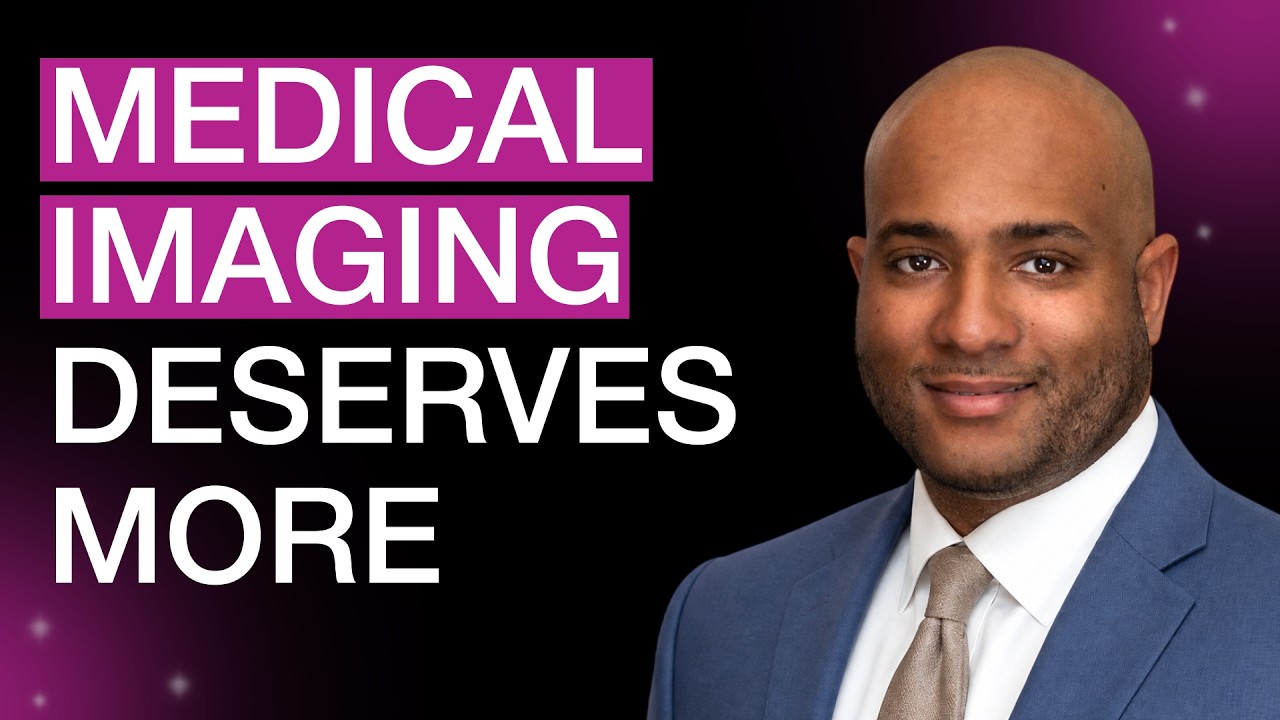
Allen Goode Official Transcript
Intro – 00:00:02:
Welcome to Frame by Frame Rethink Imaging, a podcast by Imalogix. Here, we explore the intricate world of medical imaging, aiming to dissect the field and inspire both professionals and curious minds alike. I’m your host, Chris St. John.
Chris St. John – 00:00:19:
Today on Frame-by-Frame Rethink Imaging, we are excited to welcome Chris St. John, Chief Diagnostic Medical Physicist at UVA Health System. With over two decades of experience, Alan has worked at the intersection of healthcare imaging and technology, contributing to the improvement of radiological practices within one of Virginia’s top academic health systems. Today, we will be discussing one of the most pressing issues facing radiology departments, the short staffing of radiology technologists. We will explore how this issue affects patient care, the quality of imaging services, and ways to address these challenges in a field that is essential to modern healthcare. Welcome, Allan
Allen Goode – 00:00:59:
Goode afternoon. It’s a pleasure to be with you.
Chris St. John – 00:01:01:
It’s very nice to have you here today. I almost dragged you kicking and screaming.
Allen Goode – 00:01:06:
Well, I’m happy to do it. Thanks for having me.
Chris St. John – 00:01:09:
Absolutely. So just to warm you up a little bit, can you just tell me a little bit about your role at UVA?
Allen Goode – 00:01:14:
So here at UVA, we have a very large level one trauma center and over 250 x-ray devices, imaging devices. So I have a team of about five medical physicists, including myself, and we’re in charge of all the x-ray inspections. We’re in charge of compliance, image quality, dose, which both go hand in hand, and keeping our patients safe and try to provide the doctors with the best image that we can. And so it’s quite an active and dynamic day-to-day role, and we absolutely love what we do for the health system.
Chris St. John – 00:01:47:
Amazing. Can you talk, you know, to pull back the curtain for the listeners, we obviously know we’re going to talk about short staffing today. So rather than dance around it, I’d like to just kind of run straight into it. You know, a lot of folks have been talking pretty much every episode about this massive issue. Can you tell me just a little bit about what you’re seeing at UVA and from your perspective?
Allen Goode – 00:02:11:
Absolutely. And, you know, I think as you and I chatted briefly about, you know, this kind of started back when COVID came around and we started noticing the amount of techs that we had, technologists that we had in imaging across the board, be it in radiology, cardiology, everywhere was diminishing. And I think COVID scared a lot of people and those that were contemplating retirement retired. Those that were contemplating going on to advanced schools, they went on to advanced schools. Those who are, you know, not happy with their job, wherever they are, they decided, you know, I’m going to be a traveler, become a traveler, and I’m going to move around now. I don’t want to sit in one place. And we started seeing these numbers go down and it became a lot, you know, like a revolving door, so to speak, in that the ones that we did have didn’t stay. And we were having trouble at many times treating patients just because we just didn’t have enough technologists to help in the clinics perform the tasks that are needed for us to image patients effectively.
Chris St. John – 00:03:12:
Yeah. And so, like, I guess let me start with one of my classier questions, right? At least currently, what are the primary challenges in terms of recruitment, right? Or talking a little bit about travelers versus what’s the non-traveler term? Stationary?
Allen Goode – 00:03:28:
Right. Yeah, exactly. Yeah, non-travelers. I mean that’s a great question. What’s happening now is we see improvements then we kind of, We see it slide back in that. The technologist’s that are with us, I say the world become small and flat and although the tools hat we’re using like this tool right now became prevalent. A zoom or Webex and all this tools. And so people that didn’t want to necessary home because they wanted to around their families or around, yo know, their parents didnt matter anymor, folks left and the left to go wherever they wanted to go. And once they started, you know, doing things like traveling or moving to a different hospital, but especially, you know, to address the traveling issue, this sets up a weird dynamic that, you know, a traveler can actually go and work for an agency and come back and actually work in another hospital they came from. And a lot of times they come in with different or improved salaries. They come in with, you know, contractual arrangements that they’ve been able to arrange. And it sets up a weird dynamic with the text that are currently on staff. And this environment is really hard to work in because you’ve got folks working very close side by side. Sometimes in scrubs. Sometimes in sterile conditions and there’s a lot on said makes run uncomfortable situation when the goal is to take care of the patient, right? We have to take care of the patient.
Chris St. John – 00:04:27:
Right.
Allen Goode – 00:04:47:
And they’re in charge of the radiation hygiene and making sure we’re effectively using the tools, the imaging tools effectively for the physicians. And so this is a very strained environment that happens. And I’m not saying it’s bad. It’s different. We were not used to it at all prior to COVID. You know, once in a while we’d have a traveler, but now it seems like, you know, we were having more and more of them. But I think we’re trying to put some things in place to address that. But with the increasing shortage of technologists, the travelers at times are a necessity to just, you know, make ends meet to take care of the patients. We just don’t have enough hands on deck to treat the patients. That’s really unfortunate.
Chris St. John – 00:05:25:
Right. And so am I correct in like very often probably travelers are being offered higher salaries?
Allen Goode – 00:05:31:
Yeah, that’s what I hear. Right. I mean, most of the time I hear this, I don’t have, you know, the salaries in front of me, but I hear that this happens. And I think that’s the one of the hard things, because salary matters. Money matters to a lot of people in the current economy, obviously. And to have somebody, you know, come in that hasn’t been there very long, to have somebody come in and sort of start and be a new technologist in an area they’ve never seen and be making more money than, say, somebody standing right beside them. Again, it’s a weird dynamic. Right. And it’s unfortunate. But patients keep coming. We have to treat the patients. And so we have to do to get people here to help run the equipment, to help us, you know, serve the patients.
Chris St. John – 00:06:10:
Yeah, I mean, I feel like that like almost creates like this kind of it’s like a feedback loop. It’s like digging the hole deeper. Right. Because in theory, it would be great like to be able to have techs on staff that you could incentivize to stay. Right. Like to have a sustainable team that’s sticking around. But you now introduce, you know, this patch to help deal with things where you’re having, you know, you’re incentivizing travelers because you need to get somebody there. So you have to pay them more. But then in doing so, it’s almost de-incentivizing the thing that you actually need, which is like a consistent group of reliable people.
Allen Goode – 00:06:48:
Yeah, that’s exactly what happens. You know, and a lot of the things that we do are very complicated. You know, the procedures we do are very complicated. It’s very hard to, you know, in the medical field, we use the terminology, see one, do one, teach one. And it takes a unique person to see one, do one, teach one. And so if you’re a traveler or you’re somebody just starting to see one, do one, you know, teach one for something that’s, you know, more simplified procedure or exam, that’s probably OK. But a lot of the times we’re working on very complicated procedures and to see one, do one and then teach one is very difficult. If you’re just starting or if you’re transient, you’re only going to be there for six weeks. You may only see one. You may only see two of a certain procedure or exam. And so it’s very hard for, you know, you to lend your hand and become competent in that area. Whereas the tech, you know, technologists that are still here, they’re doing that. And, you know, as you’re right, it sets up a little bit of animosity between, you know, those folks because, well, I’m here and I’m doing the job, but you’re coming in and you’re basically going to say see you in a few weeks. So it’s unfortunate, really.
Chris St. John – 00:07:53:
When you say see one, do one, teach one, right? You’re talking about like at the exam level, right? And are you being literal when you say one or is that just language being language?
Allen Goode – 00:08:03:
You know, I think we do a lot of that. I mean, yeah, I think and I heard that, you know, physicians speak about a long time ago. And when you think about things through that lens, it happens a lot. You may not see a complicated IR procedure more than once as a technologist and you’ve got to retain everything that you learned on the last one because patients are different. And so you see one, you may get to do the next one. But after that, you’re going to have to tell somebody else that doesn’t really understand what’s going on, you know, what they’re doing and what they need to do to correct that when it may change in that procedure as well. So, you know, only being transient in some of these areas like IR and catheterization and some of the more advanced imaging modalities is, you know, MR and CT. It’s very hard. It’s very hard to, you know, have these folks come in and stay for a short amount of time and then they leave. And yeah, it’s tough.
Chris St. John – 00:08:53:
Yeah, I mean, how do you try and tackle, like, systematizing teaching travelers or just teaching new techs? Like, during the C1 phase, right? Like, is there some sort of, like, systematic approach? Or, like, I don’t expect y’all to have time to be, like, building back-end systems, right? Because you’re already not having enough time. But I’m curious, like, what the approach is during the C1 phase? And, like, is there some sort of structure that could be implemented to kind of smooth that out?
Allen Goode – 00:09:23:
Correct, yeah. And we do a relatively good job of that. We expect that somebody on their first day is not going to be able to handle, say, a trauma and CT by themselves. Unless you’ve been an imaging technologist for a long time, you know, to be able to do it, you know, how we do it. And many hospitals do it their own way. We all have our own ways of doing things and the way that the doctors like to see the images. And so there’s usually quite a bit of mentorship that goes on during that first or second one.
Chris St. John – 00:09:48:
Right.
Allen Goode – 00:09:49:
But then very rapidly in this dynamic environment, you’re right. You got to kind of get it pretty quickly because otherwise you are going to be in a situation where somebody else has left the room and now you’re doing it yourself. And most of the techs are very good at doing that. They’re very good at watching this procedure or exam happen and running with it. And so we’re fortunate for that. They all do a fantastic job doing that.
Chris St. John – 00:10:12:
Right. And like, you know, I’m going to talk about AI. Sorry, everybody. So just like I’m going to talk about technology in general. Excuse me. Given the explosion of AI, given the explosion of different technologies in this field, like like are there things that you see also like tech solutions to being able to address things like this? Or at least it’s not at this point.
Allen Goode – 00:10:34:
But they’re small and they’re kind of hidden a little bit. I see them because, you know, said at the intro, I’ve been doing this for a few months now. And, you know, you see what we used to do and you see what kind of what we’re doing now. And you kind of get a direction of how things are, you know, are going to where they’re going to. And I think some of the things that, you know, we’re looking at are streamlining processes where, you know, somebody comes in and they’re going to have X procedure or Y procedure. The machine, you know, the X-ray machine or the MRI or the CT. Or whatever we’re using is already knows ahead of time what we’re doing. It changes things around, especially like in IR. You know, it will move around and do the things it needs to do to get prepared. So it’s one less thing for the technologist to worry about so that they can focus on the patient. They can focus on what tools do we need to do this procedure, that kind of thing. So things like that are helping them. But also, I know that digitally we’re taking advantage of a lot of those things by automated routines. You know, if we’re always going to process the MR or the CT a certain way, it’s a lot easier to build that into something that says every time you see these keywords, process it this way. We’re not going to do it any differently because we want them all to look the same. We want them all to look uniform so that when something subtle, it pops out at the physicians. So, you know, I think things like that are taking advantage of some of the AI that’s out there and doing some things ahead of time so that the techs don’t have to do some things that they’ve always done. So they can turn their attention to is this other thing set up correctly? Have we documented some of the things that we need to document legally, you know, ahead of time, those kinds of things. Right. And allows them to focus on some things that can frankly be done by a computer pretty well, whereas there’s a lot of things that cannot be done by a computer. So I think those things are coming. I think we’re taking advantage of some of them. I don’t think the technologists will be replaced in any way, shape or form. In fact, we need more of them, as we’ve sort of said.
Chris St. John – 00:12:33:
Yeah.
Allen Goode – 00:12:34:
But there are some things that computers can do easily for us to make their job a little more streamlined and a little easier on a day to day basis. Right. And I feel like, you know, correct me if I’m wrong, but like just because there’s tools to help them do their job well, if you have like a constant backlog of patients that you’re looking to get through, like, yeah, it can maybe help your techs get through the patients faster. But like, it’s not like it’s going to address their burnout. And that’s true. You know, yeah, you’ve touched on another point, you know, is burnout. And I was just talking to one of our imaging managers the other day and that, you know, last week we set records at our institution for the number of procedures. And, you know, we’re not a hotel. We can’t turn people away because the rooms are full. They keep coming. And it’s very hard when you’ve got technologists that are already working lots of shifts. And as you say, the logs continue to get longer and longer of patients awaiting imaging exams. It’s very hard to not get disgruntled. It’s hard not to, you know, go, we’ll just never get there. And, you know, so you have to be creative a little bit. You’ve got to, you know, lighten it up a little bit because, you know, they’re working long hours under duress. And so we try to do what we can to incentivize them just to, you know, take a minute and think about how things are going. And just being creative a little bit to help them get through the day and providing them some things to think about other than just, you know, one patient after another. Because it’s not cookie cutter. Every single patient is different. And so having them, you know, work through the situations and helping them work through those situations the best that we can, we try to do it all the time.
Chris St. John – 00:14:09:
Yeah. Do you have any advice? Or like, let’s say, you know, some other techs somewhere who don’t get to work with you. Do you have any sort of like little sound bites you can give me to talk about dealing with burnout?
Allen Goode – 00:14:22:
Yeah. I mean, you know, one of the things I think that we’ve gotten away from in the imaging world, when I first started, things were quite a bit different. They were a lot slower. They’re a lot more analog, you know, whether it was film or not. They’re a lot more analog. We didn’t have these digital systems where, you know, things could be ordered, you know, faster than we can even say the words or make the order or whatever. But I think back in those days, we invested in technologists a lot more than we probably do now. And I think, and I’m talking about this across the country, that, you know, we’ve gotten away from, you know, sending technologists for training off-site. You know, at times where we can send them off and invest in them. You know, make them part of the family. Make them part of the decision process. What do you think is going to help, you know, the situation tonight when we’ve got 10 patients? You know, what have you seen has helped in the past as opposed to you just got to get it done. That’s not helpful. And that adds more stress and duress, you know, to them. But I think, you know, involving them in the situation because they’re the, you know, the front line. And saying, what do you think will work? And trying to help implement what they say. And also giving them a voice in the process. I mean, those are the sound bites that we always talk about. And try to involve them as much as we can in the process. After all, they’re the ones that know the machines quite well. And they’re the ones that help the doctors take the best, you know, images. And so I try to work with my techs as much as I can. What are you seeing? I have my opinion about what I see. And what I think the problem is with the machine or whatever. But what are you seeing? I feel like it invests in them that I very much deeply value their opinion about what they’re seeing. Because they see this machine all the time. I’m sort of, you know, at the shop. I’m sort of, you know, they brought their car in. You know, that kind of thing. And they drive it every day. And so when they’re saying it’s pulling to the left.
Chris St. John – 00:16:08:
Right.
Allen Goode – 00:16:09:
You know, for me to just say, nah, it’s not doing that. You know. That doesn’t make them feel very good. And so I think just trying to invest in them as much as we can. Giving them, you know, stakes in the decision process. And so, you know, that they can be involved. I think those things help ease some of the burdens and things, the stresses that they’re under.
Chris St. John – 00:16:27:
Yeah, for sure. Honestly, it feels it is very akin to my restaurant life where like if a server comes up to me after, you know, six months of getting shit done, has an idea about a way to streamline things. It’s like, I haven’t been waiting tables. Like, yeah, absolutely. Like, if you think it’s going to work, I didn’t think of that. Let’s give it a shot. And then on the other side of that, though, like I totally understand, you know, administrators are underwater as well. And, you know, they’re also trying to deal with 16 million problems. And now they have a tech who’s like, hey, I’ve got an idea. And they don’t even have time to listen to it.
Allen Goode – 00:17:00:
That’s true. Yeah, that happens a lot.
Chris St. John – 00:17:03:
Yeah, there’s a lot going on.
Allen Goode – 00:17:04:
Yeah.
Chris St. John – 00:17:05:
Yeah. The speed to which that we work now, the speed, how fast things arise and get dealt with is at a rate that we’re just not used to as humans. We’re just not used to, you know, the. The phone call, the pager, the text message, the person at the door, everybody’s saying, you know, because they can write all these communication mediums can happen near instantaneous, you know, and a lot of times, you know, the email is sent and the problem’s already been resolved by the time somebody even reads it. And so that means that a lot of problems are in a bubble to the surface. And so it’s hard to sort of, you know, tease out which of those problems are the most critical for the administrators and for some, you know, to hear the technology going, I have a solution for why we’re not getting through patients in a timely fashion in this shift, you know, and the administrator may be dealing with all kinds of other problems that we don’t even know about, you know, from billing to HR issues or whatever. And so, you know, they’ve got to weed through that at a rate that I think is unfortunately very hard for humans to deal with. You know, there’s a lot of communication overload and they have to deal with that, unfortunately. Yeah. And so I guess to slowly start to change gears. So what are health care facilities doing right now or what trends have you seen? Like aside from travelers, right? Like what approaches are you seeing people take to try and address this issue?
Allen Goode – 00:18:29:
That’s a great question. And I think one of the things that we’re seeing is for us and other folks out there is that what used to work is not working anymore. We cannot just wait for technologists to come and say, we really would like to work at your institution. And so you have to be aggressive. You have to spell it out. What are we going to do for you? You know, why would you want to work here at the University of Virginia? Why would you want to work wherever you’re at? And what are we going to do for you that’s better than someplace else? You’ve got to make yourself look attractive. And so you have to do things like think out of the box. You’ve got to get into the high schools. You’ve got to, you know, go into areas where people may not know what a technologist even does. You know, most people see the big building and they’re going to have a procedure. They think doctor and nurse. Valid thoughts. That’s what we’re all trained to think about is, you know, doctor, nurse. But there are a lot of other people, including technologists, including IT folks, including physicists, that are making the solutions happen for the doctors and the nurses those are support staff. So you have to get in front of them and say, have you thought about this? You know, if you like computers, would you like to do this thing? You don’t have to be perfect with people. You have to be pretty good with computers at this point also as well. And so I think you have to get in front of them. You have to tell them about this, you know, trade that they may not have heard about. You have to set up training programs for people who are coming in the workforce that may not even think they’re going to be dealing with patients. But they’ve got, you know, some sort of beginning nursing career. And you say, hey. You know, what do you think about being a technologist? You know, and could you work in, say, MRI part time or even three quarters of a time, learn it and then, you know, go back to school while you’re doing it? Those kinds of things. So these sort of training programs to become a technologist, you know, maybe the ones that aren’t even x-ray techs at this point. You have to be thinking outside the box because they’re not just lining up to come to you anymore. As I said earlier, the world is small and flat. They’re going wherever whoever’s barking loudest, whoever’s going to pay the most. And who is going to involve you know, have the most incentives for them, you know, and so they’re going to go there. And so if you’re not trying to capture some that otherwise would not be technologists or you’re not trying to incentivize the ones that are coming, you’re kind of selling yourself short. So we’re doing I think it’s a full court press and basketball turns. We’re trying to do everything that we can. We’re going to, you know, job seminars and things like that. And, you know, hanging our shingle out there going, please come to work for us whereas probably in the past 15 years ago, we didn’t do that. You know that. The technologists were abundant. So we’re just saying, hey, you should come here. Here’s what we can do for you. We’re doing that a lot. We’re getting into high schools or starting training programs. We’re doing as much as we can across the board just to try to, you know, make this work.
Chris St. John – 00:21:09:
Yeah, for sure. I’ve heard very casually in passing conversation. I don’t have any hard data to support this claim, but I have heard that some institutions are willing to help pay for technologists schooling in exchange for like a certain number of years as a tech. Is this something that you’ve actually. Seen in practice or is this just like a daydream?
Allen Goode – 00:21:29:
Yeah. No, that’s actually true. Yeah. I mean, so, you know, the problem is, and back to where sort of this conversation started a little bit, at the end of the day, we have to treat patients. And so if you’ve got 20 patients coming to a clinic that can only do four or five at a time, and you only have one or two technologists, it’s going to be a long day. And so if you can train folks that aren’t technologists on the fly, if you can at least have them help the technologists that are there, they can learn while they’re here, they can earn while they’re on the job, and they can probably get into school, start school with some training. That’s a win-win. And then, you know, yeah, I guess there are, you know, programs around where you can keep somebody here or incentivize them to work for a year or two before they leave if, you know, the education has been covered. And so I think that’s a win-win because we really do have to have the people on site to take care of the patients and run the machines. You know, let’s make no bones about it. They’re running the machines. And so if you don’t have people here, or if you don’t have people that can be with a patient while the trained technologists can run the machine, it’s going to be a long day. And there are a lot of things that folks can do to learn in the clinics before actually running the machines. And so I think we’re taking advantage of that as well. But yeah, I think that’s another win for both sides is to, you know, pay for education and get people in the door.
Chris St. John – 00:22:51:
Yeah. And so, you know, thinking about different types of people getting educated, you know, tapping different labor pools, what sort of, you know, I transitioned from restaurants into vendor marketing position, for lack of another term. From a vendor to a podcast host. What am I talking about? And, you know, what, like, I feel like there are so many different skills that I had that have kind of transferred over into my new role, right? Like podcast hosting, I see as a one-to-one with bartending when you have someone like a single person at the bar who wants to talk to you. It’s like, it is uncannily the exact same thing. You know what I mean? So like, what are the traits and qualities or like, what are the, you know, the je ne sais quoi skills that, you know, y’all would be looking for in terms of technologists?
Allen Goode – 00:23:37:
Well, you know, I think things now are obviously much more computer driven. And so we like to have folks that are not scared of a computer. You know, a lot of the things we teach. So it’s not like you’re going to have to do programming. You know, it’s not like we’re going to set you down and say, you know, here’s a set of code you’re going to have to analyze that. That’s not what this is about. But you can’t everything that we touch is computer driven. So you have to have, you know, a basic set of computer skills. And then I think the desire to learn. And I think that’s the thing that, you know, we’re constantly evolving and constantly changing. And so, you know, when a technologist and I’ve seen a few that come in and they get very, you know, they’ll get set. You know, well, this is not what we did yesterday because today is today. We change. We evolve. We can’t help it. We have to evolve. We have to change. We learn things about what we’ve done. And we say, look, this is the way to do this better. And so we may do it different tomorrow or next week. And so just the ability to, you know, sort of change and evolve. Evolve day to day. It’s a unique skill set. You know, I understand that it’s a unique skill set, but just the desire to learn and to improve, you know, with day to day and, you know, have a little compassion with humans as well. I mean, you know, the human element cannot be removed. We’re treating patients and each one of them is different. We’re treating them with, you know, complex devices that continue to get more and more complex. And they have to, you know, sort of evolve with that equipment and say, I realize that what happened yesterday may not be the way we’re going to do it today because we learned from that yesterday. And so that does take a special skill set, but I think we have a lot to offer. You know, I think it’s a very steady income and it’s assured income, you know, that’s the thing, you know, and so we can incentivize that, you know, and say, look, you know, if you’re here and you’re doing a great job, we want to keep you as long as we can. Cause we like having people here that do fantastic jobs that we don’t have to train every single day to do the job because you’re brand new. That kind of thing. Yeah.
Chris St. John – 00:25:33:
And so I might have brought this up to you like very casually the other day, but I have this theory and I’m not saying it’s correct. And I also would like to emphasize that I am saying this with the utmost respect to all imaging professionals. I really believe that I think millennials in the service industry is quite potentially an untapped labor pool that imaging could be pulling from. Let me lay out my theory for you. And there’s no guarantee. We’re putting this. In the episode.
Allen Goode – 00:26:03:
Yes. Thank you.
Chris St. John – 00:26:04:
Okay. So I decided to leave my restaurant job where I was the chef and owner of a very successful New Orleans restaurant and wedding venue and catering company. Effectively. We survived the pandemic. I have a Princeton degree. You know, I’m quite competent. I’m great in an interview chair leaving restaurants. Well, now on the other side, but I’m talking about in that position, but like trying to get out of the service industry as a business. You know, I was 31, 32 when I left felt like an impossible task. I think like so many millennials raised on the Food Network, I was like, I want to do this because I’m passionate about it. I’m not falling into it. I’m doing this by choice. And, you know, restaurants also have their own form of burnout, like many industries do. I burnt myself out, unfortunately. But trying to get out, you know, I hear a lot of people saying no one wants to work these days. I sent in probably like a thousand resumes, 200, you know, totally like well-written cover letters. I can write decently well. I got like maybe one interview or something. And, you know, luckily when I was connected with Immalogics, we ended up being a match. But, you know, my partner is having this issue right now as a former chef. And so many other friends of mine in the service industry, and especially in their 30s, are looking for a pathway out. They’re looking for stability. They’re looking for just anything, right? And the pathway doesn’t necessarily seem clear. But in my mind, so many service workers especially the millennial ones are very computer competent, right? Chances are they have the people skills, especially if they were customer facing. And that adaptability that you’re talking about is everything that service life is, right? New specials, new dishes, like table. Like there’s like things change every single day. Shit systems change every month. Like it is a constant updating, rotating, growing, evolving field. And these are people who are experienced and looking for more stability. And I just like, I wonder if there’s a way for healthcare facilities to start tapping into. Like it is a massive pool of people looking to get out.
Allen Goode – 00:28:19:
I think you’re really onto something. I mean, just the way you described it, it’s absolutely a perfect situation because that’s really what we deal with on a daily basis. And I envision, you know, in the restaurant business, you’re juggling a bunch of balls and you have to do that because if you drop one of the balls, and I’m not figuratively saying you’re going to drop the plate, but you know, somebody’s not going to get what they’re asking for. Somebody’s not going to get their ticket in. Somebody’s not going to pay. Something bad is going to happen that on that level is not good. And so the same thing happens, I think, in medical imaging, where depending on what service you’re talking about, nuclear medicine, for example, where you’ve got a patient in the waiting room, you’ve got a patient in the soak room, you’ve got a patient needing to get injected, and you’ve got a patient under the gamma camera, depending on what, you know, hospital you’re doing about five or six things. And at the end, you’ve got to get them through each one of those steps effectively, because if you don’t, they’re not going to get their imaging. And we’re not going to understand what’s going on. You know, what disease process they came in for us to evaluate. And so I think you’re really on to something because I think just
Chris St. John – 00:29:22:
Just to crack a joke, once again, all the respect for that very important and difficult work y’all do. But that sounds exactly like waiting tables, the drinks phase, the food phase, the specials, the back, the first course, the back. You know what I mean? Do you need a reef like the constant bouncing around, hip hopping, constantly change? Like, yeah, yeah. Keeping everything on track all at once.
Allen Goode – 00:29:43:
That’s exactly what has to happen. We have to do it. We have to keep things on track. We have to move the patients through the system because there’s five or six waiting to get in the same thing. You know, there’s five or six waiting to come in the front door, you know, to be served for you and for me. But the same thing happens. And I think you’ve really stumbled on this and you do have to have a unique set of skills to deal with people. And I think that’s something that can be learned over time. I think, you know, we’re not just born with this, you know, I’m great with people, but as you deal with the complex situations that you deal with, , the customer, the overly, you know, happy customer, you know, you did so great. And you’re like, I’ve got to go to another patient or I got to go to another table. Thank you, but I got to go. You learn how to deal with these situations in a way that helps you move along through the process or helps them move along through the process. So I think you’re really onto something and you should continue on with it because we really need technologists in the field. Thank you. For sure. And so if there’s an untapped pool out there, I think we ought to start dipping in into it to get folks out of there.
Chris St. John – 00:30:47:
That’s how I feel. Also, not to dissuade anyone from reaching out to high schoolers, but like I cannot imagine myself at 18. Like, I know you’re not locked into a career path, but I cannot imagine at 18 being like, ah, yes, a nice, stable career as a technologist. Like, I will do this until I retire.
Allen Goode – 00:31:05:
Yeah.
Chris St. John – 00:31:06:
Right.
Allen Goode – 00:31:06:
Yeah. That’s a great point.
Chris St. John – 00:31:08:
But if you’re looking at 30 year olds, they’re like, please give me a stable career. Yeah, please.
Allen Goode – 00:31:16:
And the demand is there. That’s the thing is, I think, you know, the demand is there for workers in the health care industry across the world, not just techs, but everywhere that if you want to stay in a place for a long time, you’re there. You are effectively there. And I know a lot of people are moving from job to job. You know, you’re like, hey, you could do this as long as you, you know, you do a great job and you do it hat you’re supposed to do. The health care organizations want to keep you because people keep running to the front door. Yeah. So we got to keep them. And so, you know, that you can’t underscore the stability of working in health care. It is hard work. I’m not going to sugarcoat a lot. And it’s same in the restaurant. It’s very hard work. Some days you go home, you go, how did I even make it through the day?
Chris St. John – 00:31:55:
Oh, 100 percent.
Allen Goode – 00:31:56:
You know, but not every day is like that. A lot of days will really, really impress you of the number of things you can accomplish and the impact that you can make in people’s lives. And so not every day is like that. And nobody would be able to sustain it. But I think, boy, you’re really on to something in the industry there. If you could tap into that, we ought to figure something out there.
Chris St. John – 00:32:14:
Yeah, we’re going to have to circle back on this one. But I will say my data points are strong of the very small handful of restaurant friends of mine that I have talked to about this. What I think like three out of the four of them have already been doing research into these programs, which sample size of four. You know, Dr. Samae and I talked for two hours about data and numbers. I understand the size of my sample size. But at the same time, it’s encouraging to me.
Allen Goode – 00:32:42:
Yeah, you’re really on to something. I think you should keep going with that. We really need the people. We really need the workers. So keep going with that.
Chris St. John – 00:32:50:
Yeah. And so we are nearing the end of our time. Before we say goodbye to everyone, do you have any closing thoughts on short staffing or any points that you were hoping to make that you have not so far?
Allen Goode – 00:33:02:
No, I think you’ve raised some awareness that folks may not know about. You know, I think health care is a really rewarding field. I got into this field because it was pretty clear to me I wasn’t going to go to medical school. So I kind of wanted to be as close as I could to a physician and help as much as I could. And there’s so many opportunities to help in health care and be a part of the organization. And you guys are doing a fantastic job of getting the word out. You know, how can you help? And, you know, what are the benefits to you? There are a lot of benefits to you to working in health care. It’s very stable. And I just think we need to continue to get the word out about you know, things that you can do that are not, you know, necessarily nothing wrong with being a nurse, nothing wrong with being a physician. Those are fantastic, great job roles. There are so many other things that you can do to help pick that ball up and push it forward for health care so that you can help the patient get through the system and make a real impact, especially medical imaging. That’s where I come in is medical imaging. So there’s so many roles that are out there that can be filled by somebody who really wants a steady job and wants to make an impact to health care.
Chris St. John – 00:34:04:
Yeah. Honestly, that reminds me. I believe I was talking to Tom Griglock on a previous episode and he was talking about how often these health care positions become in the family. Right. Like a nurse whose mother was a nurse, a doctor whose parent was a doctor, you know, et cetera, et cetera. And so, like, you know, I think there is a snowball effect that can be harnessed by getting the word out in the right way. The question just is, like, how do you start to get the word out?
Allen Goode – 00:34:32:
I think you guys are doing a great job of starting that or continuing with that.
Chris St. John – 00:34:36:
I guess we’re doing it now.
Allen Goode – 00:34:37:
You’re doing it now. And yeah, I mean, I think you’re right. I mean, a lot of people don’t even know about some of the roles that we have in health care. And so as, you know, a mother or father, you know, do those things and they see their kids doing those things and they go, wait, you got a, you know, a steady job and pretty good pay. You know, maybe I should do that as opposed to doing this other thing that I was thinking about doing. And so if they’re successful, then that’s typically handed down. And, you know, you can see the success, you know, being passed down. And so, OK, well, that’s clearly. What I want to do kind of thing. And so I feel like that was maybe broken for a while. Maybe it wasn’t, but I don’t have any data on that. But it would be nice to see that happen again where, you know, like you say, it’s kept pushing forward by the family, you know, and folks are continue to work in health care because you do see that. You do see that in nurses a lot. You see the physicians a lot where, you know, it’s in the family and people continue to stay a physician, you know, become a physician and keep it in the family kind of thing and keep handing that down. And so it’d be nice to do that for some of these other roles as well.
Chris St. John – 00:35:35:
Yeah. Well, all right. That is all the time we have today. Alan, thank you so much for joining us. Thank you. I hope you will join us again sometime.
Allen Goode – 00:35:46:
Maybe I will. It’s been a pleasure. Thanks for having me. It’s been a fun time.
Chris St. John – 00:35:49:
Thank you so much. All right.
Outro – 00:35:53:
Frame by Frame Rethink Imaging is brought to you by Emologix. Here, you’ll find engaging interviews with thought leaders, experts, and patients, sharing stories that showcase the transformative power of medical imaging. To discover how Emologix is rethinking imaging in healthcare, visit emologix.com. Be sure to subscribe to Frame by Frame Rethink Imaging on Apple Podcasts, Spotify, or wherever you listen. And from all of us here at Emologix, thanks for tuning in.