Rethink Imaging Podcast Transcript
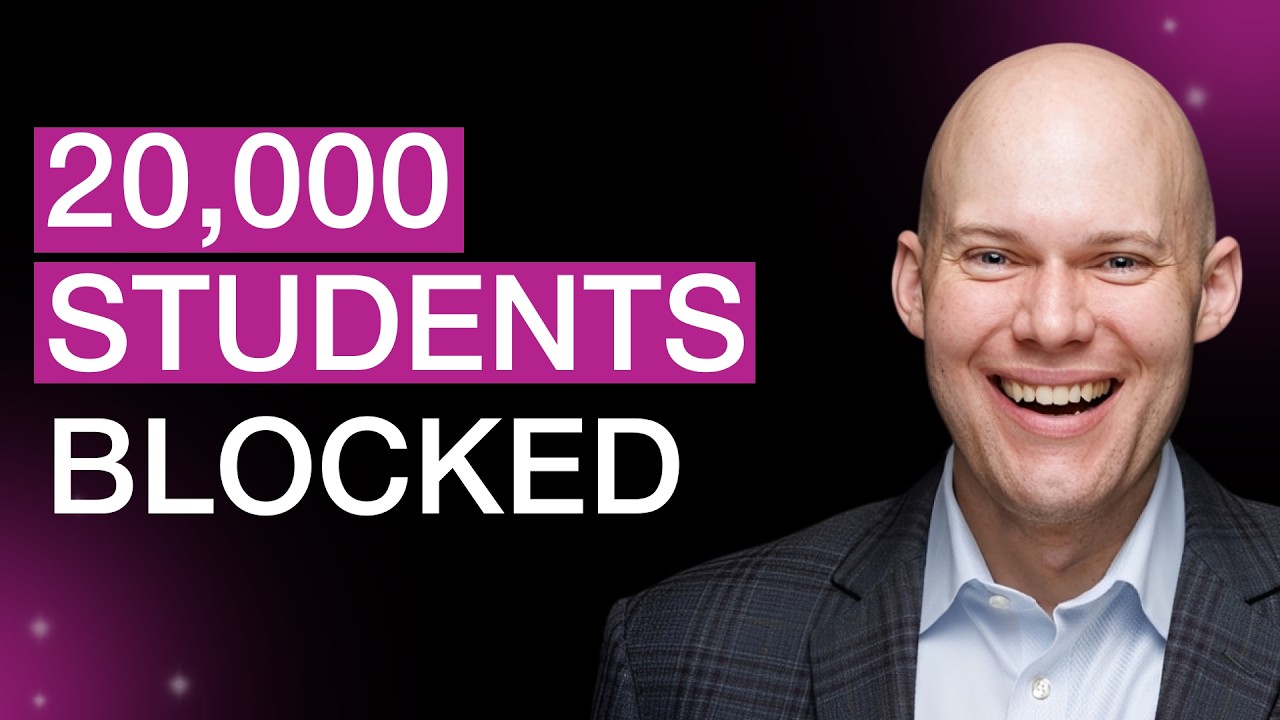
Guest: Brandon Smith, M.B.A., M.S.R.S., R.T.(R)(VI), CIIP.
Host: Chris St. John
[00:02:18] Chris St. John: Welcome back to Rethink Imaging. Today I am joined by Brandon Smith. Brandon, welcome to the show. Thank you so much for being here today.
[00:02:30] Brandon A Smith: Thank you for having me. I’m excited.
CHRIS ST. JOHN Yeah,00:02:33 I’m super stoked to have you. I want to focus on you and your own career accomplishments, but given that you have a familial connection, I would be remiss if we didn’t start there to trace your history back. I believe your father was involved in medical imaging in the late eighties. Originally, you were intrigued by the profession, but you were potentially going to follow another path, and then you eventually came back to imaging. Can you tell me a little bit about your detour and what drew you back into the imaging world?
[00:03:11] Brandon A Smith: Yeah, sure. So my dad entered the field in the late ’80s. He went to a hospital-based program. But of course, like any child, especially a son, it’s like, “I’m going to do my own thing.” And so I did. I went off to school on a whole other path in engineering. But at some point, I took an externship with neuroimaging, and I realized it was something I was really fascinated with. I had grown up around it. From there, I legitimately decided to take a shift. There were some people that were upset, but I’ve always been pretty decisive in my ability to make a decision. My grades were at a point where I was academically supporting and funding school myself, so my parents didn’t have to pay for it. I decided I was going to make a big boy decision, and I did.
[00:04:14] Chris St. John: So you went down the engineering path, and then you had that neuro externship. At what point—what was your entry point back into imaging? You went back to school for it.
[00:04:31] Brandon A Smith: After I did the externship, because my dad was working in research, he wasn’t doing traditional patient care. I went to where he was just for a summer, getting into some things, and I felt a sense of inspiration there that I didn’t feel before. I don’t think I felt as driven, to be honest. I could do engineering and I was succeeding in it, but I felt kind of blah. So I ended up jumping into imaging.
My dad would argue he probably was not a big proponent of promoting the field in that way. Think about it from a parent’s perspective: regardless of how lucrative it may have been for you or how successful your career was, if you experienced it as more laborious, then you’re probably not going to encourage your child to do it. We actually have conversations today about how his view of the profession initially, and then his view of the profession through watching me, has become a totally different perspective.
[00:05:51] Chris St. John: I’m curious, can you tell me a little bit about that perspective shift?
[00:05:59] Brandon A Smith: Initially, it was about sustainability. It was about taking care of your family. It was about it being a less lengthy path, but still a quality path—basically being ready to work. I think he went into it initially as a job that became a career. I’ve always viewed it and been exposed to it as a career, so I didn’t see it any different. I was able to be in environments where I realized it was a career choice, not a contingency.
[00:06:39] Chris St. John: Right. It’s so interesting. I feel like the familial connection within radiology in general, but also in healthcare, is something we’ve talked about on this show and we see it a lot, right? Children of nurses becoming nurses, children of doctors becoming doctors, children of techs becoming techs. It’s something that you talk about a lot publicly. Why do you think it is that so few people get exposed to these career paths as potential paths without that familial connection? Why do you think it is that without this kind of entry point, it seems like a pretty big jump for folks to get into the field?
[00:07:25] Brandon A Smith: Historically, it has been treated as a contingency plan despite being a real career option that is rich in terms of development. I don’t think it’s traditionally been portrayed in that way. You see it all the time. To keep it cute, people say, “Well, I went to program X, but then I failed out of program X, so my counselor advised me to get into radiography.” Like, why? Because you didn’t make it there? This is not an easy route in. You see that happen to a lot of personas like medical lab technologists, RTs, occupational therapy, and physical therapy. They get treated like contingency plans, and that’s not the case.
But we’ve also allowed it. You think about terms that seem harmless, but you look at it and realize that’s not really who we are. Like, “Oh, you can go into an ancillary program.” Ancillary? Do we not deliver direct patient care? I’m just kind of confused when people say, “Yeah, we’re all here. Oh, you all too, thanks for coming.”
Whether you have to learn it or not, you don’t have to be adversaries, but you do have to educate people on who you are and what that looks like. When you don’t do it, they start to write narratives based on their limited information and become the experts in defining you, and it’s so grossly incorrect. But if you’re busy working with your head down and saying, “Well, I don’t have time for that, I can’t worry about that,” you start to find residence in your own dissatisfaction. This is insane. You don’t have to live here. You do not have to accept that. Sometimes it’s like asking an airplane pilot how to navigate a cruise ship. You’re good at what you do, so how about you do what you do, allow me to do what I do, and we can do what we both do together.
[00:09:47] Chris St. John: I love that. I really like the way you put that, “finding residence in your dissatisfaction.” It’s very apropos and makes me think about you and your path, because that does not seem like your style. You have a Master of Science in radiological sciences, an MBA, a CIIP, and you are the first ever back-to-back sitting president of the ASRT. I feel like that is the marker of somebody who is not only not taking up residence in their dissatisfaction, but in fact, the very opposite. You are constantly pushing forward, you are growing, you are expanding your knowledge base, and you are educating others. It feels like, to some degree, you’ve always been trying to fix these larger problems within the field. I’m curious if that’s fair, and if it is, at what point you started seeing different problems that you wanted to try and fix.
BRANDON A SMITH00:11:00 To be honest with you, I probably saw fewer problems than I saw the worth in the worthiness. I saw the opportunity. Maybe we’re not happy with it, but have we really ever showed up to the fight? I will argue that to anybody: we haven’t really lost the fight, we just haven’t fought. Losing a fight means that we went in, we pushed, and we lost. Even when we have the perspective that we’ve lost, did we really show up?
You can be in attendance and not be present. Did you really go into this knowing that not only are you trying to give a lick, but you would take one? Depending on how you grew up, that’s going to make sense to some people and not make sense to others. You get to this place and you see these people changing the world every day. You see the contributions they make. You understand from an organizational business standpoint that most imaging service lines are revenue-generating, just like pharmacy, just like the lab. But people see and fully acknowledge the value you create and will still convince you that you’re not valuable, and then you accept that. Then you get drowned out by personas that are more commercially facing. That’s not to take away their value, but it’s the social norm. There are only one or two personas that people think exist in hospitals. People argue it’s doctors and nurses, and everybody else is classified as “others” unless you’re in the know. That’s not to villainize physicians or nurses, but you have personas like the medical imaging professional or radiation therapist who have worked with their heads down and have never required anybody to appreciate them for what they do, but have fully acknowledged that they are dissatisfied. Well, what did you do to refuse to be ignored? It’s just that simple. So I didn’t see problems, I guess I saw complacency to some degree.
I talk in analogies. I’ve learned to talk to students like this as they are training and entering the workforce: many people are going to tell you that you will meet disgruntled, angry technologists and therapists. I disagree. What you meet are people who have showed up consistently for patient care, worked with their heads down, and haven’t been appreciated. So they fall into a gap. Instead of us addressing what they’ve been faced with, we address how they’re responding. We weren’t curious enough about how they got here, only how they’re acting today. They haven’t always been that way.
[00:14:03] Chris St. John: You have said before that the profession recognizes the contributions, but disregards us as essential contributors. Where do you think that disregard most shows up concretely? At the hospital level, at the policy levels, or somewhere else?
[00:14:23] Brandon A Smith: All of the above. You can’t talk about the hospital without talking about policy. If appreciation for you is not evident in policies and procedures, you can keep your words, your banners, and your celebrations. That means we have a system that’s not set up to promote you to be at your best because you have a room of decision-makers that don’t represent your expertise or understand it, so they’re shooting from the hip. If they’re the majority shareholders and say, “Well, it was all right for us and we think this is good enough for you,” and you don’t exist in the room, then you’re not a part of the conversation.
Then you can’t get mad and say, “I need a seat at the table.” Understand that some of the chairs that people are occupying that belong to us, they’re occupying because we weren’t sitting in them. Why? “Nobody’s going to pay you more for sitting on this quality committee. No, I don’t want to do anything outside of the department. I want to clock in and clock out.” Well, that’s a job. But for a career and a profession, you have to be involved in certain processes if you care to be an agent of change—and not even just change, but maintenance. How are you contributing to or influencing the ecosystem? It’s as simple as that.
I get real adamant when it comes to that because there’s not a room we don’t qualify to be in. Yes, our scope may be different, but our scope is not what people often define it as. My argument is not that we are equal in liability or in the depth of practice, but we are equal when it comes to the fact that we specialize in having expertise in an area of patient care that has become very centric to the patient care plan, both when we talk about diagnostic imaging and when you get into interventions and therapy. I’m not trying to make the RT an RN, and I’m not trying to argue that an RT is a doctor—these are ridiculous. If you want to be a nurse or a doctor, go to school and be a nurse or a doctor. But what you will not do is discount my expertise and my contributions like you’re running a one-man band. We’re not going to do that.
[00:16:57] Chris St. John: Is there a culture of quiet martyrdom in RT? To what degree do you feel like the profession is complicit in its own kind of invisibility?
[00:17:13] Brandon A Smith: That’s a combination. It’s our marker on the dissatisfaction before it’s anything else, and I mean that pun intended. What I would argue is I think we’ve operated from the beginning, and maybe even into the present, trusting that the community partners we were working alongside would see the value in us like we saw the value in them. When they didn’t, somehow we got to a place where we would argue in a small setting—singing to the choir—that we’re valuable, but we didn’t really do anything about it. You took your loss like a champ, you clocked out and went home, you clocked back in, and it became an acceptable culture to say, “Well, they don’t care about us anyway.” Tell me why you’re comfortable with that.
[00:18:02] Chris St. John: Can you tell me a little bit about your column where you said that the profession needs to overcome volunteerism? I think it’s so common, especially in this field, to have this constant volunteer participation. It’s celebrated among professionals, but do you mind expanding on that and explaining to the listeners what it is you’re talking about?
[00:18:36] Brandon A Smith: Culture is important as we drive forward. Especially as I come closer to the conclusion of my board service, I really want to say the things out loud that we may not be talking about as casually as we should. One of those things is volunteerism. To volunteer is to choose the option of your own free will to do X, Y, and Z. You show up. But think about this: if I gave you a list of 17 things that I’ve volunteered for—like being a president twice—the assumption is that I do good work. But what if that’s an illusion? What if I’ve simply occupied a title or a position, sat on a committee, become this important person, and you see a couple of Photoshopped pictures or I live in a magazine, so the automatic assumption is that I do good work? What if that didn’t show in my actual performance? What if things were not getting done? A lot of times that has happened.
If I asked you to go an X amount of years back and we talk about what happened then, mind you, this person accomplished something forward-facing that seems incredible because the achievement was there, but there was no impact. Are we volunteering or are we advocating? Volunteering says we cared enough to show up. I’m not villainizing volunteering; it is the first and most basic step in involvement and engagement. But if it doesn’t ever transition into advocacy, it means that yes, I volunteered, but we’re still in the exact same place we were when I started 40 years ago. No policies have changed, classifications are still the same, and we’re no closer than we were yesterday. But you take the credit because you’ve done this for 40 years, as though you’re the expert. Was my ego bigger than my impact?
When we talk about plaques and achieving things, that’s great for you as the individual. What people fail to realize is that when you’re truly working as an advocate, that recognition is going to come as a symptom of the work you’re doing. But when recognition is your focus, you’re doing everybody a disservice. I could come in, make world history at this point, and say, “I’m done, I did what I needed to do, I changed the profession,” and they’re like, “Well, you didn’t do anything.” Exactly. I’ll focus on that when I become irrelevant and am sitting in the peanut gallery where nobody remembers me. I would rather you remember and be conscious of my impact and have no idea who I am, versus knowing exactly who I am but not being able to tell me two things I actually did.
[00:21:36] Chris St. John: I love that distinction between volunteering and advocating. There are so many pieces to that: strategy, commitment, and vision. Do you have a concrete example of what that difference looked like in your own experience within the ASRT?
[00:21:59] Brandon A Smith: One hundred percent. Everything listed—all that stuff—doesn’t belong to me. I may have been seemingly more visible, but it is all a product of teamwork, a shared vision, and a willingness to execute. It really gives me concern when I see individuals who claim to move mountains alone. It could have been your brainchild, you could have been the champion, and I’ll even argue maybe you took on the lion’s share of it, but be honest about what that looks like. A lot of the successes you see with the ASRT are a joint effort between more than 200 volunteers being ushered in every year, an incredible ASRT staff, and a working ecosystem of champions. Some are more visible than others.
To give a prime example of the difference between volunteering and advocacy: the ASRT has been around for 106 years. Can you name five ASRT presidents?
[00:23:19] Chris St. John: Me? No, absolutely not. Well, I can count you twice though, so I’ve got two.
[00:23:21] Brandon A Smith: That’s common. These are people who are volunteering at the highest level nationally and internationally. That’s volunteerism. Let me be completely clear: that’s not saying somebody didn’t do a good job. We’re just talking about a disconnect. When it comes to a professional association, the caveat with advocacy is that advocacy is not contingent on membership and it’s not contingent on your engagement.
The ASRT is successful even though there are about 157,000 members out of almost half a million registered technologists and therapists through the credentialing agencies in the US. Everybody benefits; it’s not exclusive to people who choose to be members. What I’m arguing is that you have individuals volunteering for you every day, but if you can’t palpate or make tangible what the work is, then there’s a gap there. You can’t take away from people showing up—they’re volunteering.
Advocacy is the almost 50,000 signatures when you’re petitioning and pushing the OMB to say, “Hey, we need you to look at our classification again.” Yet, you can’t get 50,000 people to vote in the ASRT election.
CHRIS ST. JOHN00:24:46 , can you go back to those numbers from the beginning? How many members did you say there were?
[00:24:51] Brandon A Smith: There’s about 157,000.
[00:24:55] Chris St. John: Okay. And if I’m correct, the OMB received 42,000 comments?
[00:25:00] Brandon A Smith: 42,000 comments. That’s just from the ASRT. You had other entities pushing as well. The ARRT made a big push, and some of the other modality-specific organizations pushed. I say that because the ASRT is the world’s oldest and largest medical imaging and radiation therapy association, and it represents all modalities. It can seem different because the bulk of that population are radiographers since they outnumber most other modalities. But the ASRT has established representation for every modality and sector of medical imaging and radiation therapy that exists. We have to think about everybody. It really takes you out of what I call “modality mentality” and helps you recognize, “I don’t do mammography, but I have to be conscious of what this legislation is, and I also have to be fluent when I have to argue it.”
The same thing applies to any modality that I’m not in, but it has furthered my appreciation for them. Being an IR technologist taught me the difference between professional practice and a profession, because you had so many skill sets in one room sharing a common goal. I will argue at any time: take pride in the modality that you specialize in, but do not lose purpose in your profession. That’s the forest. Your tree is beautiful, it’s great, the flowers are blooming, and the fruit is immaculate, but that is one tree—it is not the forest. Until we operate in a way where I can celebrate you and what you represent, and you can understand why I need your help, we will find ourselves running on a treadmill that’s not even turned on, wondering why we’re not getting anywhere.
[00:26:58] Chris St. John: In terms of all of those comments to the OMB to reclassify RTs from technical personnel to professionals, am I correct that this classification only opens up about once every 10 years?
[00:27:16] Brandon A Smith: Yes, it does not happen often, so the window was open. Let’s talk about it because it’s impressive regarding the professionals who decided to show up. The call to action and the recognition that this was happening started on a Thursday, driven by the CEO and the team saying, “Hey team, let’s get this done.” It was closing on Monday by 5:00 PM Eastern. Between Thursday at the end of the week and Monday, you got 42,000 signatures from the ASRT-populated petition alone. That’s not including anybody else’s statistics.
[00:28:00] Chris St. John: Honestly, that colors it very differently. Do you mind explaining to me what the changes are if this goes through—if you “win,” for lack of a better term?
[00:28:13] Brandon A Smith: A lot has changed since then when you talk about classifications and statuses. What would happen is it would take the profession out of this hyper-technical classification that really dilutes what they look for. You have some professionals whose comments are always grand, like, “Oh, we’re being arrogant, we’re thinking too much of ourselves. What does it matter? I’m good where I’m at.” I’m good with that, but the problem I have is: don’t be so negligent as to be content with preserving the profession you know while not being interested in building the profession you wish you would have inherited. You had a 30-year career and you have the audacity to say, “Why would we do this?” You’re not thinking about anybody coming behind you. That’s what I tend to take issue with. It shows that a lot of our complacency has been because we have professionals who found themselves satisfied enough with their own career, or not inspired enough, to consciously and intentionally build the profession for those coming next.
That is advancement. Half the work I do, I’m never going to benefit from in my career. It’s just not going to happen. But I’m okay with that because somebody built a bridge for me who didn’t know me, didn’t know I was coming, and they built it anyway knowing they would never cross that bridge again. That bridge would never serve a purpose for them again. So I am obligated to build a bridge. What have I done with my bridge?
CHRIS ST. JOHN00:30:00 You definitely are out there building bridges. You ran ads on NBC during the Olympics or during the qualifiers, right? Can you tell us a little bit about what the ads actually were and tell us how you did it?
[00:30:20] Brandon A Smith: The “Be Seen” campaign was formulated as a board discussion. The question was posed: “If we’re successful as an organization and we’ve been sustainable, what are we doing next?” From that question, a seed developed into what we used to call ASRT presidential initiatives. Dr. Pergola and the board as a team talked about how the president doesn’t have initiatives; the ASRT has initiatives. The president may have priorities, but now I’m probably getting into semantics. It’s really important to me that we choose words that properly communicate what goes on.
At the rate at the time, Danny Gonzalez was becoming president, so the “Be Seen” commercial became Danny Gonzalez’s cornerstone initiative, and it inspired the world. It was the ASRT saying to professionals, “We see you,” in a very unignorable way. We had this national commercial airing, and to date, we reached 27 million people. That was important. It went from a commercial, and then we expanded it to a campaign. Let’s not just do a big splash; how are we going to push this momentum for the next 5 to 10 years in a way where it matters?
It went from this general ASRT commercial about the profession collectively to, by the end of this year, 12 modalities being filmed and highlighted in individual commercials. Then, of course, the conversation becomes, “Okay, we’ve done these commercials, we have this stuff circulating in the world, so what’s our next big thing?” We’ve tried to be very intentional about being more externally facing and not letting our biggest roars be only at ASRT annual meetings, because that’s ineffective. You’re just preaching to the choir, literally. You have to go out to where the people are.
Between that and other efforts, you see a collective of things. You’ll hear me argue what I call the theory of mobilization. Progressively, we have to achieve or demonstrate five things. The first and most basic thing is visibility. If people can’t see you, or are not conscious that you’re there, they won’t know who you are. It’s like me asking you to pick up a pen; you’re happy to pick up the pen, but you can’t see the pen. Visibility, or being in sight, is the most basic thing, and that really was the first stage of the “Be Seen” campaign.
Once they see you, the shift moves toward recognition. When they see you, what do you want them to be impressed by? What do you want them to recognize? Now the game is on. You’re on the microphone and you say you want to sing, so let’s go. What is our message? What do we want them to know about us? When they see us, they start to recognize us.
The third step, once they start to recognize us, is appreciation. They appreciate us because they know how we contribute to the community and how we create value for them. They see you, they recognize you, they can tell you something about what you represent, and now they appreciate you because they know the value you create. When you create value, people are more willing to advocate with and for you.
Professionals are not the only people voting on policies, procedures, and legislation. You want to be able to transition supporters internally and externally so that when they see you and recognize who you are, they appreciate your value enough to fight for and with you. You cannot win the battle keeping it internal alone.
The last step is advancement. You see change and success start to happen because you see a community in motion. I didn’t use any buzzwords. Those are five very simple words: visibility, recognition, appreciation, advocacy, and advancement. In that specific order, it is functional, plain, and has always been doable.
The only other thing is that in order for this to be more of a practice than an aspiration, we have to be able to measure it. As long as we can measure those five things, we succeed. For visibility, are website views going up? Are people interacting with your website more? For recognition, do you see an uptick in medical imaging and radiation therapy programs? Do you see more people coming into the field? For appreciation, do people recognize National Radiologic Technology Week, or do they recognize that you are the reason the mother who had a mammogram and an early detection of breast cancer is home for the holidays? Or that the person you love who was in a radiation therapy suite was never alone because the radiation therapist was with them?
For advocacy, it’s making sure people understand why it’s important that policies and procedures represent the best interest of the public, not just the best interest of the profession. The people who are delivering this area of care must be clinically competent and educationally prepared. No, not just anybody can walk off the street and do this. No, as awesome as you are in your lane, you cannot veer over without a turn signal and jump into my lane. Then you start to see advancement—you start to see things change because you have living progress. Those are the things to me that become incredibly important as we push, because if we can’t measure it, it’s aspirational at very best.
[00:37:11] Chris St. John: I want to pivot a tiny bit. Everybody right now is talking about the tech shortage. We know that there’s a massive bottleneck in education; we’ve got massive waiting lists of people trying to get into programs. We’ve got healthcare facilities helping to pay for people’s programs to try and get techs out here. I think CT vacancy rates have hit like 19.5% or something, though radiography is improving. You’ve talked about this as a shortage cycle and noted the cyclical nature of it, which I feel is a unique take that I have not heard too many others bring up. Very often it feels like we’re talking about the shortage like it’s this brand new problem, whereas when I hear you talking about it, it is more about the cycle.
[00:38:20] Brandon A Smith: want to be fair: I probably get more information about the profession in general than the majority of people, no matter how long they’ve been in it, just because of where I am. Managers, directors, vice presidents, and people who are operationally dealing with it are closest to the fire, so it’s a here-and-now thing for them. It’s like being in a crisis, so I understand why that is a working reality they deal with every day. I’m not taking away from that.
My argument is that there are two things we talk about as if they are problems, and they’re not problems. Problems are things that have a fix. This is not the first time there’s been a shortage. We’re not the only profession in a shortage, and it will come again. My question is: how are we preparing ourselves to either reduce the impact that the shortage has on our profession or protect our ability to deliver care? We will never be able to eliminate it entirely. People are going to be impressed by healthcare, they’re going to flee from healthcare, people will retire, and people will join. This is a factor. It’s not a problem; it’s a factor. How are we responding?
Right now, it’s really reactive. We already knew the baby boomer exit was coming. A lot of things got exaggerated by COVID because not only were the baby boomers exiting, but other people were saying, “Yeah, life’s too short, I’m not doing it.” Now we’re back in a place where people are worried. I remember a time when the talk was that we were putting out too many techs and the market was oversaturated. It is cyclical. I’m not arguing it doesn’t have a negative impact; I’m arguing a problem can be fixed, whereas a factor has to be attended to.
I feel the same way about encroachment. Encroachment is not a problem. Encroachment is never going away; it is a factor. As long as you create value, there will be a fox that tries to come into the henhouse.
[00:40:34] Chris St. John: When you’re talking about encroachment within the field, can you be a bit more specific for me?
[00:40:44] Brandon A Smith: You have persona X pushing statewide legislation to read, interpret, or order medical imaging. It’s not just us; it’s a service line issue from the radiologist on down. But you don’t hear about people going on a nationwide heist of Goodwills. No, you hear about people robbing banks and jewelry stores. People impede on valuable things. As long as you create value as a profession, somebody is going to try to take it. That’s not a problem; that’s a factor. My thing is, are you so good at what you do that you can show others that it only looks easy because you make it look easy? Are we putting out research and being professionally represented to the point where we are producing more resources and citations than we’re consuming?
A professional out of New Jersey whom I respect so much said this at a meeting—I don’t want to pretend it’s mine, but it’s one of the most striking things I’ve ever heard. He said, “Our problem as a profession is we consume more information than we produce.” When it’s time for people to refer to our profession, we haven’t been the cited sources. I was so offended by that because I couldn’t argue against it. You go and look for peer-reviewed things when you’re putting together an argument, and a lot of times—I remember this from grad school—I had to pull from another profession because the concepts were transferable and universal, and I had to make it my own. But the credentials at the end of that author’s name looked nothing like mine. We’re busy working. I’m not making any excuses and I’m not giving that as a justification, but that’s always the argument: “Well, I was working.”
[00:42:40] Chris St. John: Honestly, talking to you is remarkably refreshing. You’re a breath of fresh air. I understand why you got voted in a special election to be the ASRT president a second time in a row. Can you tell me how and why you went for a second term? Did you get pushed into it, or how did that happen? It was unprecedented.
[00:43:12] Brandon A Smith: I held out until the midnight hour. I’ve been approached by some members and asked to run because we were having a special election. The individual who was getting ready to become the next president resigned in order to go and actually work for the ASRT organization. What a lot of people don’t realize is that you cannot apply for a staff job—he couldn’t even apply for the job—without resigning first. I don’t want to say I took it personally in a negative way, but that was a person I was really going to miss because he was somebody who was always willing to stand with me or oppose me in a very objective way, and we worked very well together. Anyway, he resigns, and now you have to have a special election.
This has never happened or been recorded before. Whoever won this position was legitimately going to be president-elect for two months and then be elevated to the office of president at a time when things were pivotal. In our professional career atmosphere, it has been seen as a taboo to enter back onto the board. I had some serious conversations with mentors I really respect who were more distal from it, and they felt like the most natural thing to do was for me to go for it. That was a big decision because this position is very time-consuming, though incredibly worthy for sure.
Two things were going on, and I think this is the first time I’m ever saying this out loud publicly: I had a big fear that doing this would give the impression that I think a president should just automatically return to office. I believe the best person for the job should be given a fair opportunity to do the job. If you’re just doing it for whatever glory you need, that is a gross disservice. I have written that in articles and I have been very clear about it. My being here a second time allowed for this year not to be about the uniqueness of a president, but to truly treat this presidential position like business as usual, to focus on mentoring the incoming president, Marissa Mangrum, and to allow the ASRT staff not to have a whole new run of projects.
When I won, Dr. Pergola asked, “Well, what does this look like?” I said I won’t have unique presidential initiatives. She asked what I meant, and I explained that we’re already doing great work. I completely agree that we need to figure out the things we need to stop doing that have been going on for years on autopilot and are no longer serving us, as well as the things we need to continue doing because we do them very well. If you have a good initiative, it’s not going to be accomplished in a single year’s term anyway. Then we focus on the things we need to start doing.
This allowed for the ASRT to take a breath without having to be focused on the pageantry of a new president. I’ve been a lot more behind the scenes this year than I was in my first presidential year. I didn’t want this year to be about a president; I wanted it to be about the profession. I really hope as I transition out that people feel as though I did what I said I was going to do.
[00:47:20] Chris St. John: I feel like—who am I to judge—but I feel like you succeeded in that. Or at least you come across as succeeding in that.
[00:47:36] Brandon A Smith: I hope so. It’s ongoing work every single day. I don’t think I’ll ever stop to say, “We did it.” Even when we succeed in things, I’m like, “Cool, great. On to the next task.” I would hypocritically advise somebody else not to do that—you know, take a moment to celebrate. But I’m very hypocritical when it comes to myself because I’m like, “No, we’ve got to get this going, we’ve got things to do.” As I’ve said on another podcast, success is as much of an imposter as failure. Success says you made it and you don’t have to go any further. Failure says you’ll never make it and you can’t do it. Both of those things stop progress. I appreciate both, but they are twins.
[00:48:20] Chris St. John: I think that’s a beautiful place to wrap things up. Brandon Smith, two-time president of the ASRT and radiological technologist. Brandon, thank you so much for being here today. It’s been fantastic to have you.
[00:48:48] Brandon A Smith: I appreciate it. I appreciate you reaching out and extending the invitation. Hopefully the conversation was decent and people can walk away with a different perspective.
[00:48:57] Chris St. John: Absolutely, I hope so.