[00:00:00] Chalonda Jones-Thomas: There’s a shortage in the field. All of her imaging modalities have a shortage. And they actually one of her pulling points is what she’s doing is she is currently offering programs like mines for them to advance. So she like, if you come to work for us, we will pay for you to get educated and learn these different modalities. And so, of course, that’s helping the technologists, but it’s also helping the institution.
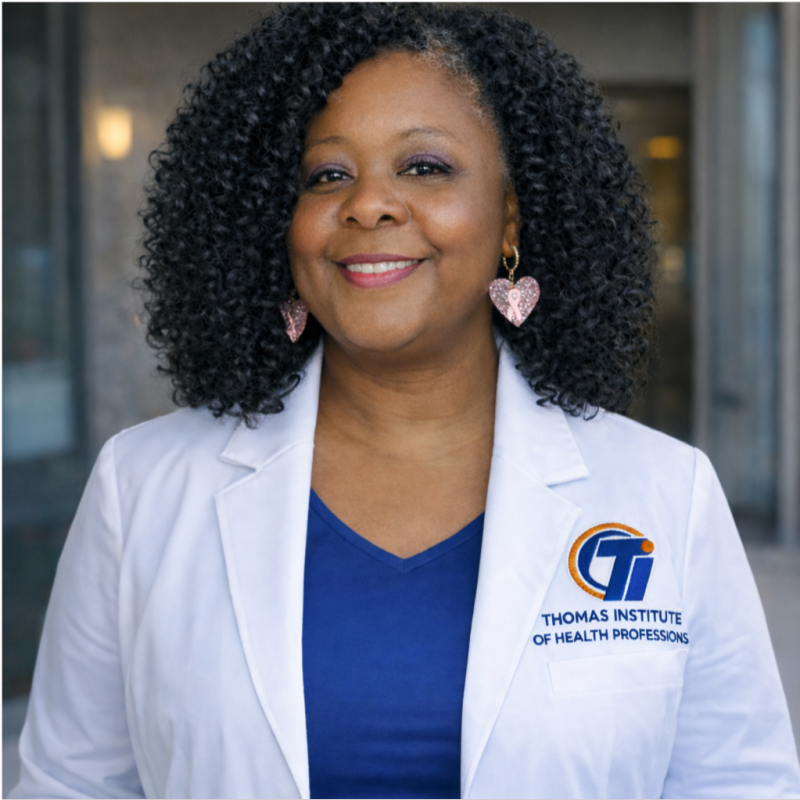
[00:00:33] Chris St John: Welcome to Frame by Frame Rethink Imaging, a podcast by Imologix. Here, we explore the intricate world of medical imaging, aiming to dissect the field and inspire both professionals and curious minds alike. I’m your host, Chris St. John. Welcome back to Rethink Imaging. I’m your host, Chris St. John. Today, I am super excited. Our guest today is Chalonda Jones Thomas, an educator, radiologic technologist, and the founder of the Thomas Institute of Health Professions. She has over two decades of experience in CT and MRI. She has trained thousands of technologists across the country, and Chalonda helped create the first fully online CT training program, which, you know, reshaped how advanced imaging education is delivered. She is a national voice for access, equity, and innovation in health care training, and we are super excited to talk to her today about closing the technologist gap, building smarter curriculums, and empowering the next generation of imaging professionals. Chalonda, thank you so much for being here today.
[00:01:36] Chalonda Jones-Thomas: Thank you for having me, Chris.
[00:01:38] Chris St John: I’m super excited. So let’s just get right into it. So you’ve been called a a pioneering radiologic technologist who has broken barriers down, especially in, like, an extremely male dominated field. So tell me, what pulled you into imaging in the first place, and how did your early years kind of start to shape how you ended up in education?
[00:01:58] Chalonda Jones-Thomas: Well, a life changing changing story. So I originally went to college to be a social worker. And do you know how you when you’re in high school, you take these career tests
[00:02:13] Chris St John: Oh, yeah. Of course.
[00:02:14] Chalonda Jones-Thomas: Assessment tests to tell you what you’re gonna be when you grow up? Well, it was strongly likely I was gonna be a social worker. So I graduated from high school, and then I enrolled into a community college to be a social worker. While I was going through my social sciences, I had to take biology and anatomy and physiology. And so it was my anatomy and physiology teacher biology teacher who told me about the field. So he one day one night, I was taking night classes. One night, he said, Chalonda, what are you going to school for? What’s your major? And I says, to be a social worker? He like, no. He like, you’re too good. He said, you’re too good in the class to be a a social worker. Not not consulting workers, but you’re like you should look into the medical field. Mhmm. I asked him, like, what do you think I should look into? And he said, one of them you might like is ray radiology. And he said, to be a radiologic technologist. He suggested that I go to the ash actually go to the hospital and look into it some more. So I went and shadowed. I was amazed at how awesome of a field radiology was, and I actually was surprised I had never heard of it. Right? So I quickly came back and changed my major from being a social worker to being a radiologic technologist. So that was my shift in thinking at that time. Also, as far as being an educator, it was that instructor that planted in my head that it will be a awesome awesome career educating others. So fast forward, I did go into the field of radiology, and I’ve loved it from the start. And so that’s how I got into the education side and also to be a radiologic technologist.
[00:04:22] Chris St John: I love when there are good educators out there who engage with the people that they are teaching on that level. Like, it it’s so the windfall results of that teacher having that conversation with you just like, hey. You may not be be doing exactly what you wanna do, and then, you know, spoiler alert. You know, later on, you go on to found a fully online tech training program, but, like, that’s a serious windfall from just, like, an off handed conversation.
[00:04:50] Chalonda Jones-Thomas: Yes. Yes.
[00:04:52] Chris St John: And so you were you were at UAB for over fifteen years, you know, starting as a technologist, and, eventually, you know, you worked your way up to assistant professor. Mhmm. Were there any, like, moments in that time that really, like, pushed the education side forward for you?
[00:05:09] Chalonda Jones-Thomas: Yes. So I’ve always had a passion for sharing my knowledge. Even when I was working on the floor to technologist, student would naturally gravitate towards me. I later found out that my name was used a lot in the classroom. So a lot of times when they would ask a question, the student would say, oh, miss Shalonda told me that. And so after about two years working on the floor as a supervisor and being a clinical instructor, they contacted me and asked me why I’d be interested in becoming the full time clinical instructor for the UAB radiography program. And so I, of course, I accepted it because I love, again, teaching. So at that time, I was between the hospital and also the college. So I taught the college and I taught at the hospital. And so this dual role helped me to teach better, actually. I was able to see that unique perspective of the students. I could see how the students were thinking in real time, where they were struggling, and how they there was a disconnect actually between the textbook and the real world practice. So technology was advancing very fast at this time, and the textbooks was actually lagging behind.
[00:06:25] Chris St John: Mhmm.
[00:06:25] Chalonda Jones-Thomas: And so this helped me to transform the way we was teaching our students. And that’s when I knew education was where I would really push things forward.
[00:06:39] Chris St John: Yeah. And so then, you know, I in 2009 Mhmm. You kind of helped start the first fully online CT tech training program. Where did that idea come from? Who were you working with? And and what did the genesis of putting that first program together look like?
[00:06:56] Chalonda Jones-Thomas: So in 2009, the idea actually came directly from what we were seeing in the field of medical imaging.
[00:07:03] Chris St John: Mhmm.
[00:07:04] Chalonda Jones-Thomas: So at this time, medical imaging was merging, like the technologies or the different fields were merging together. For example, PET CT.
[00:07:13] Chris St John: Mhmm.
[00:07:13] Chalonda Jones-Thomas: So and education hadn’t caught up, like I said, at this time. So I was hired through UAB nuclear medicine program as an assistant professor and a clinical director. And not not only developed the first CT, totally online CT program at that time, I also developed the first MRI program. So I did both of them in conjunction. Got them both approved through the state. And so there was not, at that time, any other program like this. At best, we had a lot of hybrid programs, but not a totally fully online program. And so this is how we we moved forward, and it was actually accepted widely accepted after talking to a lot of the technologists and the radiologists.
[00:08:06] Chris St John: Mhmm. Were you driving that program on your own? Like or did you have a team that you were working with?
[00:08:14] Chalonda Jones-Thomas: Actually, I was driving it on my own.
[00:08:16] Chris St John: Hell, yeah.
[00:08:18] Chalonda Jones-Thomas: So Crazy. I was driving it on my own. I was the only at the time, I was the only technologist and educator that was triple certified. So I I’m certified as a radiological technologist. I’m certified as a CT technologist, and I’m also certified as a MRI technologist. So I was contacted by the director at the time and asked, would I be interested in working for the nuclear medicine program? I was previously working for the radiography program. And I’d also have have dibbled a little in nuclear medicine. So he thought I’ll be a it’ll be a great fit to push the program forward. Also, I have had a lot of relay I have a good relationship with the doctors out there, the radiologist. And so he was asking me, would I, you know, go and talk to the radiologist, explain the program to them, what the benefits were of the program, etcetera. So that’s how we got it up and going and started. And I was I was teaching both of those classes at the time. One woman show.
[00:09:31] Chris St John: So what I mean, you know, you’re you’re getting this program up and running. What roadblocks were there roadblocks that you hit both in terms of the the like, designing the program, convincing people it could work? And, like, to me, there there seems to be, like, some level of disconnect, right, in, like, the tactile nature of, you know Mhmm. Scanning someone on a CT. So, like, how did you how did you think about overcoming these challenges, but specifically, like, the the physicality of it?
[00:10:00] Chalonda Jones-Thomas: Oh, okay. So, honestly, I had very few roadblocks because of the relationship that I have built over the years. I had a strong, again, relationship with the radiologists and the clinical staff, not just at UAB, but across different clinical sites. Because at that time, before I became the assistant professor for nuclear medicine, I was also the clinical director. So I will go out to different clinical sites, and so they knew me very well and knew the quality of students that was out there. And so I didn’t have a lot of pushback from it. Once I explained the course design, how we had built in assessments, because that was a lot of questions about that. How would you assess the students? How you know the students would was not gonna be cheating online? That kind of thing. I thought
[00:10:49] Chris St John: Mhmm.
[00:10:49] Chalonda Jones-Thomas: Explain how we was gonna do that. The use of videos. We had simulation software, not as good as today, though. And we had checkpoints before the students ever touched a patient. So most of the directors and radiologists were on board. Also, I emphasized to them the benefit it would be to the clinical setting, especially with patient care and especially with our fields merging together. So it was more beneficial to have a multimodality technologist where we had PETCT, so they know they knew about nuclear medicine. They knew about CT. And so they were on board with it.
[00:11:30] Chris St John: Yeah. And so you you’ve said before that nothing makes you happier than watching your technologists, you know, hit their career goals. I’m curious about, like, access and how your online program opened doors for folks who, you know, may not have had access to this type of education before, you know, like, either adults who are already working other jobs, people in underserved communities. I’m I’m just curious, like, in terms of, like, what you’ve seen in terms of access.
[00:11:57] Chalonda Jones-Thomas: As term of access, I have I have the saying that online does not mean offhand or hand off. So I’ve had that saying, and I have that mentality about online because I have seen some some not great online educational programs. And so I actually learned from those that was not that great because, again, we were not just putting lectures online. We was actually putting forth a lot of effort to make sure that the the students, when they went out to clinic, that they understood the clinical site, how it operated, etcetera. So we would take videos. We’ll go out to clinic. We’ll video the equipment. Let them see how it was. We did simulations, etcetera. So now as the CEO and the founder of the Thomas Institute of Health Professions, I am proud to say that we have maintained a 100 pass rate, and we have been in business for over ten years now. And so
[00:13:05] Chris St John: Congratulations.
[00:13:07] Chalonda Jones-Thomas: I love the fact that I’m able to make a difference not only in the technologist’s life, but also in the life of our patients. And so we have in anywhere in our program, we have health care professionals or working adults that are parents, secondhand career professionals, and technologists in rural and underserved areas who otherwise could not have access to advanced imaging education. Because as you know, when you’re talking about rural areas, you have to travel a lot of time to even get your education. And so many of our students at the Thomas Institute of Health Professions are already working full time. So online flexibility allows them to upskill without putting their lives on hold. And so that is, like, the power of online and how online can push forward against boundaries, push through boundaries. So, again, with online education, it allows you to reach areas that could not have been reached before. And so I’ve also have military students that have that’s not in the country. And so that’s a unique population where you have military students that they know once they leave the military that they need something to fall back on. And so they’re able to image in the military. So they they have a desire to get their certification. So when they become civilians, that they are able to enter the work for force. So that’s another benefit that online education and the Thomas Institute health health professions have when we talk about online education.
[00:14:53] Chris St John: It’s it’s interesting. I didn’t I didn’t even consider the military angle. Y’all don’t do anything with, like, the VA or anything. Right? You’re you’re mostly just, like, training active military members?
[00:15:03] Chalonda Jones-Thomas: Well, we have students from all over from
[00:15:07] Chris St John: Right. Yeah.
[00:15:09] Chalonda Jones-Thomas: So that includes the VA as well. And we also have we talk about the rural area. There are several several medical institutions that have partnered with us to get their technologists trained. And so we do webinars, and a lot of times, I do, like, group webinars where we train them a lot of time at the job. There are other institutions allow us to do it on the weekends, so they’re at their home, aware of they can be to get that information. Again, because if as you know, if you have a technologist that is well skilled, then that increase patient care. And so that decreases a lot of liability on that institution as well.
[00:15:57] Chris St John: Yeah. So I I mean, I know we touched on it briefly. Right? You know, you said that online education is not offhand education, but I’m I’m curious just what your framework and thinking is in terms of building a curriculum, especially for adult learners in a virtual space. Right? Do you have, like, any, like, key talking points about your approach and and how you, you know, how you can keep it challenging and online, but still have, like, this human element running through it?
[00:16:27] Chalonda Jones-Thomas: So adult learners begin bring experience. We know that. Right.
[00:16:32] Chris St John: So
[00:16:32] Chalonda Jones-Thomas: they have previous experience. They also have accountability in the real world context, but they also bring responsibilities. My approach is structured, rigorous, and human. I designed the the curriculum that respects their time while, again, being challenging, and I allow them to think critically about what they are studying. Clear expectations are given upfront. We give feedback throughout. So, again, we don’t just put the information out there and leave them on their own. We give them feedback throughout, and they have real world applications. And so that is key when you’re talking about adult learners. They want the rigor. They want to make sure they understand what they need to do and how to perform the procedures. So, again, we provide that, and I believe wholeheartedly that when you have a program that is very rigorous, make the student accountable for their actions, make sure they understand the material. And I’ve had students to tell me that is kinda unique with my program compared to some other programs that they have attended. A lot of times, I have students that come to my program after they have attended another program and didn’t do so well on the registry. And so a lot of times they tell me that, oh, I didn’t know that. Oh, now that makes sense. Because I always try to merge not only what they’re learning in the book, but what is happening out there in the real world so they can actually see what’s going on. And we also also have students that is doing their clinicals at the same time. And so a lot of time, that light bulb, you know, cut on, like, oh, that’s why that do that or that’s why that is the way it is. So Mhmm. That is how I have that’s my thought process in curriculum and developing the designing. And, though, the curriculum is to make sure that the students understand the information and can apply the information.
[00:18:47] Chris St John: Yeah. Would you mind just touching a little bit more too on what the transition from, like, the digital learning space to actual, like, you know, clinical practice walking into the scanning room. Right? I’m I’m curious about, like, what the transition from one to the other looks like.
[00:19:02] Chalonda Jones-Thomas: So we have so as far as the digital learning part of it, we go over protocols, procedures. Again, we have videos where they can see it. They actually have opportunity to do live where they can talk to me, bounce things off Mhmm. With me. We have guest speakers to come and talk to them as well. I implement a lot of videos not only from other health care professionals, but I also have videos from my own YouTube channel that we implement into the classroom. So I I always find it easy for students to learn through analogies so they can relate. And so students tell me that, oh, okay. Now that makes sense. And so just using analogies also helped them as well. And so when they get out in clinic, they like I said, they’ve already seen the machine. They kinda have an idea how the machine works. We have some simulations inside of the classroom, so they’re not physically touching the patient. So if they make a mistake and
[00:20:17] Chris St John: they
[00:20:17] Chalonda Jones-Thomas: don’t have it’s not as stressful because if they make a mistake, they can go back and say, oh, this is where I made the mistake at, and they can correct it. So that give them more confidence when they go out into the clinical space.
[00:20:32] Chris St John: Yeah. I wanna I I wanna shift gears, like, a tiny bit, you know, still on the same track, but starting to to talk more about, like, the workforce issues in general. And so I I didn’t send you this question ahead of time. Apologies for that, but I I recently did an interview with a gentleman named Jeffrey Roche from a, like, education technology consulting company called RizePoint. But
[00:20:54] Chalonda Jones-Thomas: Yeah.
[00:20:54] Chris St John: One of the statistics Jeffrey shared with me is that there is, like, a there is an active waiting list of about 20,000 students just, like, waiting to get into a radiological technologist education program right now. And I’m curious about your program specifically and, like, are do y’all are you operating at capacity? Is there like, are online programs a, like, a viable route for these folks who are sitting on waiting list and may not know that there are other opportunities that they may not have to sit around and wait for?
[00:21:30] Chalonda Jones-Thomas: Yes. So my program is actually geared more towards medical imaging professionals. So we do not accept entry level technologies yet. So we actually are in the middle of developing a curriculum for MRI assistance. So
[00:21:51] Chris St John: Yeah. Yeah. That Jeffrey was talking about this too.
[00:21:54] Chalonda Jones-Thomas: Yeah. So for MRI assistance. So that program is coming out very soon. So we have developed that program waiting to get the approval from the ARRT. And so that will be actually a gateway for entry level students. They will get a chance to go out there in the field, see what the field is about. And, of course, if they’re a good worker, especially like an MRI, if they’re a good worker, the chances that a lot of company was will invest in them and their education is very high. I recently talked to one of the partners. She’s a executive director, and she was talking to me. She’s like, there’s a shortage in the field. And she’s like, all of her imaging modalities have a shortage. And they actually one of her pulling points is what she’s doing is she is currently offering programs like mines for them to advance. So she was like, if you come to work for us, we will pay for you to get educated and learn these different modalities. And so, of course, that’s helping the technologists, but it’s also helping the institution and making sure that the patient is getting the patient care that they need. So as far as there have been a shortage as far as entry level and the facility’s running at full capacity, that has always been a problem, actually. And so I know that there are here in Arizona itself, we have four to five programs, and they’re always full. So and there’s a long waiting list. So that is true. But, yes, our program does not address the entry level.
[00:23:46] Chris St John: Yeah. Yeah. I mean, I I believe that CT tech vacancy rates hit, like, 19 and a half percent last year, more or less. Don’t don’t hold me to that number. Yeah. But, roughly, I I it was 19.4% in 2025.
[00:24:01] Chalonda Jones-Thomas: Yeah.
[00:24:01] Chris St John: Like, what do you think the most practical moves are that we, like, we as a community can start to make to start addressing that issue? And, like, where where do education and upskilling programs like yours kinda fit into that?
[00:24:15] Chalonda Jones-Thomas: So, again, by being online and reaching Mhmm. A wider audience, I think that more and more technologists are becoming very familiar with especially because I feel they’re coming very familiar with online learning, and they prefer online learning because of their current positions and their workload. Because when we talk about the shortage and the workload, the workload continuously increase. And so it makes it more challenging for technologists to advance and to upscale. So I’ve when I look at it, I see that a program like mine is helping close the gap. And I actually have seen that because the my program have grown a lot, and it’s very popular. And, again, I’ve had students to tell me that they have chose this route because there will be not there wouldn’t there was no other way. They couldn’t physically go into a classroom and sit down in a class room due to their workload and their schedule. Myself have experienced that firsthand. So when I was working on the floor, I wanted to go back to school, and I tried to find ways to go back to school. At the time, online was kinda new. And so I was talking to an executive, and I was asking a question like, where did you go? And she told me she went online and did it online. So then that’s when I start looking online, and I got involved with the University of Phoenix and went to school there. It was a very rigorous program, but I made it through there. But it was my typical day would be come in, drop my stuff I had in my hand, pull out my uniforms, cook, cook, cooked as I cook, took out my my computer, stopped working, writing papers, you know, and I, in between, do homework with the children. And that was, like, my whole routine. Go sleep most time, 03:00, 04:00, get up at seven, uh, because I had to be at work at eight. So it was kinda like that that juggle. But Right. At the end of the day, it helped to close the gap. And so I think that is the important part of having a program like this. That was my reason reasoning for having or fan being the founder of the Thomas Institute of Health Professions because I myself knew the struggle that health care professionals have in advancing in their career, and they can feel stuck. So Mhmm. That helps them to feel unstuck. Like, they have Yeah. Ownership of their life, and they can do it, and they can they can joke about it. So I always be transparent with my students and let them know you can do it because I had four children at the time. And Woof. Yeah. I’m telling you. So I have four children juggling all of this and a husband. So so yes. But but, again, although that was a struggle, I felt fulfilled. And it opened the gateway for me to, again, advance a lot quicker in my profession because I had a lot of student, like I had a lot of time I had student, like, how did you how did you get from this point to that point? And for a long time, not anymore, but for a long time, I was known as the youngest to be in different positions. So I was, like, very young. When I became the active supervisor on the floor, I had just graduated, like, six months because I actually turned down at first. I’m like, I’m you got me. I’m not ready for this. And but by level, uh, because I was going back to school, and so the level of education I had and I also worked there as a student technologist. So it helped, you know, for them to see my worth. And, also, the radiologist was, like, requesting me to do certain procedures. So I did. Actually, my coworkers encouraged me to take the position. And so I’m glad I’m glad I did. And, again, just I know the power of education. And to close that gap for other people is very passionate for me, you know, because I want I feel like everyone should have a opportunity that wants it to learn and to advance and to move forward.
[00:28:46] Chris St John: Yeah. And I mean, honestly, I feel I feel like your model is is also helping close, like, diversity gaps in imaging. Right? Yes. Like like, I feel like having these online programs is providing a level of access, especially for folks from, like, under underrepresented backgrounds in in this community. Right?
[00:29:05] Chalonda Jones-Thomas: Yes. When you said that, I thought about one of my students. She is from a under reserve
[00:29:12] Chris St John: Underserved community?
[00:29:14] Chalonda Jones-Thomas: Yeah. Community. And so she had she contacted me because she was actually discouraged. And so she said that her manager told her that she don’t think that it’s needed for her to get her CT certification. I don’t have a CT certification, so why are you trying to get one? And so she was like, I was very discouraged at first. And I’m like, well, what is the point? So I told her I said, the point is you’re gonna be way more knowledgeable in what you’re doing and understand what you’re doing. So fast forward, there was a situation, a mercy situation, and she called me because she was so excited that she knew it. She knew what to do and she knew how to do it. And she said the manager walked by this by the computer screen and said, what is that? She said, oh, that’s called being hardening. Like that. And she like, oh. She’s like, I’m learn that’s what I’m learning, you know. And so she like, that’s made me feel so good, you know, that I like, I know what I’m doing, and I understand what I’m doing. And I knew how to manipulate my techniques in order to get what was needed for the radiologist to read in this mercy situation. So she contacted me a few months ago, and now she is the manager of that facility. And they’re like, see? That’s why you don’t listen. You do what you gotta do for yourself and advance yourself. Because I told her at that point, you never know where life would take you. You could either make one or two choices. You can stay where you are, learn very little, or you can learn as much as you can and be more flexible and also have more job opportunities out there for you. And so she’s like, yeah. That’s where I’m going. I’m a I’m a go ahead and learn what I need to learn and get my certification.
[00:31:09] Chris St John: I love the I love, like, the little the little thread here throughout this episodes of of you starting with your journey into social work and having, you know, a teacher, you know, give you give you a piece of sage wisdom and maybe re rechart your course a little bit. And I I just love hearing you continuing that practice on and being able to have, like, a similar effect on in the lives of your students. I think so often, like and I say this with all due due respect. I feel like when people think of online education, I think there is a gut reaction to thinking about it in terms of like, oh, you’ll watch some videos and click some multiple choice questions, and then you’ll, you know, you’ll get an email saying that you completed the course. Right? I’m not saying that’s what online education is, but I I I do think to some degree that’s the stereotype.
[00:31:58] Chalonda Jones-Thomas: There have been a lot of bad programs out there, but I’m a tell you why. So I think I have the unique perspective by me being an online student myself. Right. So when I left and came to Arizona to be the director of online education, I saw a lot of things that could be adjusted. And it was at that time, the CEO of this institution was like, go at it, because I had proven that online education can work. I had all these students that was graduating not only at UAB, but across the country. So we have people across the country that was taking our courses as well. And like I said, that was one of the first programs out there of its kind. And that program grew tripled actually tripled in one year where you had people from all over. And so fast forward, I come here. I got recruited here to Arizona and took the position here. And what happens is educators that don’t have that experience as a online student I also got my degree in curriculum and instruction online, um, was my focus. So I learned a lot of theology and theory of how things worked online and how people learn and how people think. And so you can use all of that. You can use the visual, the tactical, and the auditory part of it online. Actually, you can learn it you can be better online because a student can go back and look at it again or redo the simulations again, etcetera. So
[00:33:51] Chris St John: Mhmm.
[00:33:52] Chalonda Jones-Thomas: It takes a it helps in a way that if an educator understands online and how online can be very beneficial, then, again, that will help change that mindset. I can say, though, I feel that that mindset have changed a lot Mhmm. Over the years with medical programs. Because now, you know, you can I actually, uh, just did a did a three d simulation for the university here? And, you know, so they can actually put their like, they’re putting their hands on the model, and then rotating the models and opening it up, etcetera. And I was kinda instructing them through it. So Mhmm. Again, I am on several advisory boards as the distant education expert. And so, again, I think if we open up our minds and know that online education is not going anywhere, to be honest. Nope. So you need to embrace it. And when you learn to embrace it, you realize the possibilities that is there for online online education. Things that you’re not able to do. Like, you can go inside a surgical suite, you know Mhmm. And actually perform surgery, which you, you know, if you if you nicked something on the simulation, oh, well, that’s fine. Right? Only thing it probably can hurt is your grade if it hurt that, but you’re not killing a patient in the process. Right.
[00:35:30] Chris St John: So Even so much, like, beyond the simulations. Right? Like, to me to me, what’s really standing out here is, like, your ability to still connect with your students even through an online program. Right? I feel like that is, to me, like, the biggest piece that a stereotype would feel like the education is missing is this relationship with your actual educator. But you you still have that, and I just I love that.
[00:35:55] Chalonda Jones-Thomas: Yes. Thank you.
[00:35:56] Chris St John: Okay. You know, Shalonda, we’ve we’ve been talking for a minute now, and and we’re gonna start wrapping things up. But I’m just I’m just kinda curious, like, what keeps you going? Right? And if you were talking to a new technologist or a new educator who’s who’s kinda looking to challenge the status quo, shake things up in the way that you kind of have, any advice that you would give to them or or words of wisdom?
[00:36:18] Chalonda Jones-Thomas: To move forward, don’t be afraid. Speak up. And for new technologists, just realize that you’re in a profession that save lives. And if it wasn’t for your expertise, there will be a lot of people in the health care as health care that would not get the diagnosis that is needed for them to be taken care of. And so that is what I have to say is don’t be afraid to advance yourself. You’re not a tree. Move if you need to move and grow. It’s all about growing, moving, and also take time to go out into community in the community and let people know about our field. We have an amazing field.
[00:37:08] Chris St John: Oh, yeah.
[00:37:09] Chalonda Jones-Thomas: It’s actually a STEM field, and it’s amazing fit field. I continuously go out to the local schools and talk to the students and let them know about medical imaging. So I know we have had a camp campaign in our society to be seen. And we are getting out there, and we’re being seen more and more, and I’m loving it. And so just take pride in what you do. Take pride in your profession, and realize anything is possible. So if you, you know not saying I was dreaming I was dreaming small because I didn’t even know about the field. But when he said, you know, when that professor said, you look like you can go into you know, you’re you’re basically doing well. You should check out the medical field. In my head, though, I’m like, little old me, go into medicine? And now people are like, you should’ve continued on and been a medical doctor. But yeah. It but I love the field. It’s all what you make out of it. If you are the person and you love your you love this field, you can do wonders. You can be anywhere. You can do anything. I’ve written books. I’ve worked with the school of medicine, the research with them because of my background and my certifications. The possibility as you learn, as you grow, the the door doors are open. Sometimes you have to turn some people down because it’ll be that wide open for you. And so that is what I gotta take away. That’s the takeaway is to make sure that you understand the power that you have in your profession and be proud of your profession.
[00:38:55] Chris St John: I love that. Well, thank you so much, Chalonda. Today
[00:38:59] Chalonda Jones-Thomas: Thank you.
[00:39:00] Chris St John: This is once again Chalonda Jones Thomas, educator, technologist, and the founder and CEO of the Thomas Institute of Health Professions. Chalonda, it was so nice talking to you today. Thank you so much.
[00:39:12] Chalonda Jones-Thomas: Thank you, Chris. Nice talking to you.
[00:39:14] Chris St John: And I’ll talk to you soon.
[00:39:15] Chalonda Jones-Thomas: Okay. Bye bye.
[00:39:18] Chris St John: Frame by Frame Rethink Imaging is brought to you by Imalogix. Here, you’ll find engaging interviews with thought leaders, experts, and patients, sharing stories that showcase the transformative power of medical imaging. To discover how Imologix is rethinking imaging in health care, visit imologix.com. Be sure to subscribe to Frame by Frame Rethink Imaging on Apple podcasts, Spotify, or wherever you listen. And from all of us here at Emalogics, thanks for tuning in.