James Armbruster Official Transcript
Intro – 00:00:21: Welcome to Frame by Frame: Rethink Imaging, a podcast by Imalogix. Here, we explore the intricate world of medical imaging, aiming to dissect the field and inspire both professionals and curious minds alike. I’m your host, Chris St John.
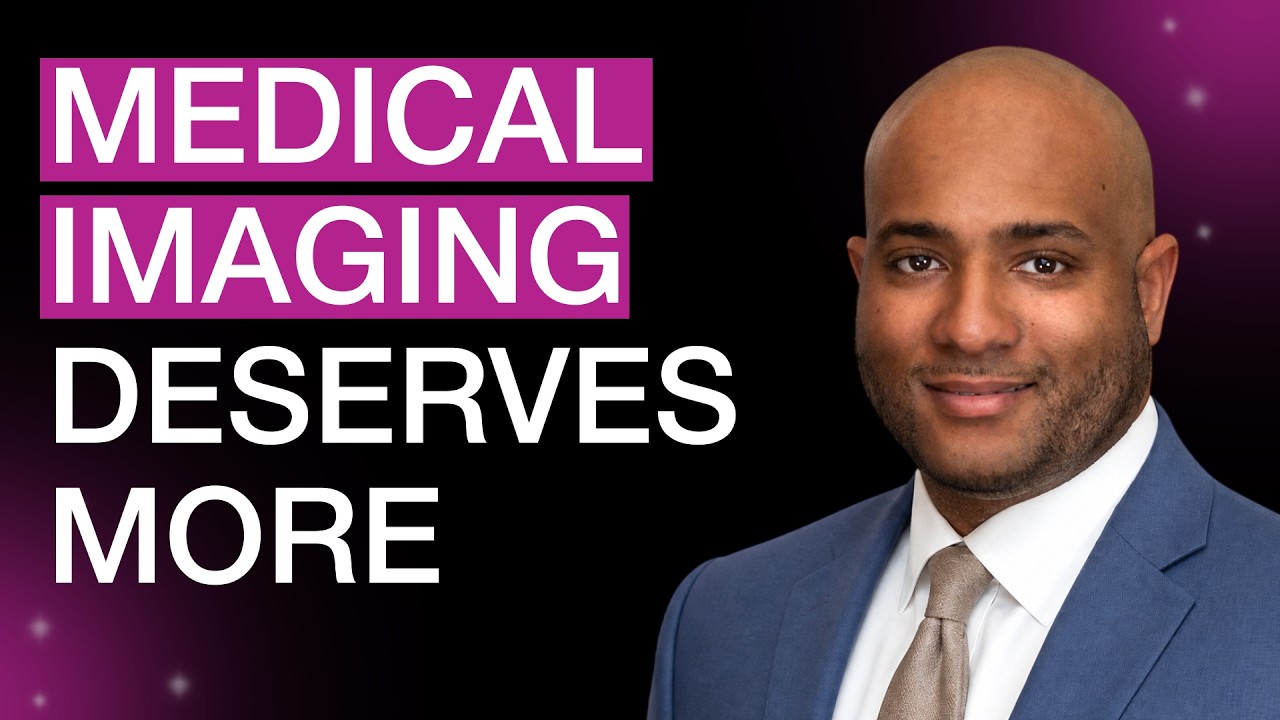
Chris St. John 00:00:22 Hello, everyone, and welcome to Episode Three of Frame by Frame: Rethink Imaging. I am your host, Chris St John, and I am here to continue to talk very high level in season one about different concepts, ideas, processes in medical imaging. We’re trying to keep our season one very high level. We’re laying a strong foundation, and as we proceed through this show, we’re going to get more and more granular. We’re going to get more and more detailed. And we’re really going to get into things a lot deeper. But for now, I’m trying to build my knowledge base and that of our listeners. Today, on Frame by Frame: Rethink Imaging, we are excited to welcome James Armbruster, a seasoned leader in the realm of medical imaging with over two decades of experience. James has been a pivotal force at Imalogix, where he currently serves as the Vice President of Customer Success. His journey at Imalogix included roles as Senior Director of Customer Success, Director of Product Management, Director of Business Intelligence, showcasing his extensive expertise in enhancing radiology workflows and advancing imaging technology. With a deep background in managing imaging professionals and overseeing complex PACS implementations, James brings invaluable insights into both the operational and technological facets of radiology and medical imaging. James’s career began with hands-on roles at SSP Partners and Raytel Medical Imaging, where he honed his skills in imaging protocols, PACS administration, and business management. His transition into medical software and his ongoing contributions to the development at Imalogix highlight his dedication to improving radiology practices through innovative solutions. Join us today as we delve into James’s extensive expertise, exploring the intersection of radiology technology and customer success, and uncovering how his work is reshaping medical imaging. Welcome, James.
James Armbruster – 00:02:17: Thank you so much.
Chris St John – 00:02:18: James, you’ve had kind of a remarkable career spanning over two decades in radiology and medical imaging. Can you share a personal story or an experience from your earlier days that kind of defined your approach to this field?
James Armbruster – 00:02:36: Yeah. You know, obviously as an x-ray technologist, you’ve got tons of stories, right? Just different scenarios that you’ve run into and different news. I started my career as an x-ray technologist, had a cup of coffee in CT, and then spent a good bulk of my career in MRI. But I think probably the thing that stands out the most with regards to where I am now and where I started would be back when I was a student, right? A student technologist at Medical College of Pennsylvania, which is in East Falls, Pennsylvania. It’s actually not there anymore. But there was a time when, you know, we were students and obviously we’re learning on the job. We’re doing our, you know, clinical portion of our learning experience, actually scanning and performing x-rays on patients. And I had to do an x-ray on John Chaney. So I’m not sure if you’re familiar with John Chaney, the former head coach for Temple basketball team. And he had a reputation for not necessarily being the nicest person. But my role in the facility and what started to come out as I learned the business a little bit more was my experience with dealing with complex patients, right? Being able to listen, adapt to a situation that was a little bit challenging. Where you get a patient who’s not that happy as a lot of us are. We’re having a test for whatever reason. We’re not healthy. We’re not feeling well. We may be frightened to a certain degree. I mean, obviously, in this particular situation, he wasn’t happy about having an X-ray. So it was my job to make sure that we got through the exam unscathed. And I was able to do that. Right. He was a gentleman. We had a great conversation. We took him from a situation where he was a little bit uncomfortable to where he was comfortable. We got the X-ray done. But really, I think that experience and being able to really focus in on patient care has stayed with me through my career. And I think it plays a large part of my current role.
Chris St John – 00:04:20: Yeah. And so what was it about this particular interaction that drove the patient care narrative?
James Armbruster – 00:04:29: I think what made me feel good is that, you know, when the time came and said, okay, we got a difficult patient, we have a VIP who is not very happy. They pulled me off the bench to a certain degree. I’m like, okay, you know, James, you got to take care of this, right? We know that you can handle it. We know that you can communicate with this person. You can empathize with this person, bring yourself to their level of understanding of where they are in their treatment path so that we can be successful in making sure that we get this VIP done successfully, right? And completely. So it was a notch in my belt, like a good feeling that I had that they went to me as a student to do that. And I think from my perspective, that really said, okay, this is one of the things that I’m good at, right? And you can take x-rays, but when you can really relate to your patients, when you can have that empathy for patients and patient care and understand the importance of it, I think that kind of lays out a specific path in a healthcare career, which I’ve been fortunate enough to benefit from.
Chris St John – 00:05:22: Yeah, absolutely. So chasing this line of questioning a bit, how do you think currently, radiology techs can better engage with patients to improve patients’ experiences and outcomes during imaging procedures.
James Armbruster – 00:05:37: It’s important. I think a lot of it boils down to communication, listening, and fortunately and unfortunately, I think it’s spending time with the patient, which is a luxury in this day and age. I’ll preface my statement by stating that it’s been a long time since I’ve scanned a patient, but I do have a reference, right? My wife is a technologist. She’s still practicing and scanning patients. And I also have the benefit of communicating with a lot of our customers in this space and understanding what their day-to-day actions are. And I think the importance is communication and spending time with your patients. And it’s difficult, right? It’s tough. I say this often when I’m communicating with our customers and our respective customers, which is technologists are constantly being asked to do more with less, right? The equipment is getting more advanced and we can scan faster and the time slots are getting shorter, right? So the amount of time that we spend with our patients gets less and less and less. So it’s really incumbent upon our technologists in this day and age to spend the time, right? Really listen, hear what they’re going through, empathize with them, and really bring yourself to their level to facilitate getting that exam done, whether it’s MRI, CT, x-ray, ultrasound doesn’t make a difference, right? To be able to see that through successfully.
Chris St John – 00:06:45: Yeah. I feel like the logical next step in following this train of thought, right, is given that time is of the essence, right? To borrow a term, as you stated, time is a luxury. Let’s get into workflows a little bit, right? If me saying workflow is all it takes to get you to go, you should go.
James Armbruster – 00:07:07: No, I mean, I think workflow is a big deal. I think workflow is where it begins and where the emphasis needs to be put. Because workflow is, the term workflow gets thrown around a lot in every industry, right? But I think in radiology specifically, it’s extremely, extremely important because it is unique, right? And workflow, I’ve mentioned this a lot, I stand behind the statement that workflow is a living, breathing thing, right? That is very unique and specific, not only to hospitals, but to departments, right? And workflow is not just, hey, these are our processes, right? These are our policies and procedures, and this is what we do on a day-to-day basis. Workflow is much more, right? Workflow is relationships that the technologists have with one another. Workflow is what my day-to-day steps are. What are my responsibilities when I walk into the radiology suite? In a lot of cases in advanced imaging, advanced imaging being CT, MRI, fluoroscopy to a certain degree, there’s more than one technologist involved with the process, right? And that’s one of the I think, things that have changed the most since I was a clinician versus today, right? When I was a clinician, you say, oh, back in my day, I’m aging myself a little bit. But back when I was practicing, you were by yourself to a certain degree in a lot of cases, not every case, but in a lot of cases, you were by yourself as a technologist. So you were responsible for getting your patient in an MRI scenario, clearing your patient from metal, making sure that they get on the table, scan them, validate that the scans are great, get them off the table, and then prepare your next patient. Whereas today, in most cases, there’s multiple individuals in the radiology suite, right? So from a workflow perspective, it’s good to know what you’re doing as a team, right? And say, okay you’re going to scan today. I’m going to run the patients. I’m going to get the line set up. And then there’s also what’s a lot more prevalent today, which is documentation, right? Making sure that you’re entering information into the RIS or the HIS system and validating that the metal implants in the patient are clear in MRI scenarios. There’s a lot more steps involved in the process, but there’s also more individuals involved in the process. So you have to make sure that everyone’s on the same page with what you’re going to do that day so that I can continue if I got a patient on the table and the other person is responsible for getting the next patient set up, get a line in that patient if they need be, that that whole workflow just runs like a well-oiled machine. Because what benefits from that, the patients will benefit from that because things are moving. Nobody’s late. Nobody’s delayed getting on the table. The organization benefits from that. We’re actually able to move our patients through the system strategically, based on what our workflow is. And the technologists benefit, right? We don’t get backed up. Everybody knows what they’re supposed to be doing that day with regards to what my responsibilities are, whether it’s scanning or running or what have you. And things work smoothly, right? But again, that has to be communicated. That has to be consistent. And it’s tough these days when, there’s obviously a shortage in technologists, right? When there’s a shortage in technologists, what happens is you engage with agency technologists or techs that are coming in that aren’t necessarily part of your organization and they know things a certain way and aren’t familiar with how things are done at your facility, right? Those types of disruptions in workflow can be expensive. Expensive in the terms of time and through, right? So that’s where workflow is really critical, making sure things are consistent.
Chris St John – 00:10:31: Yeah. Are there common workflow bottlenecks that techs are facing on a day-to-day basis? Like, not avoidable, but is there, like, a consistent bottleneck. And is there a way around? Like, do you have insider tips, knowledge, thoughts about how to get through some of these problems, right? Like, let’s say the communication has gone down a little bit and folks are running around. Like, where, if you’re stepping in to get things back on track, what are you doing?
James Armbruster – 00:10:58: I think that the specific examples are very specific to departments and types of departments, right? MRI is going to have different types of issues than CT, than ultrasound, right? The scenarios are going to be different because the workflow is different. I think the bottlenecks come when there’s lack of communication, right? When you have individuals participating in daily procedures or daily workflows that aren’t not familiar with what’s going on that day. For example, if I’m coming in and there’s typically three people working on this particular unit, and we know that each day the technologist who’s scanning at the console rotates per patient, right? I’m going to scan patient one, then I’m going to do three, five, seven, so forth. You’re going to do two, four, and six, and that’s how the process is going to go. So one person doesn’t have to sit in the chair all day. The other person isn’t running all day. You kind of rotate. Well, if that person isn’t aware of that, then the communication breaks down, right? Then the workflow breaks down. Then you can start building animosity. I’ve been sitting in the chair all day, and this person just wants to run. And while I’m scanning, they’re on their phone. They’re not getting the patients completed. So I think it’s different based on each modality. But I think in general, in a lot of cases, it boils down to familiarity with the workflow and communication, right? I think communication is always key.
Chris St John – 00:12:16: Yeah. I mean, we’ve been talking a lot on this show about staffing shortages, tech shortages. What we haven’t really gotten into yet while talking about these things is burnout, right? Because with these shortages, the folks who are working are working harder, faster, doing what they have to do. Are there any solutions that you can think of to help mitigate burnout and, or these staffing solutions?
James Armbruster – 00:12:46: It’s tough, right? Because at the end of the day, most organizations, it’s tough because I think that the reality is, is that there is a shortage, right? And the easy answer is, well, there’s since there’s a shortage of technologists, since we have agency technologists, or maybe we do, or maybe we don’t have agency technologists, and we’re just going to stop scanning, right? We’re going to reduce our patient load, reduce the amount of patients we scan in a day. And that’s obviously not a popular decision, right? No hospital wants to reduce. So, and if you do that, what happens is majority of hospitals have backlogs, right? So all you’re doing is making the issue worse, right? You’re just extending out that backlog and you’re scanning less patients. There’s different things that you can do from a protocol perspective with facilitating moving things along quicker. But again, what you don’t want to do is you don’t want to sacrifice quality for quantity, right? You never want to do that, especially in the healthcare setting. So at the end of the day, I don’t want to say it’s unavoidable, but it really becomes incumbent upon the administrators at an institution within a department to identify where those bottlenecks are, to identify those areas where we can facilitate things moving along quicker. If you’re in an inpatient scenario, are we consistently waiting for transport for patients, right? That’s causing a backup in the hallway. If we’re in an outpatient scenario, are we having problems getting starting lines on patients and therefore we’re wasting a lot of time? You know, we have scanner idle time where we’re not imaging patients, where we’re doing other things that maybe we could do in between there. And there is a shortage of technologists, but there may not necessarily be a shortage of individuals that can facilitate with those processes, right? People, nurses or medical professionals that can facilitate what workflow needs in a radiology setting. And I, even more prevalent today than I experienced 15, 20 years ago, where there are nurses and a higher prevalence of nurses and medical professionals, non-imaging professionals, in the radiology suite to facilitate what workflows. So there are ways to address those scenarios, but it’s tough, right? Because at the end of the day, you have to finish the scan on the patient.
Chris St John – 00:14:55: Yeah. Are there things that leadership can do to be supporting techs who are experiencing burnout?
James Armbruster – 00:15:02: Yeah, I think understanding, right? Checking in what your staff, something that’s huge, right? And again, it kind of rules back to what I was saying with regards to communication, making sure that you understand what your technologists are going through, listening. And a lot of cases, just listening, right? Just being there to listen, empathize, understand, and facilitate, right? Be able to help. Hey, listen, you know, this is what we’re going to do. We’re going to, why don’t you just run through lunch today? This way you can leave an hour early. We’ll get somebody in, right? Those types of things in a radiology setting go a long way, right? Just being heard. And it’s funny, right? It’s the same thing with what I did with Mr. Chaney, right? You listen, right? You just listen to what’s happening. You empathize. You say, okay, I understand what’s happening. If I was in your shoes, I would be just as frustrated, right? But here’s where we are. Really appreciate those efforts, but we’re going to get things going. We’re going to get things done and we’re going to see this through. I think those things go a long way when you’re either dealing with patients or employees, right?
Chris St John – 00:15:59: Dude, see what I mean? Easy, nothing. We’ve talked a little bit about staffing, techs, burnout, but given your extensive experience in managing imaging operations and developing software solutions, how do you foresee the role of technology evolving with the increasing integration of AI and machine learning. Like, how do you see that coming into play in terms of the day-to-day life of a tech?
James Armbruster – 00:16:26: That’s a great question. So much is changing, right? So much is changing. You know, technologists, it’s funny, you know, I just saw something recently, but I know it’s coming, whereas GE, Siemens, some of the major manufacturers are utilizing technology where, I forget what it’s called. I think it might be called cockpit or something like that. I forget. But basically what it is, is a technologist can be at home, right? At home and have a laptop in front of them. And they can be remotely scanning multiple modalities, right? Multiple devices, right? So they’re the scanner. And my scenario, when we were talking a little bit earlier about workflow he’s like, okay, you get the patients together and then I’ll sit at the console and I’ll scan. Well, that’s what these individuals are doing, right? They’re sitting at home with the console and they’re scanning. And then they’re not physically with the patient, right? AI scenarios where there’s a lot of AI algorithms that are having predictive analysis and understanding, okay, based on the patient that walks in the room, these are the parameter settings. This is the protocol that we’re going to run. And it really is taking a lot of the technology out of the technologist’s hands, right? Things are being done for them to a certain degree. I think it is problematic from a patient care perspective is my initial gut reaction. Technology and advancements in technology are phenomenal, right? Anything that allows us to do things better, I’m all for it, right? With our organization, we’re constantly finding ways to make imaging better, utilizing AI, utilizing tech, I think that’s fantastic. But what you can’t lose in healthcare is the patient care aspect of things, the interpersonal reactions that you have with that patient. In that scenario where you have a technologist at home, perhaps scanning on multiple modalities. What happens when there’s a situation, right? What happens when there’s a contrast extravasation? What happens when there’s an event that’s going on with that patient and you have maybe two or three other modalities that you’re trying to run? You’re distracted, right? You’re not giving 100% of your attention to that patient, to that condition. The person who’s on site certainly is, right? Absolutely. Their role would be, which is to make sure that that patient is taken care of. So I’m not saying that the patient is going, to be neglected in these scenarios in any way. However, the person who’s behind the screen, the person who is managing that protocol is not devoting a hundred percent of their attention to what’s happening. It’s impossible. There’s a lot of people in this world that can multitask. I’m not one of them, but to that degree, I’m sure that there are individuals that can do a very good job at scanning three patients at one time. I’ve done that in my past, you know what I mean? In my past life, you know, we had a control room where I had one scanner in front of me, one scanner behind me. I got chair on wheels, right? And I’m managing two patients. And you do that because that’s what you have to do, but I don’t recommend it, right? That’s not ideal practice. That’s not what you’re supposed to be doing, especially in an MRI suite, especially CT imaging or any modality for that matter, fluoroscopy that patient needs and deserves a hundred percent of your attention to make sure that you’re identifying small things, right? Small artifact from breathing, small artifact from implants that we should communicate to our radiologist or pathology that we’re visualizing and saying, hey, you know, maybe we should do some additional scans. I think if advancements in technology mean spending less time with patients, that could be problematic, right? That’s my gut reaction on some of these things. And there’s certainly advancements in technology that do not incorporate spending less time with patients. And I realized, you know, what I’m saying is a little bit drastic, but when I’m looking at things, that’s where I see a detriment to some of these different advancements, right? Spending less time with the patient, trying to do things faster. That’s always going to be problematic, I think, in healthcare.
Chris St John – 00:20:12: Yeah, for sure. I mean, and from my largely uneducated perspective, the advancements in medical technology should be used as a tool to increase the amount of time spent with patients, right? Like trying to decrease busy work and trying to decrease the amount of time that you’re sitting in front of a screen, inputting random information or whatever it is that you’re doing, like we’re trying, the goal should be to create more time, which, as you said, is an extreme luxury, especially in these situations, right? That’s where the emphasis on technology should go rather than dehumanizing the process.
James Armbruster – 00:20:53: Absolutely. Obviously that’s not an intended artifact. But it’s a real artifact, right? And it’s a real artifact that organizations are going to have to get their arms around and adjust, right? And again, what it is, again, going back to what we talked about earlier, it’s an adjustment in the workflow, right? How can we simplify these processes? How can we make sure that we automate or expedite the documentation and paperwork flow of our system so that we can spend optimal time with the patient and make sure that patient is getting the experience that they need in order to get the diagnostic outcome that they deserve?
Chris St John – 00:21:31: Absolutely.
James Armbruster – 00:21:31: That’s dropping some bars on me right there.
Chris St John – 00:21:37: I love it.
James Armbruster – 00:21:37: You can choose to edit that out or not. It’s up to you.
Chris St John – 00:21:40: You guys, we can leave that in. And we can leave in this conversation about deciding whether or not to leave it in because that’s authenticity right there, you know? And to keep digging in, right? So we’re talking about how these various technologies can affect our workflows, our staffing, the human element in patient care. But.l to get a little higher level with it, to back up a bit, given your background in overseeing enterprise-wide PACS implementations, what do you think the key factors are for successfully integrating new imaging technologies into existing systems?
James Armbruster – 00:22:14: Right, effort and time. The PACS implementations that I was part of quite some time ago, but nevertheless, you know, I think the same work and effort that is involved persists today. It’s similar. Making sure that there’s ample communication with the stakeholders, right? Identifying who those stakeholders are, identifying what adjustments and workflow need to take place, whether it’s documentation, whether it’s ordering, and making sure that everyone along that workflow path is in sync with what those changes are going to be, right? You know, it’s, you know, imaging is no longer patient shows up with the script. We read the script manually. We put them on the table. We scan them, and then that’s it. That’s not how it works anymore, right? There’s scheduling, right? And then there’s all different types of considerations to be made with regards to where you schedule that patient, right? Because if you think about it, depending upon what type of technologists you have scheduled, hey, we’re going to do contrast injections during these times. You know, on Tuesdays, that’s the day that we do these types of exams. All of our biopsies are done on Thursday mornings, right? So it’s very specific about where those patients get scheduled depending upon what their conditions are and mistakes happen, right? Because nobody’s perfect. Especially patients who are either worried, scared, or confused about the procedure that they have, they don’t necessarily give you all of the information when they’re calling you to schedule the appointment, right? A lot of times you get surprised, right? So what we’ve scheduled as a routine procedure at noon today may end up being a procedure that can’t be done at that particular point in time because of staffing concerns or just process, right? So really understanding when you are bringing in a new, a PACS system or updating your EMR or your RIS. It’s really understanding all of the different components of that workflow and making sure everything is in sync, right? Making sure, okay, these are the scheduling procedures. We need to make sure that the scheduling system is aware of what our staffing situation is so that we’re putting the appropriate patients in the appropriate time slots. Then when it comes to the technologists, right? With the technologists’ responsibilities, pre-exam, are we going to be validating that that patient is safe to have that procedure the night before? Who’s responsible? Is that the technologist? Is that a QA person? Is that a scheduling person? Then at the day of the procedure, is there a process of protocoling, right? Protocoling in a lot of cases is this patient is on our schedule. They have certain types of indications and we want to make sure from the radiologist’s perspective that the protocol, the scans that we’re going to be performing on that patient are appropriate given the indication. Who’s responsible for that? How do they communicate with the radiologist? Is there an automation in our system that facilitates that, right? Or is it a manual process? And then post-exam, right? Making sure that what type of documentation needs to be scanned in the system? You know, do we have to go into a computer and update the RIS or the HIS system with the status of the patient? Yes, it’s completed. Here’s the information. This is the accession number. Here’s the documents. And then make sure the radiologist has everything they need to be able to expedite the read, right? So I think, you know, the goal is to make sure within that path, that workflow, that everyone is aware of what those steps are, communicating appropriately so that when that change comes, you do not disrupt your workflow.
Chris St John – 00:25:39: It sounds like a logistical nightmare.
James Armbruster – 00:25:43: It’s a lot, right? It’s a lot of stuff. Again, it’s not as easy as it used to be, right? It used to be just, I got a script, I’m going to get on the table, I’m going to get scanned, and then I’m done, right? There’s a lot more involved. There’s a lot more safety involved, right? As our equipment has advanced, right? Safety concerns have become a big deal, right? With radiation dose management for CT and fluoroscopy, metal artifact and implant management for MRI, right? Those things are important, right? And unfortunately, there’s been catastrophic events that push that importance to the forefront. So it’s incumbent upon the technologist to be a technologist and be aware of those things and make sure that the patient’s safe.
Chris St John – 00:26:20: Very cool. So, James, we might have danced around this already. And we might have just been dancing around this question the entire time. But in your experience, what are the most effective strategies for training and retaining techs in this industry, right? Given the staff shortage, given the lack of time available, are there things that you can think of for either training or helping with employee retention?
James Armbruster – 00:26:48: Yeah, I think it’s funny. My wife just had literally last night, she had a town hall meeting with her staff. Not her staff. She’s not a manager. She’s a technologist. But the managers had a call last night and they just talked about something almost like a staff meeting. They call it town hall, which I kind of like because it gives you an opportunity to communicate. But it’s interesting. A lot of the issues that the administrator was addressing were issues that I had to address, right? When I was an administrator, when I was running a department, right? They’re fairly consistent, right? The more things change, the more things stay the same. So to that degree, I think maintaining and retaining staff is probably the same that it’s been since when I was responsible for managing a department, which is communication, listening, making sure that your technologists are happy, understanding when they’re not happy and understanding what those issues are and whether or not those issues or scenarios can be remediated by you or human resources or at a higher level administration. And just maintaining that level of communication. I think the worst thing that you can do to a technologist is tell them that you hear them and not do anything about it, right? Tell them that you’re listening and not follow through. Even if the answer is no, right? Even if the answer is, hey, listen, I hear what you said. I understand. I’ve heard you. But unfortunately, when I brought this to HR, when I brought this to administration, these are the reasons why it got shutdown, right? And just so you know, I completely understand. But here’s what the business is thinking, right? As long as you have that level of communication and maintain that level of communication. I think for the most part, you’re going to have a happy staff. There’s always going to be outliers, right? This is the nature of the beast. No matter where you’re at, you’re always going to have, you know.
Chris St John – 00:28:26: Well, no matter what field you’re in, right?
James Armbruster – 00:28:29: It’s not unique to radiology, right? It’s software development, right? We run into the similar types of issues. Like sometimes it’s difficult to make everyone happy. But I think as long as you communicate and effectively you listen, I think for the most part, really, that’s the best you can do.
Chris St John – 00:28:46: No, I was just listening to you talk about this. Given my past management experience, it is so funny how no matter what it is, it is exactly the same no matter what forever, right? It comes down to managing people, right? People are going to be people. And what people want when they’re having trouble at work is to be heard, to be understood, and to be considered, right? So it’s not enough just to listen and then just move on with your life, right? You need to put in the time and the energy to think about what the person is saying, and wonder if it has value or merit, right? Because, you know, once again, restaurant analogies. When a server or a line cook or a bartender comes up to me and tells me, hey, this is a recurring problem that I’m having. And here’s a way that I could solve it in a way that works for me, right? It’s my duty as a manager to value that voice, value that opinion, consider it, and then give honest feedback based on what I think. Whether or not that feedback is, yeah, you know what? I’ve never thought of that. Let’s try that on. Or more likely than not, I’ve been doing this for a long ass time. I tried that five years ago. It didn’t work. Here’s why, right?
James Armbruster – 00:30:00: I agree. And it’s funny because you’re right. It doesn’t matter to the industry. It’s certainly, at the end of the day, it boils down to just being a human, right? Being able to communicate effectively as a human being. The other thing that I thought of while you’re talking is also reminding, I think every once in a while, people need a reminder of what they’re doing. It’s a special kind of individual who goes to work every day as either a frontline care provider, a first responder, or a healthcare provider in general and understands and appreciates every day. I’m going in to affect human beings’ lives. And it’s not just healthcare. It’s every industry that you do that. But I do think in certain times a reminder from administration. And a reminder can be, hey, I just want to remind you that you’re dealing with human lives. That’s not great. Hey, I just want to remind you that what we’re doing here matters. There’s effective ways to communicate that. What we’re doing here matters. I know personally, I try to have that conversation with our staff here at Imalogix. I try to make sure we remind everybody what we’re doing matters. We’re not just affecting things that we see on the screen. Because in a lot of cases, people at our organization, that’s what they see. They don’t get to communicate with the individuals that my team gets to communicate with. They don’t get to see, all we see are rows on the table. Whereas every one of those rows is a page, right? It’s a human being.
Chris St John – 00:31:23: It’s a person. It’s a life with a history and a family and friends.
James Armbruster – 00:31:26: When you bring it to that level and you say, these are human beings that we’re affecting for the better. These are human beings that every day we have to go in and they’re dealing with stuff just like we’re dealing with stuff, right? When you can take a minute and compartmentalize that, I think it becomes more gratifying, right? And I think you get better outcomes, right? I think you really start to realize, okay, I know you’re five minutes late, right? But I also know that you’re struggling with a diagnosis. You’re scared. You know, it took you time to get things together in the morning because things weren’t going the way you had hoped them to go because you’re worried about what the results of this test are. So I’m going to spend some time and make sure that you’re comfortable, right? Not just say, sorry, 10 minutes late, there’s nothing we can do for you, right? It’s that level of interaction.
Chris St John – 00:32:11: It makes such a difference to administrative processes that we have kind of set up culturally can very often become very dehumanizing very quickly, right? I think about a joke in 30 Rock, the Tina Fey show, where she gets onto an airplane and she wants something or she needs something and says something to someone about it. And the response from a fellow passenger on the plane is, oh no, like we’re just airplane folk now. Like, you know, like they’re equivalent to serfdom now that they are flying on a plane, right? They’ve lost all agency. They’re not a person anymore. I think people feel like that a lot in healthcare too, right? They don’t feel like that they’re treated like a person because it is so embroiled in layers of administration and policy and rules and documentation and all of this. And so to have someone take a humanizing moment, it’s priceless, right?
James Armbruster – 00:33:06: I’m going to try to draw this into kind of what my current role is, right? I really take that viewpoint and I take that, whatever you want to call it, my thought processes, I take that to my current role, right? I’m not treating patients anymore, but I’m servicing a costumer. I am and my team and our organization is servicing a customer and a customer who is taking care of patients, right? That is dealing with human lives on a day-to-day basis. So when our solution, whatever it is, whatever role it’s playing in the healthcare organization, when there’s questions, right? It’s imperative that we respond to those questions. It’s imperative that we deal with those issues immediately, right? That we don’t just take for granted the fact that, yeah, they’re our customer and they have issues and there’s lots of issues out there and we’ll get to it, right? The worst thing is dealing with cues, right? Oh, here’s a cue. And you know, I’ll get to you when I get to you. No, it’s not how things should be, right? When there’s questions and issues and those things are important because they’re extremely important to that person. So being a good representative of an organization, being a good provider of healthcare means that you appreciate the importance of whatever it is of that other individual, right? And you prioritize it as such.
Chris St John – 00:34:24: Yeah. And so, you know, we’re talking about patient care. I love this thought about reminders about what it is we’re actually doing, right? Like breaking the hypnotism of a nine to five, right? The repetition of it, the way that just like when you’re working in restaurants, customers become less and less human. I can only imagine in healthcare at some point, patients become less and less human, right? I think in order to survive mentally as a person in healthcare, I’m sure there has to be some level of dehumanization at some point just to be able to manage it all. But you, having had decades of experience, and not to age you, James, but given all of this experience that you’ve had, what is a reminder, what is a key piece of advice that you would give to this new generation of techs and imaging professionals who really want to make an impact?
James Armbruster – 00:35:17: I think the reminder is to continuously remind yourself that you’re making a difference, right? You are impacting human lives. I feel like in a lot of cases, a lot of my responses are kind of similar, but it really does boil down to just that. There’s new tech, there’s obviously a technology shortage. When there’s a shortage, it’s supply and demand. When there’s a shortage, individuals come in and they’re making a good living these days, given the situation that we’re in. And when that happens, it’s easy to say, well, this is fantastic. This is great. I’m doing so much better than I thought I was, or so much better than I was doing. And it’s easy to forget what the purpose is, right? And the purpose is to, sure. Pay your bills and take care of your family. But the process is making sure that you’re taking care of the patients. Because at the end of the day, that’s what you’re there for, right? That’s what the goal is. The goal is to be there for your patients to ensure that they have quality outcomes and then that patient feels like they’re being taken care of. I think the reminder is the best thing. It’s human beings that we’re taking care of that are allowing us to be as successful as we are.
Chris St John – 00:36:23: This is going great, dude. I mean, you’re going to say just because different questions have similar answers to the problems doesn’t mean it’s necessarily the same question and answer, right? I’m seeing questions and answers as units, not as individuals, right? So, yeah, if communication is the answer to ten different questions, I mean, that’s what it is, right? Like, we can’t argue with that fact. I mean, honestly, James, we’ve been talking about how potentially administrators can be supportive of techs and supportive of getting these workflows moving along. But there’s another piece, right? We haven’t really gotten into the fact that there’s outside vendors involved in this process. So how should vendors be supporting radiology departments? What can the vendor do to better support these processes that matter, that the vendor may be on the outside of, but are required for?
James Armbruster – 00:37:23: That’s a great question, Chris. And it kind of just lands with where I am currently in my career. Vendors play a huge role in the success of the radiology department in this day and age. And it doesn’t matter if you are providing support for the product, whether it’s the scanner, the RIS system, the PACS, or even other types of software that facilitates workflow. Vendors have to be responsive. And I think that that is one of the things that I notice in the industry with just dealing with the customers that we deal with and some of the third-party vendors that kind of partner with us, but we have the same customers, right? And the unresponsiveness that we see in the industry and the fact that some of our customers with other vendors just don’t feel like they’re being heard or don’t feel like they’re being prioritized, that couldn’t be more different than what I feel as being responsible for our customer success department in our current organization, right? The reality is, is I take the same onus and emphasis that I put on patient care to customer support, right? It’s no different from my perspective. We’re dealing with patients from a customer care perspective. We’re dealing with individuals that are dealing with patients from a customer support perspective. Their needs, wants, and response times as important, right? And I think that that’s huge when you’re dealing as a software company, as a vendor who’s responsible for equipment or PACS systems. It doesn’t make a difference what it is. You have to be responsive. You have to listen, and you have to prioritize that customer’s needs over everything else, right? That’s the only way you can be successful and really meet the customer’s needs. And that’s the onus and emphasis that we demand in our organization. And as long as I’m here, we’ll never go away from it. That’s just the way it is.
Chris St John – 00:39:11: Yeah, that’s beautiful. Well, everyone, I think that is all the time we have for today. This has been James Armbruster, VP of Customer Success at Imalogix. James, thank you so much for joining us today and talking, and I can’t wait to connect again with you soon.
James Armbruster – 00:39:26: Thanks, Chris. It’s been a pleasure, man. Appreciate it.
Chris St John – 00:39:28: Thank you. You have a good one.
Outro – 00:39:31: Frame by Frame: Rethink Imaging is brought to you by Imalogix. Here, you’ll find engaging interviews with thought leaders, experts, and patients, sharing stories that showcase the transformative power of medical imaging. To discover how Imalogix is rethinking imaging in healthcare, visit imalogix.com. Be sure to subscribe to Frame by Frame: Rethink Imaging on Apple Podcasts, Spotify, or wherever you listen. And from all of us here at Imalogix, thanks for tuning in.