Geoffrey Roche Official Transcript
[00:00:00] Chris St John: In The US every year, more than 20,000 students sit on a waiting list to get into these programs. Well, imagine if you can put them into the workforce and then actually have the employer invest in them to get that associate’s degree to become that technologist, and you’ve already had an employee for several years. We know when retention is gonna improve.
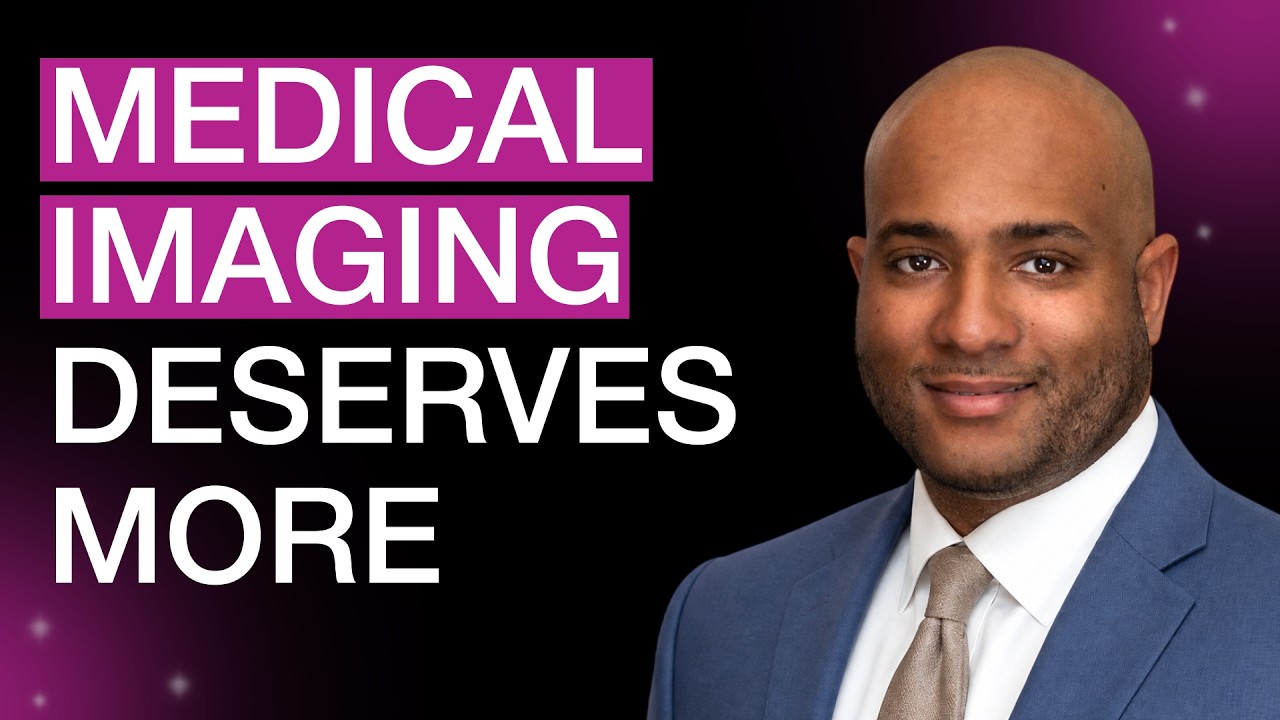
[00:00:19] Geoffrey Roche: We’re here because we’re curious about medical imaging or have a hunger to learn more. What can we learn from each other, and how should we prepare to tackle the challenges ahead? I’m Chris St. John, and join me today as we Rethink Imaging, a podcast by Imologix. Welcome to the show. Hello, and welcome back to Rethink Imaging for those listeners who know us as frame by frame. Just a reminder, we have dropped the Frame by Frame, and we are now more easily found everywhere if you just search Rethink Imaging. Today’s guest is Jeffrey Roche, a health care leader who spent his career building bridges between hospitals, universities, and the workforce. He’s worked everywhere from hospital systems to global health tech firms like Siemens and now serves as SVP of health care at RizePoint where he helps develop career pathways in nursing and beyond. Jeffrey is all about rethinking how we train, how we support, and how we grow the health care workforce, and we’re super excited to dive in. Jeffrey, welcome to
[00:01:17] Chris St John: the show. Thanks for having me, Chris.
[00:01:19] Geoffrey Roche: Beautiful. Well, let’s just dive in. When we spoke a little bit before, you were telling me about how your mother was a nurse, and you originally had an interest in politics in your younger years. And I’m kinda curious how those early influences steered you into health care leadership.
[00:01:36] Chris St John: And I’ll say I I had vivid memory, and, actually, I have pictures and a video of when my mother earned her community college associate degree in nursing. I was actually five, and I can just vividly remember my grandmother who was with my Ooma sitting there with her with just the pure joy particularly that she has, the mother, but also an immigrant mother. I mean, her mother was born in Germany, came to America when she was five. And so, you know, sort of the irony is that she earned her degree when I was five and went on, obviously, to have a phenomenal nursing career. But, certainly, as my life continued with her as my mother, she regularly talked about the work she did as a nurse. My brother and I, at times, would actually go into the hospital. We spent a lot of time bringing your child to work days and different things. And, obviously, then when I got into college, I never thought of health care, to be honest with you. But when I was a junior, I had actually done a internship in Washington, DC on the Hill and was actually doing a lot of research associated with health care policy. Because at the time that I was a junior, it was early on when the Affordable Care Act was being actually figured out and discovered and actually written. And so there’s just a lot of really cool experiences associated with that. And when I came back from that experience, my academic adviser said, well, when you enter your senior year, you’re gonna have some free time on your schedule because you’ve done everything right and been ahead of the schedule. He’s like, I don’t think it would behoove you to do anything else politically. He’s like, why don’t we just go and see if we can get an academic internship at the local hospital and see if we could get in their public affairs side so you can kinda get, you know, a little bit of your fix, but also get the experience on that end. And so I did that, and, ultimately, that led me to, a month later, land my first job in hospital administration where I was leading a lot of that work at my local regional health care system, which, ironically, was the hospital that I grew up in that my mom actually worked at. She was not working there anymore, but many people remember her. And so that’s what started it and certainly the influence.
[00:03:38] Geoffrey Roche: Was that the Lehigh Valley Hospital or a different one?
[00:03:40] Chris St John: It’s now part of Lehigh Valley, which is actually now part of Jefferson, ironically. When I was there, majority of my time, it was called Pokena Health System. And then in 2017, we were acquired by Lehigh Valley. And so then we became part of Lehigh Valley, and then last year, Jefferson acquired Lehigh Valley, and now they’re part of Jefferson.
[00:03:58] Geoffrey Roche: I know. I feel like I constantly need, like, a live you know, I know websites exist that are tracking this, but just, like, the constant update and transition and acquisition and sale of it, like, it makes it hard to, like, even define, like, what is a community hospital? What is an academic hospital? Right? Like, it starts to really blur those lines. And so when you were at the Pocono Hospital, Lehigh Valley, Pocono, I believe you were doing work advising the CEO and leading various departments. I mean, what were some of the key lessons in your first decade that kinda started to shape your thinking as we move into later in your career?
[00:04:34] Chris St John: You know, there are a lot of different lessons. I mean, some that come to mind is health care is certainly a space where you have to be really good at problem solving. You certainly have to be agile. You have to be one that likes to adapt because it’s just the nature of the business, but you have to be willing to take on new things. And I can remember one of the lessons that has stuck with me so much is you have to be willing to try new things and take on new projects, take on new initiatives. It’s actually what allows you to grow. And I was fortunate in my time there to have phenomenal mentors. Our president and CEO was a phenomenal leader, literally took me under her wing and taught me so much. My former senior vice president, same thing. The opportunities that they provided and afforded for me truly made a difference. And, really, what they did was career navigate. They helped me to navigate, ultimately, you know, an experience and different experiences that grew me as not just a person, but also as a leader. And that’s an experience that I take with me because when we think about, frankly, every industry, leaders have a responsibility and should be held accountable on whether they’re developing their team, whether they’re actually taking interest to help them grow, whether they’re taking interest to help them thrive. And, you know, I was fortunate to have that. I would also say, you know, I had an amazing colleague there that I was fortunate to work with for many years and actually also become her leader. And when I promoted her, she was a professional that never had a college degree. But I knew she was the right person for the job at that time, and I also knew she had the right passion, energy, and fortitude to not just do the job, but excel at it. But when I attempted to do it, our human resources was very strong on the idea that you have to have a college degree to be a manager, and that was not a space that I felt comfortable with. Yes. I’m certainly was a college graduate. My mother obviously was an associate’s degree graduate, But I have always believed strongly in work experience, skills, and certainly passion. And that was actually something that I learned from a lot of other leaders while I was there. And make a long story short, I took on that human resources team, and I did a lot of my own homework. And just so happens, I was out with another executive at one time who was a little bit on our senior leadership team, and he was sharing me how he was doing his bachelor’s program at the time. And I said to myself, wait. Wait. You’re doing your bachelor’s? You don’t have it now? And he’s like, no. I’m doing my bachelor’s in theology. I said, oh, okay. Do you have a college degree? He’s like, no. I don’t have a college degree. He’s like, I didn’t need a college degree. In this space, you grew and you had different experiences. And so to make a long story short, I used that, obviously, to prove to the human resources team that how could you hold up this ultimate promotion of an amazing professional who had evaluations that were always solid, but yet allowed an executive to reach that level, and, ultimately, that promotion happened. And that obviously has always stuck with me because more meaningful than anything in that experience was this was a professional who was a single mother, like my mom, was somebody who had the ultimate role as a parent, but also that critical role of supporting and providing for the family, and how and should an employer stand in the way of allowing that person to grow and be able to better support that family. And the best part of that story is when her daughter, many years later this is after we worked together, many years later got married. Her daughter asked for me to officiate her wedding, and I can just remember the experience. I remember her as a young girl because she would come with her mom at times and do our department meetings and such because her mom was a single mom. And I was always wanted to just bring them. That’s just what you do. I remember that was my experience as a young kid. And so there’s a lot of those types of things that really stick with me and certainly have never left me as a leader. Yeah.
[00:08:22] Geoffrey Roche: I mean, to some degree too I mean, a college degree to be a manager, I mean, that doesn’t land perfectly with me. I know many a manager in the life that I have led with college degrees who, let me tell you, that degree did not help them manage people one bit. So what inspired the shift, and how did it change your approach to solving health care workforce issues?
[00:08:45] Chris St John: Yeah. I was certainly inspired by the shift for a couple reasons. One of which was, to your point earlier, my hospital was acquired by a larger system, and what I loved so much about my health care system was gone overnight. And the culture, the leaders, just so much. And when I was doing a lot of the work I was doing at Pokeno, I was very involved in workforce development. I was very involved in partnerships with higher education. I was very involved in our workforce pathways, and I was strategically engaged in a lot of those types of conversations. And I was eager to understand whether me coming from that experience could help higher ed to sort of think anew and to be a better partner to the employer. And that really inspired me to go on to serve two different academic institutions where I had phenomenal, I suppose, success with an amazing team in driving the beginning and the investment in millions of dollars that supported the growth of new academic programs all in health care, many new buildings, many new programs, many new partners, did it at two different institutions, build a phenomenal nursing pathway with UPMC that had impact for seven different hospitals. I did a lot of work with community colleges and and such, and then obviously further inspired me to then through those experiences to go more national where I then had the opportunity to work on both the national and global stage doing a lot of the same work, but doing it more in the certificate and certification space.
[00:10:18] Geoffrey Roche: Is that continuation where you went more global? Is that when you were at Siemens?
[00:10:22] Chris St John: No. Actually, that started actually when I was at Dignity Health Global Education, which is, you know, an edtech startup that actually was actively supported and funded by CommonSpirit Health, now Providence, and then also Premier. And, you know, it was all the idea of actually health care creating its own solution to sort health care. And so I led great project there, which was all focused on how do we drive some of the best certificate programs in health care leadership, nurse leadership, social determinants of health, all those different types of programs, and we took that globally and nationally. And with the support of CommonSpirit, it was a several million dollar grant that also funded the educational opportunities for students throughout the globe. And I was fortunate to be the leader of that project, which was just an amazing project. And I met students from Malaysia and Singapore and Dubai and India and just, obviously, many students here in The US as well, but just a very humbling experience to see the life changing moments that those experiences led to. Many of those students went on to get their, you know, undergrad, masters, etcetera, here in The US and are serving in hospitals, you know, as we speak.
[00:11:34] Geoffrey Roche: Okay. Then let’s shift a little bit more into imaging. Right? Because it’s my understanding that you specifically worked on radiology workforce challenges, and you propose some solutions in your time, like medical imaging assistance. What is your take on you know, we all know imaging is short staffed, but I wanna hear your piece of it, and I wanna hear a little bit more on these imaging assistants.
[00:11:56] Chris St John: Yeah. So I was fortunate, actually, prior to coming to Riese Pointe to serve as the inaugural North America director of workforce development at Siemens Health and EARS, which was an incredible experience and certainly a very humbling one as well. Because, obviously, I had never worked in the imaging space, but I worked around it. Right? I mean, in my hospital, worked a lot with imaging team to actually grow outpatient imaging, you know, departments and access points for our patients. And through the work I was doing, I was asked by a leader at Siemens to consider coming over and and doing this work. And we, at the time at Siemens, had built a vision around the idea that, ultimately, if we’re not investing in, uh, building a future ready sustainable health care workforce to continue to enable exceptional care, were really challenged. And it’s not just for us, but it’s also for the patients. And a lot of that really led us into doing a lot of work that I was privileged to lead, which was really engaging within the imaging community, certainly with the American Society of Radiologic Technology, ASRT, were and others, including the JCERT, the higher ed creditor, and others in the space to really look at what’s the future of the imaging profession. And several of our Siemens colleagues and myself were actively involved in many, many meetings, many, many briefings and sessions with other leaders from GE and Philips and other imaging providers to really talk through what is the future. And in a lot of those cases, in addition to conversations with technologists around the country and leaders of technologists around the country, what was clear is, first of all, it’s a hidden profession in many cases. Absolutely. Yet it’s like lab, one of the most essential elements of the care delivery system. You can’t diagnose a disease. You can’t diagnose a problem without imaging in many, many cases. And yet, even during COVID, when in health care we clearly articulated the roles in health care that were central, imaging technologists were actually not included in that list. And so, ultimately, that led to a beautiful project that ASRT did around highlighting the role of an imaging technologist, and, obviously, we actively were engaged and supportive of that. But we went deeper. And as part of that, we also started to really hone in on the fact that when you envision it, we’ve got a challenge because, ultimately, the opportunity to become a technologist is at the associate degree level, and yet thousands upon thousands every year students sit on waiting lists at these colleges to get in because there’s only a certain number of seats because of the faculty to student ratio. And it’s a space that predominantly is still very much about you’ve gotta do the associate’s degree and not a space like others, like nursing, like respiratory, like other elements of health care where you could even do an apprenticeship degree, or you could have more workforce pathways to actually get people interested in wanting to be a technologist. And so at Siemens, we started to do a lot of work around attract to the profession. And as part of that work with several other partners, higher ed institutions, ASRT, we started to really hone in on we’ve got had other roles that an individual could do prior to getting that associate’s degree. Because when you sit on this waiting list, it’s possible that you give up at some point and go work at Costco or go work at Sheetz and never come back to health care. So why not have a role that you could do? And so through a lot of work with incredible professionals, the idea of the imaging medical aid was created or imaging medical assistant, which is really not that different from what a medical assistant is. However, the idea is is that they would actually work in imaging, be dedicated in the imaging department, providing all the support to the patients. They certainly cannot do the scan because they are not a licensed imaging technologist that has that associate’s degree and has passed the boards, or they can room the patients. They can book appointments with the patients. They can triage the patients. They can take blood pressure. They can do blood draws, a whole host of different elements that one can do. And, obviously, ASRT created a curriculum that went through a review process. We actively contributed to that and, you know, also started to talk to many health care systems around how you build youth apprenticeships and apprenticeships with this idea in mind. And roughly in The US every year, more than 20,000 students sit on a waiting list to get into these programs. Well, imagine if you can put them into the workforce and then actually have the employer invest in them to get that associate’s degree to become that technologist, and you have already had them employed at you for several years. We know when retention is gonna improve, and I highlight that because retention is a massive concern among technologists today. It’s a tough job. They’re on their feet a long time. That’s not the endiest job to do if you’re a parent because, obviously, depending on shifts and schedules and things. And so what really also was really eye opening to try to envision, how do you bring a different group into this? And, certainly, there’s a lot of work around as well around remote scanning. And, again, the idea of remote scanning is not to replace the technologist, but it’s to augment the fact that in many places in this country, there are spaces where it’s really hard to recruit a technologist. And a remote scanning solution can be a great way to still allow a technologist to work, but do it remotely with one technologist still in the room with the patient, but have that higher level technologist being able to do the scan from a different location. And so that’s where the idea of the MRI imaging medical aid or assistant came in as well, getting them interested in wanting to do remote scanning from that space and grow into that specific modality.
[00:17:50] Geoffrey Roche: And so I’ve got a few different things I wanna touch on here. But, one, I have never heard that statistic about the number of potential techs kind of just waiting in the wings to get their degree?
[00:18:03] Chris St John: Well, it’s not just getting degree. It’s actually waiting when Stephen begin the program because what happens is and every year, ASRT, as the professional society, puts out this report. And last year, if I remember correctly, it was almost right around 26,000. And that would have been all of the imaging roles, so not just radiologic, but, obviously, MRI, sonography, etcetera. But the irony here is that’s about a third on what nursing is. Nursing is over 80,000 every year that sit on the waiting list. And so what it proves
[00:18:39] Geoffrey Roche: is you’ve gotta have
[00:18:40] Chris St John: entrance points earlier in the health care system that allow a younger individual to have the direct work experience that actually allows them to see if they really wanna do that before they go through the investment of that program. And, frankly, if they’re already working for you, the employer can invest in them to obtain that degree.
[00:18:59] Geoffrey Roche: Right. So are they able to continue to work in those tech assistant roles once they’ve enrolled in a program?
[00:19:06] Chris St John: Yeah. I mean, you definitely have opportunities to envision doing that in a per diem type of status because, certainly, unless and there’s where the unless comes, which is a whole different matter. But predominantly in The United States, most of the imaging programs at the collegiate level, at community colleges, and at the four year level are accredited by JR CERT. And I’ll say in all my years of working with accreditors, with all due respect, JCERT is definitely an accreditor that is sort of certainly accrediting, I know, based on quality, high standards for sure. Well, definitely an accreditor that has not necessarily evolved to where we are today. And so they are, today, a higher ed accreditor from a programmatic end that will not allow an apprenticeship degree type of solution. I am a firm believer that imaging is a space where a student should be able to learn and earn on the job. This is happening in nursing. This is happening in respiratory therapy. This is happening in surgical technology because those accreditors at the same higher ed community college level have allowed it. But imaging is a space where it’s not been allowed. And I was in all the meetings, very tense conversations at times, passionate conversations, and we were told no. And when I hear no, what I’m hearing no to, it was those 20 some thousand individuals every year, many of whom may not ever get into those programs because they may choose at some point to just go find a job. And I’m also hearing no to access to care for patients who are waiting to have scans done because there’s not enough technologists at the bedside to do those scans. I think that’s one of those moments for me where I look at it as health care today, it’s 2026, is very different than the nineties, very different than the eighties. And we can’t accredit programs in the way that we did then and and still expect it to be the same way today. This is a very different time. And from my vantage point, when you have employers, hospitals, and health care systems that are saying, I would love to do an apprenticeship degree type of pathway that also involves these new roles that we were talking about and then allow them to grow and learn and earn on the job, to me, it’s an absolute no brainer. And the last final just make is we also know that even at the community college level, many students will have to take breaks during their college experience because many of them could be single moms like my mother was, or many of them may have other responsibilities. They may have to be a caregiver to a parent. If you could have a job that’s actually in the space that you’re working in and learning, it could make it a different type of situation because you may not have to work a side job while you’re still doing all your education. Yes. You’re working, but you’re working in the space that you’re you’re in. And so real challenging situations, but, certainly, a lot of work was done in that space.
[00:22:05] Geoffrey Roche: Yeah. And so last question following up about the imaging assistance just because I am in love with this idea. Were y’all able to get that up and running at different facilities, at different enterprises, and what did that process look like? And finally, the last little button on that, if folks were interested in creating similar programs at their own institutions, what would be, like, the actionable steps to start that process?
[00:22:27] Chris St John: So when I left Siemens, obviously, there was a lot of conversations with hospitals and health care systems because the curriculum was just released, and so there’s a lot of work being done, particularly when I say the curriculum, ASRT on their website has the curriculum for these roles, and the MR, IMA, and then the IMA have specific curriculum that health care professionals are expected to do that have all been reviewed by imaging expertise. Because, obviously, when we talk about imaging, we’re talking about patient care, quality, certainly a regular highly regulated environment, etcetera. So we gotta take all of that into account. We’re having many promising positive conversations about how that certainly could be rolled out in hospital systems. But when I left, we didn’t have any that had kicked off just yet. I will say to your second question, for anyone interested in it, like I said, there’s phenomenal resources on the ASRT page that walk individuals through it, have the curriculum, have the future of the imaging professional report, which, obviously, I was fortunate to contribute to, has a lot of other data such as the number of students that sit on a waiting list every year, etcetera. Great resources. And Melissa Pergola, who’s the CEO of ASRT, and her team do a phenomenal job of not just leading this work, but also doing it in a very inclusive manner. And so they’re a great partner in this work.
[00:23:50] Geoffrey Roche: Awesome. I just love this idea. And so moving on, you are now at RizePoint, which you’re helping effectively to build health care programs with colleges. But can you just tell us a little bit about RizePoint and what drew you to being a part
[00:24:04] Chris St John: of it? Like I said, I have always been the type of person that sort of believed as a journey having chapters. And I’ll tell you, I had a phenomenal time at Siemens. I had the privilege to engage both globally and domestically in such critical and important work. And I know I had shared this story with you when we last spoke that one of the reasons why I was intrigued to actually work in the global med tech space is because I was a recipient of a medical device in 2020, not Siemens, but Medtronic in the form of a pacemaker that ultimately saved my life. And previous fall, I was speaking to several hundreds of students that were in the process to become biomedical professionals, and I was speaking there on behalf of Siemens. And it was one of those moments because as I was sharing my story, my why, my purpose, ironically, afterwards, there was a leader of Medtronic that came up for me, and he said, well, what pacemaker do you have? And I told him, and he said, well, you wouldn’t believe this, but I worked on the engineering team that built it, which was a phenomenal moment. To your question, though, I had always believed during my time at Siemens that it’s certainly when we talk about innovation in this space, and when we also talk about being willing to try something new, I was very much at a view that we’ve seen this in other industries. In the private equity space, we’ve seen some great results. And so when I was contacted about the opportunity at RISE Point, which is a PE backed organization, I was intrigued because, obviously, the idea that we could be focused in the health care education space has certainly been a space very passionate space of mine. It’s also a space where I’m privileged here to lead both a clinical team of nursing professionals and health care professionals that have been on the academic side, but also in the industry side in this space, and then certainly lead our partnerships team, which works with all the industry side to build these critical strategic partnerships. And I’m a long firm believer too, obviously, as a son of a nurse, that nursing is certainly a major space of our health care system that needs so much more help in this space. And so for me, the opportunity to give back was a no brainer. And then finally, when I met my now leader who has done such a tremendous job in her career, both in the health care space, but also in many other industries of really always having working learner type of models in mind, I was just enamored with the idea to join her team. Because at the end of the day, when we think about health care, yes, we have to think about attracting more into the profession that are early in their lives, early in their careers, but we also have to think about all those people who may wanna switch into health care there later. And we need to have programs that actually match and meet them where their needs are at. And so that was another passion for me.
[00:26:57] Geoffrey Roche: Absolutely. Amen. Boy, do I agree with you there. I mean, look. I know I work for a software vendor, but I feel like I am a perfect example of that. You know, in my mid thirties, I got out of the service industry, and here I am talking to you. They didn’t demand that I would go back to school for it. I was lucky enough to have an employer who allowed me to learn in real time and learn on the job, which has been great. But I’ve probably said this on the show before, but I have this fierce belief that there is a massive, massive pool of service industry workers in this country looking for a pathway out of restaurants and hospitality, who have incredible soft people skills, who know what it’s like to work on your feet all day, who know how to keep 15 things in your mind at a time, and they’re smart and competent. And some of them have college degrees, some of them don’t. But, like, none of them have any idea. I can just talk to my sample size that this was even a possibility, especially later in life. Right? And it’s this massive untapped group of individuals.
[00:28:03] Chris St John: 100%.
[00:28:04] Geoffrey Roche: Yeah. Okay. So can you tell me a little bit about what’s been going on at RizePoint since you’ve been there?
[00:28:09] Chris St John: So we’re fortunate to support and be actively engaged all throughout the country and in many different states supporting all the work associated with prelicensure, postlicensure nursing programs. So they’ve been actively involved also in really looking at how we drive the full continuum of health care, both programs and, really, solutions to our hospitals and health care systems. And so a lot of listening and learning, certainly out and about with leaders. So we can really make sure that everything we do is always industry focused, industry recognized. And so a lot of work has been in that space. And when I talk about prelicensure, I mean, that ranges from everything of the ASN all the way to DEMSN to ABSN and then obviously into the post licensure space. But then as we look further, you know, allied health, certainly, critical spaces like clinical mental health counseling, speech language pathology, etcetera, these are all critical roles that are always needed within our health care ecosystem. And, ultimately, you know, this is a space where you have to make sure that that solution is always a worker friendly one. And so a lot of work has been spent in that space for certain.
[00:29:19] Geoffrey Roche: In your view, what makes, like, a great partnership between a health care system and an educational institution?
[00:29:26] Chris St John: Yeah. I think in many cases, for quite some time, the model that has existed between industry and higher ed institutions has certainly been much more transactional. And I have always believed that it has to really move to a model where it’s truly strategic. And what I mean by that is if you’re on the higher ed side, you can’t just view a hospital health care system as that clinical placement solution for your clinical programs. And if you’re on the employer side, you can’t just view the higher ed institution as your feeder for your future employees. It’s a much different dichotomy. And what I mean by strategic is there really has to be strong intentionality on both sides to really build a relationship that’s a mutual benefit, but, ultimately, always focused on the learner, the future employee, and, ultimately, those that we serve, which in many cases are ultimately are the patient. And so I just see phenomenal models that really envision how you do that, which is shared governance, having someone from the institution on the leadership side of the health system and vice versa. There’s a great model actually at Yuma, Arizona where the local community college has, um, leadership from their college on the leadership of the health system, and the health system has leaders from there on the community college. I mean, that’s really where you and dad such a strong connection and strong relationship into these things. I’ve always believed too, if you’re the industry, especially in health care, you tend to not have that large of a learning and development team. But if you can find a way to embed that college, that university partner as your larger learning and development enterprise, imagine what you can accomplish when we talk about career and economic mobility, when we talk about retention, when we talk about leadership and professional development, we talk about coaching. And so it’s really this idea of how do you leverage an academy, but literally build it with your local institution. And so I think those are some of the thoughts that I would certainly highlight versus what I consider to be the more transactional approach that has long been the case.
[00:31:27] Geoffrey Roche: Yeah. I mean, I mean, building on that point, you have said that leadership is about helping others grow, not just titles, not just org charts. How does that come into play here?
[00:31:37] Chris St John: You know, I think when I was several years ago, I was fortunate to go through a fellows program, which was called the Anchor Institution Framework Fellows Program, which was all embedded and focused on the idea that entities like colleges, universities, hospitals, health care systems are anchor institutions in that community. And what that means is that as an anchor institution, you have ultimate responsibility for that community, for those neighbors, for your friends, for your family. So if you envision enough of the hospital or your anchor there is to heal and take care of people and provide guidance to keep them healthy and well. And if you’re a college or university, your job is to educate and train and provide the opportunities that allow people to thrive and grow, and both entities have tremendous community and economic benefit to that community. And so when you envision it through that mentality, it’s clear that when the two are really actively, strategically collaborating, working together, ultimately, entire community benefits. And, ultimately, the community and economic impact in that community just grows so much more.
[00:32:47] Geoffrey Roche: Yeah. Well, we are getting kind of close to the end of our recording time, but what I’m gonna do is I’m gonna grab a question that you actually tossed out at the beginning of this interview, and I think it’s a beautiful place to wrap things up, which is, what is the future of the imaging profession?
[00:33:04] Chris St John: I think, without a doubt, we’ll continue to see a space that will have continued investments, particularly in the space, to grow imaging more to care at home. And I think as part of that, they’ll have to be some careful thought on the staffing end of that. Right? I mean, because there’s never gonna in my opinion, there can never really be a day. You know, just anybody can do a scan. You really have to have scans of high quality, which need to be done by those that are licensed to do it. But we will see more and more of a model where as we move to more care at home, there’s more community based imaging for certain, which is why we’re also seeing more outpatient type of settings for sure. I do think that when we consider the workforce, we have to continue to be willing to envision how we better leverage the types of roles that we’ve talked about, how we make the necessary changes so that we can allow apprenticeship degrees to actually become a possibility, because that’s how we really will change the dichotomy. Learning and learn models work. Workforce pathways work. We know that based on so many examples and great evidence in other spaces like nursing. I also think that we’ll continue to see more active investment from our global med tech companies and others, really fully realizing that they play a vital role. What I’m hopeful that we’ll actually see less of as we further get into the space is we don’t need Band Aid solutions. We need sustainable systemic solutions. And, ultimately, that means that, hopefully, we can get to a space where we’re doing a lot more work around attracting to the profession, a lot more work around supporting the current professionals, and then certainly a lot of work around how we grow and further invest in each and every one of them as well. The ultimate solution cannot be offering flexible staffing models where we’re deploying high expensive talent into communities that are not there long term. That’s not the best thing for that health care system, both financially and from a culture standpoint. And, ultimately, we know it’s not always the best thing for the patients either. So we certainly have to envision what that long term future ready sustainable plan is, and I’m hopeful that if we bring all the right parties and stakeholders together and if we’re willing to just understand we’re at a different time than we’ve ever been before, we can make the necessary progress.
[00:35:19] Geoffrey Roche: Beautiful. Well, honestly, Jeffrey, I feel like that is a beautiful note to leave things on. Thank you so much for joining us on the show today. It was so great to have you here.
[00:35:28] Chris St John: Absolutely. Thanks for having me.
[00:35:29] Geoffrey Roche: Once again, Jeffrey Roche is the SVP of health care at Ryzh Point. And please, anyone listening, follow-up on those little plugs on the ASRT website if you’re looking for more information. Jeffrey, thank you again.
[00:35:43] Chris St John: It was great talking to you. Absolutely. Thanks so much. Thank you.
[00:35:48] Geoffrey Roche: Frame by frame, Rethink Imaging is brought to you by Imologix. Here, you’ll find engaging interviews with thought leaders, experts, and patients sharing stories that showcase the transformative power of medical imaging. To discover how Imologix is rethinking imaging in health care, visit imologix.com. Be sure to subscribe to Frame by Frame Rethink Imaging on Apple podcasts, Spotify, or wherever you listen. And from all of us here at Imologix, thanks for tuning in.