[00:00:00] Mina Makary: Burnout happens when repeated trauma and usually moral injury results in that permanent damage. And what is moral injury? Moral injury is when you ethically care about something and you have no control to when you’re trying to do the right thing and you can’t do it, where you get this moral injury and it’s repeated stress by the system.
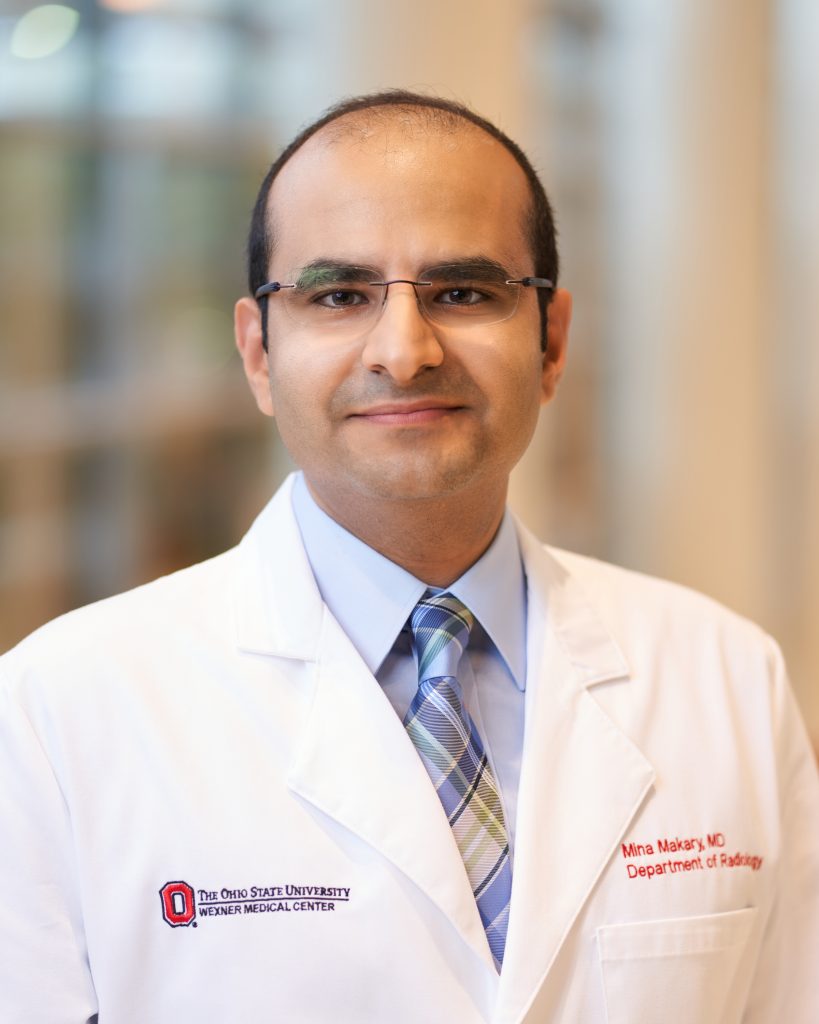
[00:00:19] Chris St John: Welcome to Frame by Frame Rethink Imaging, a podcast by Imologix. Here, we explore the intricate world of medical imaging, aiming to dissect the field and inspire both professionals and curious minds alike. I’m your host, Chris St. John. Hi, everybody, and welcome back. We’re trying something a little bit new here on Rethink Imaging. I’m gonna talk to you for a second before we get into our conversation. I’m super excited to talk. Today, I had a fantastic conversation that turned from what was planning on being a single episode into a two parter because we just couldn’t stop. I was joined today by doctor Mina McCary, who is a dual board certified vascular and interventional radiologist and diagnostic radiologist at the Ohio State University Wexner Medical Center. He holds several leadership positions there and has introduced several cutting edge service lines. He built and leads a patient facing interventional radiology, APP, inpatient service and serves in academic leadership roles tied to scholarly activity and research. His public voice often centers on making radiology front and center for patients, improving public awareness of interventional radiology, advocating for patient access to minimally invasive therapies, and strengthening patient care, safety, and quality. For me, this conversation is was such like a lovely reminder of why I love doing this show. Right? We’re trying to explore and bridge the gaps of all of the subspecialties in the world of imaging. And, you know, almost two years into this show, I’m still beginning to scratch the surface and have conversations with people specializing in things that, you know, I’ve I’ve heard very little about, interventional radiology being one of them. In today’s episode, we talk about what IR actually is. We talk about why most people have never heard of it and what it took to build a patient facing inpatient service from scratch. Doctor McCarrie also makes a keen distinction between burnout and moral injury that I just think is such a fascinating discussion. I really love this episode, so please join us and enjoy the show. Doctor Mina Makary is here with me today. Doctor Makary, thank you so much for being here.
[00:02:33] Mina Makary: Thank you for the opportunity. I’m really excited to be here.
[00:02:36] Chris St John: I’m super excited to talk to you because, you know, I’ve been doing this show for it’s almost two years now, and I’ve been slowly crawling through all of these different pockets of medical imaging having had zero experience in the field when I got going. And so I was particularly excited to speak to you today because of your specialty in interventional radiology. And it’s funny because, you know, I have had little to no exposure to interventional radiology in general, but it seems to be that is the general public sentiment anyway.
[00:03:11] Mina Makary: No. It’s true. I’m also honored and excited to be here and and to connect with you. And you’re absolutely correct, Chris. So most people are not familiar with interventional radiology. And, you know, most folks are familiar with diagnostic radiology when they think of radiology in general, and those are the doctors or radiologists who use imaging to diagnose disease. So they get X rays, CAT scans, ultrasounds, MRIs, and then they interpret them and they arrive at a diagnosis to help figure out what’s going on with the patient. Now interventional radiologists are physicians who do the same thing, but they do it a step beyond that. So not only they use imaging to diagnose, but to actually treat. And as we will discuss today, that’s amazing because it opens up possibilities to do big things through minimally invasive and small holes and and bigger, you know, better opportunities for the patient. And this has evolved over time, and it’s a relatively recent specialty. It was recognized as a its own specialty in 2012. And they’ve done I’ve done actually studies on awareness of anorexia radiology and not just the public, but even primary care physicians and even specialists may not always be aware of what we can offer and what we can do to patients. So you’re not alone. Yeah.
[00:04:28] Chris St John: Given that most patients have never really even heard of it, I’m curious, you know, about when that awareness gap kind of first hit you. I mean, you said it wasn’t even a specialty until 2012?
[00:04:40] Mina Makary: So it was being practiced Uh-huh. As a a subspecialty of diagnostic radiology. So physicians would do diagnostic radiology residency, and then then they would do a fellowship in interventional radiology as a subspecialty of diagnostic radiology. But by 2012, the board of specialties recognized that we’re so distinct in terms of the way we particularly on the basis of the clinical care. You know, we have our own clinics. We admit patients. We manage them before and after procedures. We’re not just diagnosing them, that they recognize that as its own specialty. And as a result, we have our own residency training program, so it’s not a fellowship or subspecialty of diagnostic imaging anymore. It’s its own specialty. We’re still board certified by the American Biology, and almost all of us are, you know, trained are are dual board certified diagnostic and interventional, so we can do both. But the specialty has been on even before then, but this was the more of the official recognition, uh, a training standpoint and organizational standpoint.
[00:05:44] Chris St John: Yeah. And so, I mean and since then, you know, I I know you’ve done a lot of research on the awareness of it. How how have you seen kind of the course or, like, the growth of the specialty, and how have you seen things change since since 2012?
[00:05:59] Mina Makary: So interventional radiology, or IR for short, has grown tremendously. And and the reason is, you know, we have sicker patients, and oftentimes, they are not candidates for traditional treatments or traditional treatments may be too risky or have issues. We also have health you know, generally healthy patients with unique conditions that want the least invasive options. So awareness has increased. You know, before, when it was a subspecialty of diagnostic radiology, the pool of candidates of physicians, they would be ones who are already diagnostic radiologists that would participate in this training pathway. But now starting from medical school, people can directly apply to intervention radiology. So a lot of medical students, part of the curricula have integrated radiology. Rotations, they rotate in in our departments, you know, all sorts of things. And then from the primary care and specialist standpoint, you know, other physicians will see, you know, we send this patient to IR, and and they have great outcomes, and they come back. Or patients I have several patients that I’ve offered them something or they learned online that there’s there are better options for treatment, and they they seek us out. So, you know, once you do good work, I think the the message come gets out. So I’m very proud of our specialty, and I’m really excited about the work we do now and the the future that is so bright for for what we can we can offer patients.
[00:07:21] Chris St John: Yeah. Absolutely. And I’m and I wanna so I wanna tie this back into you and your personal history. Right? Because I believe you you trained and continue to work at Ohio State. Is that correct?
[00:07:32] Mina Makary: That is correct. So I I went to, uh, medical school at Ohio State, and, uh, I did my internship in another institution. And then I came back for my diagnostic radiology residency. So I was a diagnostic radiologist first, and then I did a second residency in interventional radiology. And then I was recruited to stay here, and, you know, I’m a Buckeye through and through.
[00:07:54] Chris St John: And so yeah. I’m curious about your personal timeline and your time at Ohio State along with this this kind of growth of interventional radiology because you helped launch an interventional inpatient service at Ohio State. What what did that process look like, and where were you can you can you get me a line timeline wise between both you and the specialty, and let me know what happened?
[00:08:22] Mina Makary: No. Absolutely. So I’ve been for a long time just because of my, you know, training and staying here. And four years ago, I recognized the need for a support team to help us with management of patients. So in diagnostic radiology, the general mindset of the referring physicians is that we’re gonna order a CAT scan. We’re gonna order an MRI. We’re gonna order a test. In interventional radiology, it’s more of a consultation because you cannot order an interventional radiology procedure. The interventional radiology procedure has benefits, risks, alternatives. A patient may be a candidate or not a candidate. So we have to as physicians performing or offering these treatments, we have to evaluate the patient and make a decision in terms of whether they’re a candidate, what to expect, how to manage them, do you stop their treatment blood thinners or manage their medicines before and after? So there’s a lot of clinical decision making involved in clinical management and follow ups in clinic after. And this was a huge enterprise. And so what I did is I worked with our hospital system to develop an APP team of advanced practice providers that integrate with the interventional radiology service, and it’s an inpatient service that helps with the consults. It helps with our clinic. It helps with the patients that we admit and and follow-up. So, basically, it’s a periprocedural inpatient team that manages the patients before, after, and during a procedure to ensure they have their questions are answered, they’re optimized, their documentation so we can not just do a procedure, but we document it. We follow-up with referring physicians. We manage their medications after, and we set up for follow ups. And if they have questions, they come and see us. So, obviously, that’s a huge enterprise, and it was a gap that was needed to be addressed. So we worked with the hospital administration to, you know, hire a group of advanced practice providers, nurse practitioners, and physician assistants that worked with our team to offer that inpatient service. So it’s been tremendous. It really improved our outcomes, turnaround time, patient experience, communication, and has really became the glue that held that that that care. So I’m very proud of the work that we’ve done at Ohio State, and it’s been recognized even by the ACR and other institutions for its innovative, uh, forward thinking approach, and and it’s something that that, uh, really improved patient outcomes.
[00:10:52] Chris St John: Yeah. Did you encounter, like, any level of resistance or any sort of speed bumps when when building this program? Were there, like, any major challenges in terms of, you know, kind of building this thing from from the start?
[00:11:05] Mina Makary: Yeah. Of course. Because it’s not you know, anytime you build anything new, this took a lot of work. We created a business proposal to make sure that, uh, if the financials are sound, then we can bill appropriately. And we worked I worked with initially, you have to get consensus from stakeholders, you know, administration, colleagues, other folks. So I partnered with a diagnostic radiologist when we first started this to get buy in from our diagnostic radiology colleagues for some of some of them will do procedures that need support. In addition, I was covering interventional radiology, and we worked together and we launched that service. Uh, but there were metric quality metrics that we had to develop, education, templates for the notes, workflow, scheduling, and I also partner with an APP manager who and now there’s two who are fantastic to to, you know, HR issues and and hiring and all this stuff. So, obviously, there are always barriers in terms of workflow, culture, funding, recruiting people, and recruiting the right people. Right? And the people have the mindset of what we’re trying to accomplish, team players, hard workers. And then retention, um, we’ve had fantastic retention because we want people once they come here, they’re happy to be part of the team and Right. Understand what they’re contributing to, and and we have a great relationship with all our team members. So it was a lot of work. It’s very rewarding, and and and we were able to put all these factors and address any barriers and build it together. So I’m very proud of it.
[00:12:34] Chris St John: Good. I mean, it’s it’s fantastic to hear. And, actually, I I I’m gonna put a pin in that little retention comment, and, hopefully, we are going to be able to circle back to it because you’ve done some really interesting work talking about burnout versus, I think, moral injury is the term that you use. I wanna touch on that too. But Absolutely. You know, while we’re still, you know, in this IR thread, would you mind just giving me some examples of some of the more common procedures or treatments that you’re doing just so I can kind of understand what you’re actually up to to some degree?
[00:13:08] Mina Makary: Absolutely. So like I said, the whole point of interventional radiology is that you can see inside the body to fix patient issues and, you know, to address disease. So some of what we do is we open blocked up vessels. We block vessels that are bleeding or causing or supplying tumors. Some of it’s we remove clots. Some of it, we put devices to protect patients or to give them treatment options. So, you know, there are many, many, many categories and many service lines that we offer. But in general, we can for example, starting with the basics, we can provide vascular access. So a patient comes in the hospital, they need an IV. The IV can last for a few days. Patient that needs repeated treatments or dialysis or chemotherapy, they need devices implanted so they can get their treatments. And a lot of times, the vessels scar down and they’re small and and requires expertise in minimally invasive intervention. So IRs generally considered the experts on vascular access. So we do that. And that could also be dialysis fistulas, which are surgical procedures done in the arm that need maintenance so we can manage those. And that can also be patients who need nutrition. They need tubes in their stomachs. It’s called gastric tube or GJ tubes. Mhmm. Uh, it could be patients who have by a tumor or an abnormal finding. They need a biopsy or tissue sampling to diagnose it. We can do that. Those are kinda more of the basics. More intermediate things that we do is more glamorous, I guess, would be bleeding, and we can stop the bleeding. And that can be, you know, more stable, but it could be also immersion patients, trauma patients, life threatening, two in the morning, somebody’s dying, and they have no options. We can go in, come in, stop the bleeding. You could see on the table their heart rate goes down. They they doing great. The family’s happy. We can save their life. So we deal with bleeding issues. People with clot or DVT in their legs. Let’s say you take a long flight, you’re not getting out of bed, you get clot in your leg, and select patients, it’s appropriate to remove the clot to improve their outcomes. And sometimes the clot goes along, we can clear their lungs. Patients who have cancer, and that’s something of of great interest to me. We can offer treatments to deliver radiation, to deliver chemotherapy, to deliver other medicines to the tumor directly so it doesn’t go in the entire body, but directly to the tumor. We can burn or freeze a tumor, and the patient can go home the same day cancer free with a Band Aid. Nothing in medicine can can be like that. It’s called an ablation procedure. It’s one of the most rewarding things that I do. And there’s more exciting things about that I’ll tell you about if you’re interested. Yeah. Absolutely. There is pain interventions that we offer to patients. There’s liver interventions in patients who have fluid buildup or other things, patients who have you know, we work in every major system in the body. Patients who have kidney stones or blockages, and they need intervention in the liver and the kidney and and other organs. So we are specialists, but we are also so broad in our abilities and our scope. We have the beauty of being able to treat a whole lot of issues at a very high level and communicate with other specialists at that level. So versus you know, in medicine, there’s a dichotomy. Either a generalist, you treat general conditions and maybe not as in-depth in great depth, or a specialist where you specialize in two or three things and be really good at it. IR requires us to be specialists because we are dealing with high level situations and, you know, high level management of different diseases. But there’s so many diseases that we can touch that we’re also broad in our spectrum. But I hope that was a good air overview. I know a
[00:16:40] Chris St John: lot of There’s
[00:16:41] Mina Makary: much more too. But I
[00:16:43] Chris St John: know. I mean, it’s it I feel it’s one of those, I forget the the term, like, the the concept that the more you know, the more you realize you don’t know. Right? It’s just like I felt like with every example you were giving me, the true scale and expansiveness of I I feel like was was becoming pretty clear. But I wanna I wanna follow-up too because I I believe you take on, like, very complex venous reconstructions that very often other other providers won’t really touch them. What pulls you to those cases?
[00:17:13] Mina Makary: So that is true. I really one of my interests is venous intervention. And the reason I have built that service line is giving patients hope, and I also enjoy the challenge of these complex cases. And what happens is that most patients so clotcom uh, DVT or clotting the legs, but it can happen in in arms or other body parts is is common. And there are risk factors for patients who have family history or travel or cancer or or even benign or sometimes even know or have blood issues, but they’re very common. And 50 of those patients, they develop something called PTS or post thrombotic syndrome where the clot never clears. They get the veins gets scarred down and they disappear or they go away. And so you could have a very healthy 30 year old patient who I had Olympic athletes. I have people on in tremendous shape who have had an issue. They got a DVT. And fifty percent of those patients, the clot never goes away. Instead The vein never opens up after treatment with blood thinners. It scars down and gets clogged. They end up with swelling, redness, pain, all sorts of issues, and it’s very disabling. By ten years, most patients are disabled and they can’t work, and there’s a lot of downstream effects. So, uh, one of the things that inspired me to go down this space is that we wanna be able to give these patients hope. And, you know, using the creativity of IR, we have a toolbox of of equipment and which is a common theme in IR. You get a problem and folks tell you, like, hey. We have this issue. We don’t know you know, we don’t really have standard options. Can you figure out a plan for this patient? So we have a toolbox. I love problem solving. We have a problem, so I used different ways creative ways to build those veins or reconstruct them to get patients’ options. And, obviously, you know, as part of a medical community, and we collaborate with other physicians, and we learn from other physicians as much as we share our experience. But that was one of my true passions. It’s a need that I recognized when I first started here, and and now that has become, you know, thankfully, a a big service line for patients.
[00:19:22] Chris St John: It’s interesting. I love the, like, the driving factor of, you know, giving hope and and allowing people the up like, opportunities that they’re not going to have. But I’m curious about kind of the other side of that coin, right, and how you think about, you know, risk when, you know, you are kind of the last line of defense these patients?
[00:19:43] Mina Makary: Absolutely. And that’s a fantastic question because risk versus benefit is something that we have to deal with all the time.
[00:19:49] Chris St John: It’s our favorite subject matter on this show.
[00:19:52] Mina Makary: Absolutely. Once you once once you go into medicine, especially my specialty, you have to weigh in on all these things because we have to think outside the box and give patients options if we’re able to safely. At the same time, we don’t wanna be cowboys and just hurt people. And, also, we have to be realistic. We have to know our own, you know, abilities. So I know what I’m capable of in my hands, and I know what my colleagues are. And, you know, there’s things I’m good at, and there’s things other people are better at, and that’s okay. I know the limits of my equipment, and a lot of it is finesse and and understanding. It’s not just, you know, put this here. It’s how does it feel? What’s the angle? Where the wire goes? There’s a lot of under you know, anatomical. It’s the art of IR, which is what’s really brings me to joy to be able to to address that. And then we have to have a conversation with the patient, say, hey. Here are the options. I’m gonna make this very simple, but, you know, this is something that we generally do. We can do something else to give you hope. And there are some patients that would say, okay. If this is the risks, I’m willing to take it. Or, you know, I I had a patient tell me, I would rather die than live one more day like this. And I have patients say, you know what? I wanna be the most conservative. If we get to a point where you think it’s gonna be risky, please don’t do it. So it starts with the patient, you know, knowing the risks and benefits, starts with knowing ourselves and our abilities and what we can offer and our judgment. And, obviously, we build on science. So it is hard when in the front forefront because sometimes you’re in places that other people have not been in yet, so the science is catching up. But you can build on what we know has been, you know, in other parts of interventions that, uh, that we can replicate and build on it and share our experiences and learn from it. But it’s something that we we have to it’s a conversation that I have with every specific patient because that risk versus benefit ratio is different for for every patient. So somebody will come and say, hey. Can you do this? I can, but is it the right thing for this particular patient? And I have to see the patient. I have to understand their goals. I have to understand, you know, for them, is the benefit outweighing the risk? Maybe for you for them, they are. For somebody else, they’re not. So just because you can you do something, should you, is very important question. And and, you know, it all depends on, you know, it all depends on how that condition’s affecting them and if it’s worth it. Um, so it’s it’s a very, very important thing that I try to teach my fellows, you know, even my trainees and residents and students what what how what’s the right thing to do? And these are very complex decisions.
[00:22:28] Chris St John: Yeah. I mean, of course. I mean, especially if it feels like you’re the last line of defense. But then, like, to to pivot again, there’s, you know, the the other side of this again where you’re you know, your research found that most patients would actually prefer I mean, of course, they would prefer minimally invasive options, but just didn’t know that they existed. So, you know, you you you’re you’re seeing these patients who you’re kind of their only option, but then there’s this huge swath of patients as well out there who, chances are, might prefer your approach and your services, but don’t, you know, don’t have access or education or don’t know what to ask for or who to talk to? How do how do we think about closing that gap?
[00:23:10] Mina Makary: That’s a very important gap that we need to close because we have to do a better job giving patients options. And I always tell that to even my referring physicians. Just because you send me a patient, it doesn’t mean, you know, I’m just here. IR is the best thing for every patient. Every you know, I’m not just trying to do procedures. I’m trying to take care of patients. So when we see a patient, we personalize the treatment. Okay. If your goals are x y z and these are the expectations, maybe we are the best option or maybe not. So so we have to do a better job by educating our our referring physicians. I have done several papers and and and I was honored. Some of them was even award winning work characterizing that. What do they wanna know? Do they want lectures? Do they want YouTube videos? Do they want outreach? Do they want more science and literature? So I think it’s a multi pronged approach. What I’ve been doing is I’ve been advancing the science by showing we have data, so the science speaks for itself. We are getting into the guidelines so people know that these are recognized treatment options, and we are in most guidelines. I like to educate the referring physicians, uh, whether through given lectures or grand rounds or going to meetings, and also developing online resources for patients and going on podcasts, sharing web you know, developing websites, and I’ve done even research on multiple tools that patients prefer. And, also, patients you know, like I said at the beginning of this, I think the work speaks for itself oftentimes. I’ve had several patients, for example, uterine fibroids where they come to me and they say, hey. I read online about this. I saw you doing this procedure, and you’re a high volume provider in this area. Could you please evaluate me? I talked to them. I talked to referring physician. I evaluate the situation, take care of them. They come back on follow-up, and, like, this was such a pleasant experience. I’m glad I I I sought this option. Do you mind if I share this information with my my family or my friends or online or this? And I say, yes. Please do. So I think we all have to work together to to give patients options.
[00:25:12] Chris St John: Yeah. For sure. And is there, like we we don’t have to answer this question, but it like, if it’s a it’s a complicated It seems like very often you might have to be, you know, telling a patient something that maybe a a referring physician wasn’t aware of or wasn’t keen to. Like, how do you balance, you know, not trying to undermine the referring physician for lack of a better term?
[00:25:37] Mina Makary: Right. No. Absolutely. Well, I think communication is key. And what I like to do and I’m always very respectful with my of my colleagues and referring physicians. And even if people disagree, and that’s also fine. But I always try to do it in a respectful and professional manner. And I also reach out to the referring physician and pick up the phone. Not a lot of people do that. Some people will just send a message or not even communicate. They’ll just put a note. But I make it a point to reach out to them and say, hey. Thank you so much for thinking about this. Just so you know, these are the options. These are the pros and cons for this versus that. What are your thoughts? So I think by building bridges, you know, I build bridges within people. I wouldn’t say the competition, but people who offer alternative treatments, and we all respect each other because, you know, we can all we will all be able to take care of patients, but we just wanna help the patients get the best options. And like I said, not every pay you know, for every patient, it may be a different thing. So my attitude is not that IR is always absolute best for every single patient, every single situation, but I my attitude is we need to give patients options. And the the the issue that people have is it’s a very common thing. It’s it’s, you know, it’s it’s basically if you have a hammer, everything’s a nail. Right? If I only do surgery, then everything is gonna be fixable by surgery or not. If I only do IR, everything’s gonna be fixed by if I only do medicine, everything’s gonna be fixable by pills or not. But I try to think outside the box and even challenge myself. Is that really the best option for the patient? What about this? Have we tried this first? Have we done this? And I think once people see the way you practice and you build trust and they respect you because they know you actually care about the patient and you’re not just there to pursue turf or, you know, do, you know, do your procedure all the time no matter what, they respect you as a collaborator and as a partner. So I’m not here to do procedures. I’m a physician who is here to treat disease. That’s my mindset. I don’t offer x y z procedure because then then that then then I’m a technician or a plumber. I’m not that. I’m a doctor. So even patients that come to me and we don’t have an IR treatment options, they appreciate the fact I can communicate. I can answer the questions. I can explain their disease. I can connect them with people who can help them, or I can, you know, be there for them. So I think if we step back to the that that, you know, gold standard of medicine, the way we all grew up and and when we went through medical school, I think that’s the best way to go by by really caring about the patient and letting the work speak for itself and then also advocating.
[00:28:16] Chris St John: Yeah. You know, it it’s I mean, obviously, it’s delightful to hear you say all of that, but especially right after you very you very briefly touched on some fibroid cases. Right? Because
[00:28:27] Mina Makary: Yeah.
[00:28:28] Chris St John: You’re I mean, when you’re working on those complex cancer and fibroid cases, those are, like, multidisciplinary teams going on. Right? You’ve got a bunch of different people working on that together. Yeah?
[00:28:39] Mina Makary: Absolutely. Yeah. These are complex decisions and complex patients that might need often more than one treatment or sometimes one treatment or the timing may be different or, you know, if the patient, for example you know, some procedures are very effective but take time. So is the patient willing to wait? Or some patient may just need a bridge of treatment to menopause because once they get menopause, their treatment their issue is gonna resolve. Or some patient has cancer, can we do an IR treatment to cure their cancer? Or can we do it they’re not a candidate for resection, but can we do it to bridge them to transplant or resection? So when people realize that you’re there as part of the solution and not just to do something for the sake of doing something, I think you earn the respect. And I respect my colleagues too, and I know they do great work. So I think, basically, the team approach in medicine is very important. And and I think the quality of the work also is very important, and communication is very important.
[00:29:35] Chris St John: We’re talking about communication. We’re talking about good medicine. What I really wanna touch on now is your work doing research. You’ve did you coin the term moral injury? I know I’ve seen it before. Right? But, specifically, moral injury versus burnout in the imaging community. Right? And I I I just wanna kinda hear hear your thoughts on that before we we dig in too much.
[00:30:00] Mina Makary: Right. No. I I had I did not coin the term, but I was, you know, part of the early group of physicians that applied that term to our field. And I’ve collaborated with many fantastic collaborators on this topic, doctor Jefshake and others. But, basically, there’s different things that we have to think about when we think about this area. So burnout and then moral injury and then wellness. And they’re not all synonymous, but, you know, burnout happens when repeated trauma and usually moral injury results in that in that in in permanent damage. And what is moral injury? Moral injury is when you ethically care about something and you have no control to when you’re trying to do the right thing and you can’t do it. Right. So you get this moral injury, and it’s repeated stress by the system. Sometimes you work in complex systems where you are trying to navigate the bureaucracy and and all these different aspects of care, interpersonal issues and and economics and work and reality and business and medicine and all these things. And you’re trying to do the right thing, and you have the moral injury of not being able to do the right thing because of all these conflicts. When these repeated injuries happen to your so moral injury, so it’s just like you get hurt, but it’s you know, you’re hurting your morality, basically. You end up with burnout. You end up becoming disenfranchised. You end up losing interest in your job. You don’t have the same satisfaction. You’re not as happy. You you’re you don’t give it a 110% anymore. All these things because you feel like you’re you’re hurt morally. So and then wellness is the solution. So how do we deal with it? We have to apply wellness. And wellness is very important to address because most people, you know, if you go to any conference or any initiative or read something, people always mention the individualistic, uh, aspects of wellness. Right? The answer to wellness is not doing more yoga or, you know, having a book club or, you know, just getting a good night of sleep. These are good things, and we should
[00:32:04] Chris St John: be there. Great as all of that is.
[00:32:06] Mina Makary: Yeah. And these are, like, absolutely individual things that we can do to do wellness, but we also need to have institutional or higher level, you know, wellness initiatives. So, you know, employers allowing time, providing administrative support, giving you the resources to do to do your job, work life balance, all these things. So we cannot, you know, yoga ourselves into wellness only. We have to have individual responsibilities as well as organizational or higher level, society level or opportunities. But this is how I look at that whole issue.
[00:32:42] Chris St John: I very much identify and empathize with that struggle. Right? So, I mean, I, you know, I used to own a restaurant and wedding venue where, you know, after after the pandemic, I had effectively no you know, in order in order for the business to survive, I had to give mind, body, soul, blood, sweat, tears to it, you know, every second of every day. And, you know, once again, I I burned out, and I don’t do that anymore. So you can see the results of it right here on the show. But, you know, it’s it’s it’s so tough when you when you feel like you literally have an you have no choice. Right? You you you you know? And I was taking bathtubs every night. I was going to the gym every morning. I was doing every little I was eating perfect. Like, every little thing within my control to maintain my mental health, I had to do. And I, you know, I I would always find that if one thing slipped, right, I didn’t get a good night’s sleep one night, it would all just crumble, like, so so quickly. And so I mean and and that’s just, you know, people’s weddings. Right? It the high stakes to the client, but, you know, just another day for me. That’s without the added burden of, like, life and death decisions and patient care. Like, I just cannot imagine the the physical and emotional strain, which, I mean, physical, emotional, mind body, body mind, kinda one thing anyway. It’s it’s just wild. And so have you have you been doing, like, advocacy work talking about this? Or, like, what what is what is your approach to this balance?
[00:34:15] Mina Makary: My my my approach is obviously education and raising awareness. So, you know, it starts in in my home institution. You know, I when I work with my residents and trainees, I always emphasize that we’ve done research. We’ve published the first and only wellness related study, to my knowledge, on interventional radiology specifically just to show, you know, what are the tools are out there and how we can help our colleagues improve. And, obviously, on the national levels, I present and I discuss with other colleagues and try to bring initiatives home and, you know, different tool kits that we have in different societies. But it’s a struggle because, you know, we have to change the culture. So the culture of medicine is all about, you know, working hard and and as we should, but it doesn’t always you know, sometimes you don’t always get all the resources you need to get your job done, and that can create stress. And, you know, people feel guilt and shame because you were trying to help a patient. But that shouldn’t be at the, you know, sake of your own mental wellness or health or life. You know? So we patients want healthy doctors. Patients want doctors who are in sound minds, who are able to, you know, trade in you know, take care of them when they’re in good shape. So and especially trainees or residents and and students, you know, they work extremely long hours. You know, they’re still in training. There’s a lot of stresses from bureaucracy and hierarchy and demands. And, you know, in medicine, as you know, there is burnout. Their suicide rates are high. There is, you know, some folks, you know, unfortunately, succumb to drug abuse, different things. So we really have to help our colleagues. And like I said, not only focus on individual responsibility of the physician to to do well and and be in a good state, but also we have to have our institutions to support, you know, a healthy and well provider. Because if we have healthy providers, we’re gonna help do a better job for our patients. Um, so I I’ve been trying to advocate and highlight this issue because it’s it’s something that people don’t always talk about. And maybe it’s a taboo in some circles, but it’s something that we really need to advocate for to have a good, uh, workforce and to to really deliver for our patients.
[00:36:29] Chris St John: Absolutely. I mean, you know, I have a keen understanding of the fact that, you know, the entire health care establishment is, you know, underwater to some degree, for lack of a better term. Right? And yet, you know but personally, when I have been affected by it, right, my my partner had, you know, some neurological problems go down a few months ago.
[00:36:52] Mina Makary: I’m sorry to hear all.
[00:36:53] Chris St John: Oh, yeah. I mean, every everything’s fine now, and it’s, you know, well controlled, great radiology team, etcetera, etcetera, great neuro team. But those first 72, you know, we are bouncing around emergency room to emergency room. We finally get him admitted to neuro. And the first doctor that we get to talk to, you know, is, like, fifty hours after we’ve been there, and he comes in. And, look, I I appreciate that he came to talk to us, but he’s like you know, he sounds like he’s a little off of his rocker, and at the end, it comes out. He’s like, yeah. I’m at hour twenty five of my shift right now because no one else can be here. And it’s like, okay. We’re we’re we are we are we are we are in the bucket of trying to count our blessings right now, but as a as a patient and a loved one, like, that is not what you wanna hear, that the first purse like, the first doctor that’s coming in to talk to you hasn’t like, is is just fundamentally unhealthy, it’s it’s just not very comforting, I guess, is is is what I would say.
[00:37:51] Mina Makary: Course. And the patients don’t want it, and the doctors don’t want it, and nobody wants it. It’s not good for anybody. So I I agree with you, and I’m really glad that, uh, in organized medicine that other folks are joining our voices and are highlighting this. You know, ten years ago, nobody was talking about burnout or wellness, but, you know, now it’s a different story, and there’s more initiatives. And, obviously, a lot more work needs to be done, but I’m very grateful that people the conversation is ongoing.
[00:38:20] Chris St John: Yeah. I mean, absolutely. And speaking of conversations ongoing, I feel like that is a beautiful place to wrap part one of this episode. So in a special surprise surprise treat, doctor McCary has agreed to join us for a part two today. And so please join us in a couple of weeks where we will be continuing this conversation and starting to get, like, more into the trenches with some of the more cutting edge work that y’all are up to over there. So thanks for coming on part one. For us, this conversation will not stop, but for our listeners, it’ll pick up in a couple of weeks.
[00:38:56] Mina Makary: Thank you.
[00:38:59] Chris St John: Frame by Frame Rethink Imaging is brought to you by Imologix. Here, you’ll find engaging interviews with thought leaders, experts, and patients, sharing stories that showcase the transformative power of medical imaging. To discover how Imologix is rethinking imaging in health care, visit imologix.com. Be sure to subscribe to Frame by Frame Rethink Imaging on Apple Podcasts, Spotify, or wherever you listen. And from all of us here at Imologix, thanks for tuning in.