Rethink Imaging Podcast Transcript
Guest: Ari Goldberg
Host: Chris St. John
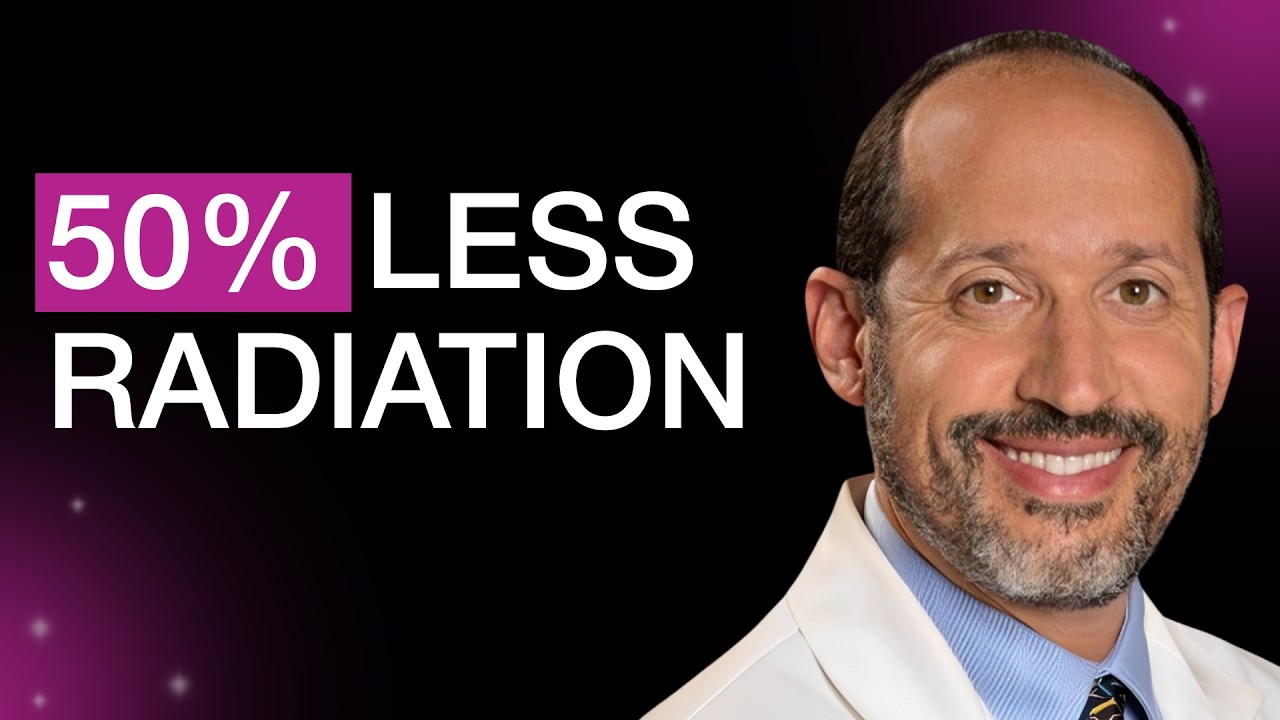
CHRIS ST. JOHN 00:56:00 Welcome back to Rethink Imaging. For this episode, we are going to be digging into the future of radiology at a higher level: what needs to change, what habits we need to let go of, what new technology is coming in, and how we can build smarter and more sustainable practices moving forward. Today we are joined by Dr. Ari Goldberg, who is in a fantastic position to reflect on this.
Ari recently finished his role at Loyola, where he directed body imaging and MRI operations and led one of the largest professional societies in the field. Ari is also the former president of the Chicago Radiological Society and an executive board member of the Illinois Radiological Society. He has both a ground-level and a wonderful bird’s-eye view of where radiology is and where it needs to go. Today we will talk about what is working, what isn’t, and what kind of shifts in the field we might need to embrace over the next decade. Welcome, Ari.
ARI GOLDBERG 00:01:52 Thank you very much. Pleasure to be here.
CHRIS ST. JOHN 00:01:55 It is great to have you here today. I was recently talking with Dr. Summer Kaplan in our last episode about shielding practices, and we were talking about practices in imaging that we do simply because that is how it used to be done. Are there assumptions in radiology practice that you think no longer serve us very well?
ARI GOLDBERG 00:02:19 I think a lot of that comes down to how we interpret and report studies. What I mean by that is there was a time where—I think it was Johns Hopkins, but there were several places—they would put a disclaimer in the report that said something along the lines of “anything not mentioned in the report, you can assume is normal.” For example, a head CT that was normal got reported out as “normal brain” or “normal head CT,” and everybody was fine with that.
We have moved away from that for various reasons—for teaching, sometimes for insurance. We have gone to very templated reporting. Being organized is a good thing, but we tend to spend time describing things that we know are not really clinically relevant. We are in a stage now, with no particular end in sight, where we do not have enough radiologists to read the amount of work, and that disparity is only going to increase. Someone might say there are all these technologies coming to fix that, but in the meantime, we are stuck with that disparity.
That is one thing I notice across the board: everybody to varying degrees gets bogged down in things—whether you call them incidentals or normal structures—that fulfill a neurosis of sorts, or maybe some medicolegal concern, though it is still a neurosis. We all do that, and I think that is something we have to think about letting go of as we move forward.
CHRIS ST. JOHN 00:04:19 Just for my own clarification, are you saying that if you are looking at an image for something very specific and you see other potential findings, you are supposed to just ignore them?
ARI GOLDBERG 00:04:35 Not artifacts. There are all sorts of structures or lesions that we recognize as benign or not clinically important, yet we still feel the necessity to describe and measure them. If you are putting it down in your report, it means you probably spent too long looking at it to begin with. Over the course of a day or a week, that adds up to a lot of time. The education around how we interpret studies as practicing radiologists is going to have to shift, because we are not going to be able to spend that amount of time given the workload.
CHRIS ST. JOHN 00:05:23 What would that shift look like in your mind then? What would the practice look like?
ARI GOLDBERG 00:05:28 The practice would return more toward trusting ourselves to not mention everything. If I look at something for a split second and know in my mind that it is benign and not important, maybe I do not report or measure it—a simple renal cyst, for example. There are gazillions of examples in every organ system in both inpatient and outpatient settings. It would look like reports stating, “This is normal,” or “This is what is wrong,” without describing incidental findings that have nothing to do with the clinical question, while still providing all the necessary clinical information.
There are ideas that have been toyed around with for years, such as if you want to look at the liver on a CT scan, isolating the liver and even graying or pixeling out everything else. There probably are some situations in which something like that would be appropriate, but it is a very slippery slope, so I wouldn’t advocate going there yet. But it is something to think about as time goes on, depending on how the mismatch between study volumes and readers progresses.
CHRIS ST. JOHN 00:06:42 Forgive me if I am misunderstanding, but in situations where you gray out everything else, what if there is an additional issue that you might have been able to catch, but didn’t because you were only looking at the liver?
ARI GOLDBERG 00:07:01 That is the main argument: you acquired the data, but then redacted it, so you are supposed to look at it. Under the current medicolegal system, nobody would risk that. But playing devil’s advocate: what if we reach a point where the disparity between the number of studies that need to be read and the number of people reading them is so great that the common good is served by missing a few incidental findings in order to get to all the studies in a timely fashion?
I don’t know the answer to that, and I don’t think the disparity is so great as to justify that right now. But it is not hard to imagine a theoretical scenario where the common good could dictate otherwise, and as time goes on, we have to at least be open to considering it.
CHRIS ST. JOHN 00:08:13 I feel the need to address the listeners who might be screaming at their podcast, “What about AI reading these images?” to help this massive deficit of radiologists. I read an article in The New York Times earlier this week about how everyone has been saying an AI radiologist will show up any day now to read scans, but the reality is that we are simply not there yet. To put all your eggs in that basket is playing a dangerous game at this point.
ARI GOLDBERG 00:08:53 I agree. We think we know it is a “when” and not an “if,” but we really don’t. There is still an “if” regarding how much AI will take over, and it is not clear that AI can make time management efficient enough to account for this growing disparity.
A good friend of mine makes a great point: Are there more flights and pilots across the US now, post-advent of autopilot, or before? People worried there would be fewer, but there are a lot more pilots now because automation enabled many more flights. What if AI comes along to soak up that busywork burden, changing the landscape such that payment structures shift and everyone gets studies? If we open the floodgates, we could end up right back where we started. Reaching a point where society is comfortable having no human eyes on a study is a very protracted timeframe. If AI expands access while still requiring human supervision, we are back where we started. Relying on AI to solve our problems is a mistake.
CHRIS ST. JOHN 00:10:45 Running with this theme and leaving AI slightly out of the conversation, let’s focus on what we have now and what we know is coming outside of that realm. As this field continues to grow and adapt, where do you think it is adapting well, and where is it starting to fall behind?
ARI GOLDBERG 00:11:09 The field of radiology is falling behind in our ability to handle workflow in a way that doesn’t completely commoditize it. Purely as an editorial, anecdotal take, I worry that clever minds that could be developing the next MRI technique or photon-counting CT technique are instead chasing one-off AI applications. There is a famous cover—I think it was MIT Technology Review with Buzz Aldrin—where he says, “They promised me colonies on Mars; I got Facebook.” It reflects the idea that brilliant people who could solve real problems are trying to make an app to get rich quickly. Seeing all the hype around AI, I worry the field overall is putting too many eggs in that one basket.
CHRIS ST. JOHN 00:12:48 You mentioned new photon-counting techniques and new MRI techniques. Can we dig into that? Have you seen a potential slowdown in new techniques coming out?
ARI GOLDBERG 00:13:04 It is a good question. The confounding factor with all these technologies is that as they mature, there are fewer things left to invent. Someone could point out that there hasn’t been a revolutionary idea in MRI for a while, but that may just be the natural course of technology maturation, completely independent of AI distractions. Based on lab sizes and the pace of invention, my feeling is that fewer people are doing those hard science activities, though part of that is simply the maturation of the technologies.
CHRIS ST. JOHN 00:13:50 At a high level, is radiology keeping up with the pace of change in healthcare at large? Is it ahead, or is it falling behind?
ARI GOLDBERG 00:14:05 I give us pretty good marks for keeping up with the field. Every time you turn around, there is a new multidisciplinary task force developing data-based recommendations for how to classify lesions, evaluate organ systems, or assess oncology treatment responses. There are also new photon-counting CT machines coming out and being studied. Radiology remains a very academic discipline. Even though many people envision a radiologist sitting at home in their underwear contracting with different hospitals and commoditizing the system, it remains a very academic field among specialties. We deserve good marks for supporting clinical care as it advances, but if we spend too much time focusing on one thing while other areas fall by the wayside, that will be harder to maintain.
CHRIS ST. JOHN 00:15:26 If a resident asked you what they should be preparing for that we aren’t really talking about yet, what answer would you give them?
ARI GOLDBERG 00:15:37 There are two things I would say. First, the gap before AI arrives is going to be filled by radiology extenders—nurses, nurse practitioners, or technologists who are trained to perform focused tasks like reading X-rays or supervising fluoroscopy studies. There is resistance in radiology to that for obvious reasons—the concern that we are giving away our specialty—but that need is so great that it is going to happen regardless. A radiology extender will do in the near term what AI is projected to do in the long term. I tell residents that extenders will be part of their practice.
Second, I would offer practical advice on the nuts and bolts of how you practice. Medical training from medical school through residency doesn’t teach you how to conduct yourself in practice to balance providing great care, having a life, and earning a living. Residents see a shortage of radiologists and high compensation, but there is no magic money tree. You still have to work very hard and efficiently to read a lot of studies. The current buyer’s market comes with the expectation that you are ready to roll up your sleeves and get down to business.
CHRIS ST. JOHN 00:18:10 Regarding pushback to radiology extenders: there are effectively too many scans for the current number of radiologists in the country to read, and extenders offer a potential pathway to get extra trained eyes on those exams. Is the pushback a pride thing, or what is driving it?
ARI GOLDBERG 00:18:44 The counterargument is that the greatest good for the greatest number is achieved by not diluting expertise in the radiology pool, especially given the slippery slope both within radiology and to other specialties—such as cardiologists interpreting cardiac CT. There is a legitimate argument beyond economic protectionism that diluting expertise is not good for overall patient care.
However, the competing argument is that it is also bad for radiologists to rush through lower-reimbursement studies that could still have important findings just to get to higher-reimbursement exams. I don’t dismiss either side, but it is to some extent a moot point: the disparity between study volume and available readers will necessitate expanding the extender pool before AI provides a full solution.
CHRIS ST. JOHN 00:19:53 As a non-medical professional, seeing in my personal life how long it takes to get images scheduled and read, my perspective as a patient is: get me an extender, let’s figure out what is going on.
ARI GOLDBERG 00:20:18 Within reason, for exams with a focused range of diagnoses where someone can be reasonably trained in that timeframe, I agree with you.
CHRIS ST. JOHN 00:20:31 We previously did a two-part episode on radiologist burnout with Dr. Elizabeth Krupinski, which I recommend to our listeners. But from your perspective, given growing burnout across healthcare, are there systemic changes you would make to render radiology more sustainable for practitioners? Could those changes potentially reduce the reliance on extenders?
ARI GOLDBERG 00:21:08 It is a tough question because nothing can or should be done to reduce the volume of studies. We invented these technologies for a reason, and they are largely applied appropriately, so we are stuck with growing study volumes and a constrained workforce.
In a perfect world, better reimbursement would allow radiologists to spend more time on complex studies while delegating other exams to extenders. A senator with a physician background recently introduced a bill aimed at increasing reimbursement, though it is unlikely reimbursements will suddenly go up. If Medicare and insurers valued imaging appropriately so radiologists felt less rushed, that would be an important structural step.
Additionally, medical school debt heavily influences physicians’ financial outlook for years. Addressing that—perhaps by making medical school tuition-free—would help. The answer to physician burnout is multifaceted and starts at the beginning of medical school. There is no quick retrofit; solving burnout is like tearing out walls to install central AC rather than putting in temporary window units.
CHRIS ST. JOHN 00:23:59 How do you navigate the tension between clinical excellence, operational demands, and administration? Is there a framework you use to balance those aspects?
ARI GOLDBERG 00:24:22 Having directed body imaging and taught residents for a long time, I encourage people to trust their training and their gut, and not waste time on findings that they know 999 times out of 1,000 are not clinically relevant. Make your day efficient and less stressful while maintaining work quality. For those with administrative duties, those responsibilities must serve to make the workflow more efficient and rewarding.
There is no one-size-fits-all approach to balancing clinical, operational, and administrative demands, but as physicians, we have to let go of unnecessary neuroses to be as efficient as possible. Radiologists enjoy sharing cases and discussing techniques. Creating dedicated times and spaces for radiologists to review cases together adds professional fulfillment, recharges people, and improves efficiency when churning through cases.
CHRIS ST. JOHN 00:26:16 Are there other traits, habits, or neuroses that you try to instill in the next generation of radiologists, or essential skills that are not taught in training?
ARI GOLDBERG 00:26:32 Most programs are good and teach all the necessary skills. Aside from teaching up-and-coming radiologists the practicalities of workflow demands, the core training on how to interpret studies remains very strong.
CHRIS ST. JOHN 00:27:00 Looking through a leadership lens, are there aspects of radiology leadership that need to evolve with the times?
ARI GOLDBERG 00:27:32 One specific area is remote work. Following COVID, that horse has left the barn: there will always be a substantial place in radiology for remote work. Radiology leadership needs to accept that a subset of radiologists will be remote, with the expectation of higher efficiency since they aren’t managing on-site interruptions. We have the technology to teach residents CT findings without physically sitting next to them.
Acceptance of remote work is still lagging; remote shifts are often treated unequally or reserved for graveyard shifts. Leadership needs to find a better balance between remote readers and on-site staff. It is a myth that given the choice, all radiologists would work from home permanently. Many prefer an on-site presence or a hybrid balance. Radiology leadership is behind where it should be on this issue.
CHRIS ST. JOHN 00:29:18 It is almost like expecting the worst out of people.
ARI GOLDBERG 00:29:25 When you do that, you cause a lot of ill will. Radiologists are physicians who were at the top of their class, completed an internship and four years of residency; they are not slackers looking to game the system or risk lawsuits. Expecting people to take advantage sets a negative stage. Every radiologist I have met agrees that if they work four days a week from home without a commute, they should be expected to read extra studies or perform additional administrative tasks. People are on board with those trade-offs.
CHRIS ST. JOHN 00:30:30 Nobody goes through medical school and residency just to slack off.
ARI GOLDBERG 00:30:45 People are more than happy to put in the work and complete teaching via platforms like Microsoft Teams. Not thinking creatively about how to integrate remote readers in a balanced way is hurting many departments and practices.
CHRIS ST. JOHN 00:31:30 When departments are so busy, building a whole new framework and structure to manage remote integration effectively takes time that leadership may not feel they have in the first place.
ARI GOLDBERG 00:31:40 Right.
CHRIS ST. JOHN 00:32:02 Looking ten years into the future to 2035, what does the ideal radiology practice look like? Will it operate vastly differently from practices today, or will it look similar?
ARI GOLDBERG 00:32:13 Radiology practices will settle into a mix of radiology extenders alongside AI. The further into the future you look, the more AI and fewer extenders there will likely be. AI will assist workflow by allowing radiologists to focus on key elements of a study and specific recommendations. While reimbursement may not improve, radiology will adapt through these measures to create better work-life balance and reduce burnout. That is a reasonable expectation for 10 to 15 years down the line.
CHRIS ST. JOHN 00:33:06 Dr. Goldberg, thank you so much for joining us today. It has been a pleasure having you on Rethink Imaging.
ARI GOLDBERG 00:33:11 Thank you very much for having me.
CHRIS ST. JOHN 00:33:15 We hope to have you back sometime, and we will talk soon. Thank you.
ARI GOLDBERG 00:33:20 Great, will do. Thank you.