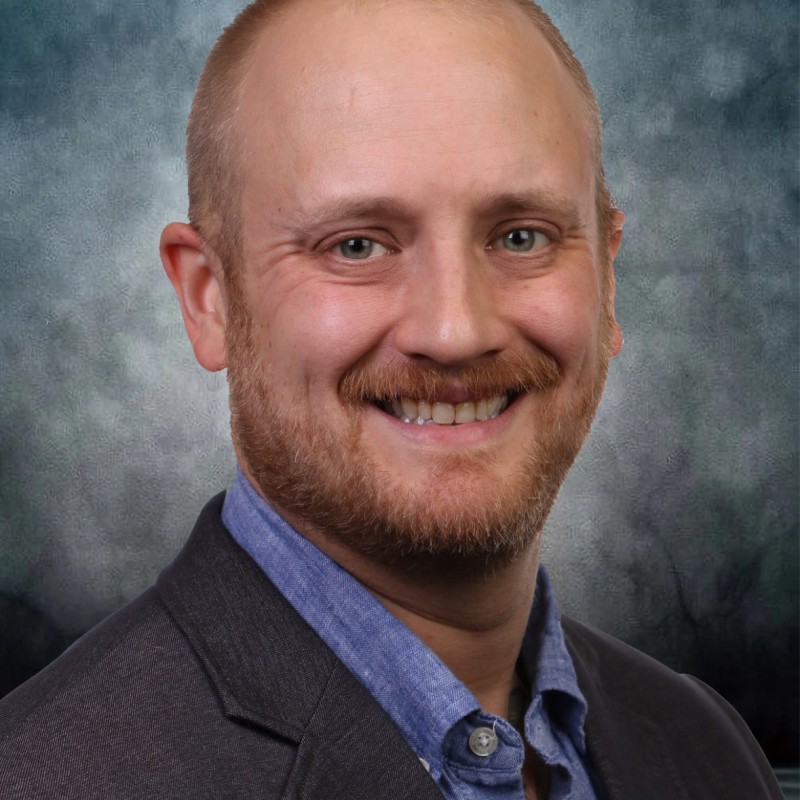
Tom Griglock Official Transcript
Chris St. John – 00:00:03: Welcome to Frame by Frame: Rethink Imaging, a podcast by Imalogix. Here, we explore the intricate world of medical imaging, aiming to dissect the field and inspire both professionals and curious minds alike. I’m your host, Chris St. John. Hi, everybody, and welcome to Frame by Frame: Rethink Imaging. I am your host, Chris St. John. I am a newcomer to the world of medical imaging and radiology, and I am here to bring my fresh eyes to a subject that affects all of us and hopefully bring you all along for the ride. We’re going to explore, we’re going to learn, and we are going to boil things down to their most basic elements. So even somebody like me, who decided not to take physics in high school, can still understand things. Today on Frame by Frame, we are thrilled to welcome Dr. Thomas Griglock, PhD, a distinguished expert in the field of medical imaging and radiology education. Dr. Griglock is the section chief of imaging physics and an associate professor at Oregon Health and Science University, where he also serves as the director of their medical physics graduate program. With over a decade at OHSU, his role encompasses overseeing clinical imaging physics and spearheading research and implementation surrounding advanced imaging technologies. Dr. Griglock’s expertise spans CT, dosimetry, patient dose optimization, and the development of novel spectral CT imaging techniques. His groundbreaking work has resulted in over 30 publications and significant advancements in radiological practice and dosimetry research. Prior to his tenure at OHSU, Dr. Griglock, completed his MS and PhD at the University of Florida and held positions at Shands Hospital. His contributions to medical imaging are recognized by numerous awards, including the OHSU Golden Rose Award, the Fitzgerald Award for Outstanding Research, and numerous other awards for teaching and mentoring medical residents and graduate students. Welcome to the show, Tom.
Tom Griglock – 00:02:12: Thanks, Chris. I’m happy to be having this conversation.Chris St. John – 00:02:14: Yeah, absolutely. And so, for those of you joining us for the first time, Tom and I have met a couple of times before, and we’ve had a couple of small chats, but we have really not gotten a chance to connect and talk about this subject very much. And so, I am very new to the field of medical imaging and radiology, and so with this show, I’m trying to gain a bit of a foundational knowledge that I can grow and hopefully get to a level where I can speak your language, I can understand everything, and we can be on the same page, and hopefully through that lens, educate whoever wants to learn about this subject.
Tom Griglock – 00:02:52: Tom is fine.
Chris St. John – 00:02:53: And so, Tom, before we dive into the technical details, I’d love to hear a little bit about your personal journey into the field of medical imaging. What drew you to this specialty? Tell us just a bit about your story.
Tom Griglock – 00:03:06: Okay. Yeah. So by training, I did my undergraduate degree in physics. I was actually in a PhD program program in physics. So I got my master’s degree in physics after undergrad, then I got my master’s degree and I was actually on track in a PhD program program and realized that everything that I was doing, you know, benchtop physics research really didn’t feel applicable to much of anything other than just doing the research. And so at that time I realized that the way I like to put it is doing research just for the sake of research really was not my thing. It wasn’t fulfilling. And I left the program partly into my PhD program. What’s interesting is I was, you know, whatever I was, 24, 25 years old with this big physics background. And I had never heard of medical physics. I’d never thought about anything in radiology or medicine or anything like that. And I chanced upon someone who was a medical physicist about eight months after I left my physics PhD program program. And the short version of the story was I was actually at a friend’s house shooting clay pigeons out in the woods, like central Pennsylvania and didn’t know whose property we were on. It was like a friend of a friend and got turned around in a snowstorm, went back to the guy’s house, had coffee, and he was a medical physicist. And so literally it was New Year’s Eve 2005. And he was telling me all about like what he did. And I was like really interested, like, you know, the snow squalls cleared. I drove back to where I was living at the time and started like Googling medical physics, medical physics, strategy programs, everything else. And I think two weeks later, I applied to a bunch of graduate programs. I was fortunate enough to get accepted into University of Florida as a master’s student and went down there and ended up getting my master’s degree and then my PhD. Four years after the master’s and then moved out to Oregon right after that. So the rest is kind of that.
Chris St. John – 00:04:48: Very cool. We’re going back to basics here. Some of our listeners will already know what’s going on. But so as someone who, you know, you have no idea what medical physics is, I personally feel like I have maybe a rough idea of what is actually going on. But for those who are kind of like me and new to this, what is it exactly that you’re doing?
Tom Griglock – 00:05:07: So, I mean, essentially, medical physicists at a profession, I mean, somebody could look at our professional organization’s web page for what they believe it is. The way I explain it is anything that has to do with applying radiation to humans in a medical setting, medical physicists are the content experts in that field. And so that applies to, you know, radiation oncology where, you know, you’re using high amounts of radiation and a variety of ways to try to kill certain cells and spare other cells to diagnostic imaging where, you know, you’re basically using radiation ionizing and non ionizing radiation to diagnose different conditions to see what is going on inside the body. And then, you know, nuclear medicine where you’re injecting radio pharmaceuticals and. Theranostics where, you’re sometimes injecting or, you know, introducing high amounts of radio pharmaceuticals with the purpose of cell killing. And so medical physicists are kind of the ones who have the expertise with how radiation interacts in the body in various ways and also how the machines that create the radiation and apply the radiation to human beings end up either, you know, potentially trying to kill bad cells or, you know, image the body.
Chris St. John – 00:06:15: Cool. We might have to circle back to the term Theranostics. A bit deeper into our conversation because that one threw me for a bit of a loop, but that’s great. I feel like I get it. So this is kind of sci-fi futurist that we’re talking about, at least in my mind. Right.
Tom Griglock – 00:06:31: Yeah.
Chris St. John – 00:06:32: It’s kind of mind blowing science.
Tom Griglock – 00:06:34: Right.
Chris St. John – 00:06:34: Can we talk a little bit about the timeline? Because to me, this sounds like everything is out of a sci-fi novel, even with your like Webster dictionary defines medical physics as definition, which I very much appreciate. What is the timeline here? When did we start playing with radiation as either treatment or for imaging? And kind of what does that timeline and curve look like?
Tom Griglock – 00:06:58: Yeah. So, I mean, as far as radiology goes, you know, I don’t have the dates written down in front of me.
Chris St. John – 00:07:03: Oh, it’s no problem.
Tom Griglock – 00:07:04: But I think Rankin kind of accidentally discovered, if you will, the existence of X-rays and how they could be used to image, I think, the late 1800, 1897 is what I want to say, something like that. But really didn’t come into play for a couple of decades later. I’m not sure exactly what the time frame is for that. And then, you know, most of the big advancements in radiology started, I’m going to say probably the ’50s and 60s, where you started to see X-rays and fluoroscopy done. I mean, it’s kind of funny because if you go back and you look at, you know, what was understood and what wasn’t, what was misunderstood at the beginning. I mean, they had, you know, these machines that basically in shoe stores where you would go in and like stick your foot in under the thing and there’d be an X-ray tube showing like how big the bone of your feet were present, just emitting massive amounts of radiation onto people’s faces in their bodies in general. Right. I mean, it was just, you know, no medical purpose for that at all. It was just like you say sci-fi. When you think about that, it was like, you know, I think about the movie A Million Ways to Die in the West. And like, you know, they would go down to see like the giant block of ice coming into town. And it was just like the fascination with things that were different at the time. So, I mean, like you had machines like that. But as far as medicine goes, most of the big advancements in development for, I think, a lot of this stuff were. You know, the base physics were in the 50s and 60s. And then application to actual medicine with CT came, you know, I think in the early 70s is when Hounsfield figured out how to manipulate all these things to start to image things using computed tomography. And then the first scanners with that started to pop up in the 80s. Really doesn’t seem like into the 90s. And then, you know, as that time progressed from the 90s until now, it’s essentially, you know, data wise and number of image wise, it’s by far the biggest modality. CT, that is. But, you know, we have a plethora of things. MRI came about similar timeframe a little bit later, I think probably lagged by a couple of years. And, you know, so you kind of see implementation wise, the last 30 years has been where more machines are available. It’s not just these unique things that only giant academic centers or giant research institutes have access to. You see it essentially widespread use everywhere, really throughout most of the world.
Chris St. John – 00:09:16: Mm-hmm. To me, that does not feel like a very long time to know what the hell is going on. I mean, I’m not saying y’all don’t know what’s going on, but it is.
Tom Griglock – 00:09:23: Right.
Chris St. John – 00:09:24: It feels it’s a short little window that we’ve been doing this as a species.
Tom Griglock – 00:09:27: Yeah. I mean, a lot of the stuff that we talk about today, especially like the higher end modalities, you know, they all required or they all required now in order to get their advantage. They all required, you know, better computers, better reconstruction algorithm, you know, faster things like that, because you couldn’t image somebody. And then, well, I mean, you could. We did for a while image somebody. And then it could take an hour, to reconstruct the images, you know, on this early stage computer. And so I think as things got figured out, we’ve seen the same way that, you know, storage and computing power have doubled and quadrupled. And then, you know, they go on that path.
Chris St. John – 00:09:59: Right.
Tom Griglock – 00:10:00: Something like that. Yeah.
Chris St. John – 00:10:01: Right. Is that Moore’s law? Am I crazy?
Tom Griglock – 00:10:04:Yeah.
Chris St. John – 00:10:04: Right. Like the exponential curve that technology increases.
Tom Griglock – 00:10:08: Yeah.
Chris St. John – 00:10:08: I think we’re like right here on that little curve right before it goes all the way up.
Tom Griglock – 00:10:14: Yeah. So I think a lot of the stuff was just almost waiting for those things to come around and also for the price of everything to come down because these machines are not right. They’re not something that, you know, even a well-funded hospital just goes out on a whim and says that, you know, I’m going to buy as many of these as I could possibly need. Like there are frames of that. And then, you know, and then there’s the fact of there’s a bunch of different players in the imaging process. It’s not just, you know, just because you have X number of machines doesn’t mean that you have enough people to run those machines.
Chris St. John – 00:10:42: Right. And so just real quick, can we just like break down the different modalities that we’re talking about here?
Tom Griglock – 00:10:50: Yeah. So you have what we call general x-ray, which is just everybody knows that if you ever, you know, went to the emergency room because you smashed your hand in something or dropped something on your foot or, you know, ran into a tree when you’re sledding or something like that.
Chris St. John – 00:11:02: I did do that once on skis, but yeah.
Tom Griglock – 00:11:04: Yeah, exactly. You know, and that’s general x-ray. And so, I mean, that’s the most commonly first line of imaging in a lot of cases. And then fluoroscopy, which is basically just a form of video x-ray, which is widely used more to look at physiological functions. But then you also use it for interventional radiology, which is, you know, a lot of angiography and things like that. And now even that gets into some form of treatment with different therapies that they’re able to do, cardiac catheterization, use a fluoroscopy as well, kind of a higher dose, more specialized format of that. And then you have CT. Now it produces three-dimensional images of various body parts, again, giving you more information, more images, aids in diagnosis, and you can see soft tissue better than you can with a general x-ray and you just get more information from it. So the utility of that is much higher than just a regular x-ray. MRI doesn’t use ionizing radiation, which is why it’s preferred in a lot of populations. MRI uses magnets, you talk about sci-fi and I always think like crazy thing about like when I teach or when I, you know, just think about how, you know, magnetic resonance imaging actually works. Like that’s probably the most like sci-fi-ish unbelievable thing that we can have. All these different magnets that make up this machine just operate in sync in such a way to create these beautiful images. I mean, in the advanced applications of MRI or, you know, probably one of the biggest things that we’ll see advancement in because it’s, you know, every little while there’s a new application. That you see, or a new advanced pulse sequence that people can use with these magnets and it’s pretty wild. The downside of MRI is that, you know, the machines are more expensive. The upkeep on them is more and the exams take a lot longer. So, you know, you’re talking about patient slots that are 30 to 60 minutes. The CT is done in a matter of seconds, but, you know, per patient, you could do 10 to 15 minutes turnaround with these patients. And so MRI isn’t ideal in some, you know, more urgent situations. And then you have ultrasound as well, which uses acoustic energy. To see, you know, to image various parts of the body, big uses are in obstetrics and soft tissue issues and things like that. And ultrasound doesn’t use any sort of radiation. So that’s why it’s preferred in a lot of cases as well. So we see a lot of pediatric use, obviously, you know, things with fetal development and things like that.
Chris St. John – 00:13:13: Yeah. Can we go back to CT for a second? There was a moment there where you were like, CT now shows things three-dimensionally. Was there ever a case where it was, because when I think of CT, I’m thinking of, you know, a bunch of slices of stuff being stacked on top of each other to create a 3D image.
Tom Griglock – 00:13:33: Yeah. So it used to be at the beginning. So, you know, I’m trying to think the best way to think about it. So at the beginning of the development, you basically had your x-ray tube on one side. Well, you still have your x-ray tube on one side and your detector on the other side. But at the beginning, they were both basically hardwired. And so you had cables attached to both sides of this thing and they would rotate around the patient and they would go around one full time and then they would have to come back the other way.
Chris St. John – 00:13:58: Right.
Tom Griglock – 00:13:59: To unravel the cable, essentially, because otherwise, if you kept going around, it would get tangled and you’d have a mark on your hands. And so every time you would rotate the tube and detector around the patient, that would give you one slice of the patient. So the table would be stationary, the tube and that would rotate, get one cross-axial, cross-sectional image of the patient. And then as it rotated back, the table would step down, you know, a millimeter or five millimeters or whatever it was. And then you would do it again.
Chris St. John – 00:14:26: Right.
Tom Griglock – 00:14:27: And then the table would move. And so all the images were actually just individual, non-linked images throughout the patient. And so you had a stack of images that you could put on top of each other.
Chris St. John – 00:14:37: Right.
Tom Griglock – 00:14:38: But all of the true three-dimensional, the volume of data that we see now, where you can just scroll through those images and do sagittal and coronal and oblique reformats and all this other stuff, the data wasn’t linked enough to be able to do that. And so, you know, that was CT and that’s, were originally, you know, it was computed axial tomography because all of the images were axial. And, you know, to a lot of people’s chagrin, we still hear people saying CT scans.
Chris St. John – 00:15:02: Right.
Tom Griglock – 00:15:03: You see signs that say CAT scan, you know, with an arrow pointing in this direction. And-
Chris St. John – 00:15:07: Of course.
Tom Griglock – 00:15:07: You know, I teach our students like, don’t ever let me hear you say CAT scan. It’s not CAT scan. It used to be CAT scan. Now it’s CT.
Chris St. John – 00:15:13: Right. Yeah.Tom Griglock – 00:15:14: And so I think, I’m not sure, again, the date when Helical came about, I think it was early to mid nineties. I’m not sure exactly when that was, but, you know, that’s one example of we had to get a bunch of the basics down and figure out the reconstruction.
Chris St. John – 00:15:27: Right.
Tom Griglock – 00:15:27: And then really what led to that was the development, what’s called slip ring technology, which is basically you don’t have cables anymore. So basically all of the energy that goes to the x-ray tube and all of the data that comes off of the detector, they’re just passed on two rings that slide around each other. And so they just gently glide.Chris St. John – 00:15:43: Right.
Tom Griglock – 00:15:44: And they pass that information and energy along.
Chris St. John – 00:15:46: Yeah. So from my limited knowledge base, thinking about like patient centering and stuff. Was it just like significantly more of a nightmare in the CAT scan days, just going rotation by rotation or that’s just a non-issue?
Tom Griglock – 00:16:00: Yeah. I mean, it was a lot longer. And so, I mean, these scans could make, I mean, at the beginning it was, you know, probably pushing an hour.
Chris St. John – 00:16:07: Right.
Tom Griglock – 00:16:07: And even, you know, to do like a chest abdomen pelvis would be a long scan and you didn’t get as much information. Now, the funny thing is we think about that, it was still such a jump in advancement from X-ray film to, you know, all these pieces of information that you could see. You know, you could see cross sections of lung and liver and stomach and, you know, intestines and all of this stuff. So you could see things, you could see blockages, you could see, you know, tumors, you could see all of these things that we now see very clearly, but it was much more visible, you know, than what we had prior to that.
Chris St. John – 00:16:38: Yeah. And so I guess is the switch to digital, is that a huge transition point in imaging?
Tom Griglock – 00:16:44: Oh, yeah. I mean, the computer, you know, computational power is what powered all these developments.
Chris St. John – 00:16:50: Yeah.
Tom Griglock – 00:16:50: And so, yeah, I mean, and I think that we still see that even, you know, one of the cutting edge technologies is, you know, it’s another episode altogether, but either photon counting or spectral CT, depending on who you’re talking to. And one of the issues with that is you need higher resolution. So basically, just from a resolution standpoint, you have like four times the data in any spectral machine or spectral CT machine than you do standard CT.
Chris St. John – 00:17:12: Right.
Tom Griglock – 00:17:12: But then you also have different energy bins that you’re putting all this information in. So basically, you have this problem where I think, you know, you’re garnering sometimes like 16 times the data. And so computational power can do it. It takes a while, but it takes a while, you know, for manufacturers to figure those things out. How do you handle that much? And then you get into, you know, hospital bandwidths. Like, you know, how are we going to transfer all of this data on an already busy network? And so there’s upgrades that you need to do to that. And so, there’s a lot of different things to come into play when we consider these technologies.
Chris St. John – 00:17:44: Right. So like, you know, we’ve talked a little bit about the past. We’re here in the present. Where do you see things going just to keep building on that?
Tom Griglock – 00:17:52: Okay, so I think advanced MRI applications is a huge aspect of this because we don’t know. I mean, there’s so many people working on so many different things that it’s mind boggling when you get into the space of advanced MRI and functional MRI and diffusion-weighted imaging and all these things. And I mean, I don’t even understand, you know, half of that stuff as well as a bunch of my colleagues that work specifically with MRI and MRI research. But MRI applications and those things, I think, are one area that we’re going to see a lot of development in the next five to 10 years for sure. Spectral CT, you know, I worked with a group in New Zealand for a lot of years on developing some of the initial spectral CT machines that they were working on. And now you see, I think Siemens has an FDA cleared one. GE has one that’s going to be FDA cleared. And we don’t know what some of the other vendors are looking at. But when you get into some of the advanced applications of spectral CT, one, you get higher resolution, you get material decomposition and identification, which is really, really neat because you can do a lot of funky things with that. So I think we’re going to see that develop. Probably clinical implementation of that, I would bet for it to become, if it ever becomes wide, widespread, it’s probably another decade until we see that with access to a lot of people. It’ll be something that’s in specific institutions for a long while. And then I think there’s the thing that we don’t know. There’s a thing that somebody is going to come up with and say, you know, we discovered something or we figured out some way, you know, some way to do something different with this. That is kind of the next technological breakthrough, because I think it’s one of those things like sometimes it’s like, well, these are the modalities that we have. And so that’s all that there is. But like, that’s such a inside the box thinking, like if you took a radiologist in the 1950s and showed them that we were going to have, you know, CT and MRI and PET imaging, they would say, you’re full of crap.
Chris St. John – 00:19:41: Right.
Tom Griglock – 00:19:41: We like, no, they’re never going to be able to do that. And so now we do it regularly. We do, you know, I don’t know how many studies across the U.S. Per day are done, but it’s a lot. It’s, you know, probably a couple hundred thousand studies across the U.S. In the course of a day.
Chris St. John – 00:19:53: Yeah.
Tom Griglock – 00:19:54: And those modalities. And so I think that there will be some sort of breakthrough that nobody really saw coming or nobody understood prior to that.
Chris St. John – 00:20:01: It’s the Henry Ford thing, right? When you ask people what they want, when he’s talking about building a car, they’re going to say a faster horse, right? So like, yeah, exactly. We don’t know. But can you discuss the role of 3D imaging and VR and where that’s kind of coming into play these days?
Tom Griglock – 00:20:18: Yeah. So, I mean, you know, we have 3D visualization tools that are used in some applications. I mean, cardiac and neurological imaging, for sure. We see that. Surgical planning. We do a lot of stuff with that, with 3D. VR is one of those things. I think this is probably something that, you know, I’ve experienced a couple of VR tools, this group in New Zealand that I worked with showed me this thing where basically, you know, you put on a headset and it was almost like an augmented reality where you could basically see the heart and you can control. The rotation and the angulation of the heart and you can go through it in layers and everything else. And that was in 3D, like just sitting out in space in front of you. And that was mind boggling to see something like that, because that was true. Like whatever. I don’t know if you call it virtual reality, augmented reality. It’s kind of a combination of all of these things. But again, it’s one of those things like sometimes the companies that are developing these things, especially, you know, even with some of the artificial intelligence tools that people are trying to vet and get implemented in these companies are trying to push. Sometimes the mistakes. Even though the technology is neat, the utilization from a physician or radiologist perspective isn’t what the developers think it is. And so I think that that’s one of the things that is one of these unknowns. I think, you know, for these companies to be successful, like, yeah, you’re going to see a lot of really freaking cool things come out in this space because the sky’s the limit once you figure some of these things out. But actual utility and implementation is going to be where I think, some of the surprises are going to be.
Chris St. John – 00:21:50: Right. Tom Griglock – 00:21:50: Because sometimes they just don’t need what’s out there.
Chris St. John – 00:21:53: Yeah. AI is the talk of the town right now. Right?
Tom Griglock – 00:21:57: Right.
Chris St. John – 00:21:57: Every business, everybody is trying some sort of AI tech into their product right now.
Tom Griglock – 00:22:03: Right.
Chris St. John – 00:22:03: Like be it. I was just staying at a hotel and they had an AI answer the phone when I was trying to call the front desk. And I was like, right, this is not the best application.
Tom Griglock – 00:22:11: Yeah, guys. Right. You know, I kind of joke about some of the AI stuff because I think, yes, there is promise in what we are able to do. However, the fact that like auto correct on my phone when I’m trying to type a text and I’m like, no, why is that the word that you would correct this to?
Chris St. John – 00:22:26: Right. Absolutely.
Tom Griglock – 00:22:27: Like I remember use that phrase in a text before ever.
Chris St. John – 00:22:30: Yeah. I am so ducking mad at you right now.
Tom Griglock – 00:22:34: Yeah.
Chris St. John – 00:22:34: Yes.
Tom Griglock – 00:22:35: And so, I mean, I think, you know, and as far as that goes, you kind of have, you know, as far as where we’re going, you know, my physicist background, I think, gives me a different perspective on things sometimes.
Chris St. John – 00:22:45: No, no, no. It was great.
Tom Griglock – 00:22:46: Then, you know, somebody who’s in medicine or like was more into, you know, chemistry, biology or medicine and then decided, you know, that they wanted to go into like a medical physics realm. And so I always talk about things, you know, from a even though, as you said, you avoided taking your general physics class in high school.
Chris St. John – 00:23:02: Yes, I did. I took music theory instead.
Tom Griglock – 00:23:05: You know, the two of the most important things from just a classical physics perspective are position and trajectory. And, you know, a lot of what we’re talking about, the future of these things, you know, that’s kind of all about future trajectory. But realistically, you know, in order to get a bigger picture and a bigger understanding of it, you have to look at current position to understand what future position is going to be. In current position, you know, radiology departments and I mean, hospitals basically everywhere are not in great shape.
Chris St. John – 00:23:35: Right.
Tom Griglock – 00:23:36: For a number of perspectives. I mean, we have workforce issues coming out of the pandemic that are continuing, you know, to cost a lot of money. And then you get into, you know, you don’t have enough people to run the machines as much as you need to run them. And so then, you know, what’s that going to impact? Well, you’re not getting enough revenue. So if you’re not getting enough revenue, you’re not going to upgrade machines. And if you’re not going to upgrade machines, you’re sure as hell not going to spend money on. You know, partially unproven, you know, pie in the sky software products, no matter how cool they are. And so I think a lot of those current issues are largely making places push pause on a lot of these things that they would like to do. And so, I mean, I think that you are going to see, you know, a little bit of a lag for a little bit of time where you see people developing things. And even if there is promise and people would like it, there may just not be, you know, enough money to go around to start to do some of these things.
Chris St. John – 00:24:23: Yes.
Tom Griglock – 00:24:24:I mean, that’s unfortunate, but that is the current position for a lot of places.Chris St. John – 00:24:27: Yeah. And I guess you’re talking about workforce issues, different things, kind of roadblocks to success or progress or however you want to say it. What’s the discourse around that? You know, what are folks doing to kind of address these challenges and address these roadblocks right now? Is there like a larger cultural conversation going on in imaging and radiology?
Tom Griglock – 00:24:46: You know, I don’t know. I’m not privy to a lot of those conversations because, you know, they’re more at like administrative leadership level. You know, that’s not where I’m at. Yeah.
Tom Griglock – 00:24:54: But I know from talking to so many different people from, you know, really places across the country, small hospitals, you know, small community, rural hospitals and large academic institutions like some of the biggest ones in the States. The thing that’s crazy is that everybody agrees that these are their problems. Almost everybody has similar workforce issues. Everybody has the problem of not enough people to run the machines. Everybody’s having financial problems leading to, you know, budgetary constraints.
Chris St. John – 00:25:23: Right.
Tom Griglock – 00:25:24:To, you know, I’m just going to use that because it depends on where you’re at and who you’re talking to, the degree of constraint or the degree of cuts that you’re looking at. And that leads to a lot of other problems. You know, you have delayed care.
Chris St. John – 00:25:35: Oh, yeah.
Tom Griglock – 00:25:35: You have, you know, not enough slots for patients who need to be seen. And everything just starts to avalanche after that. And this is something that really, you know, it started, obviously, you know, in 2020 with everything that went on. But we’re not out of the woods on that yet.
Chris St. John – 00:25:49: Oh, yeah.
Tom Griglock – 00:25:50: And it could be a while. And, you know, bigger picture, you’re talking about pipeline of getting enough technologists.
Chris St. John – 00:25:56: Yeah.
Tom Griglock – 00:25:57: You know, and this spans, I’m even going into radiation therapy now and oncology practice and everything else. There’s nursing shortages, you know, across the country.
Chris St. John – 00:26:04: Yeah, it’s real.
Tom Griglock – 00:26:05: And these are leading to gigantic problems for people. And I mean, I think it’s probably the base of, you know, the financial problems and everything else. And the fact that we have very much a tiered system of health care where you don’t have everybody getting equal access to care based on things.
Chris St. John – 00:26:21: How do we think about addressing this? Right. As folks in this field, what would you, Tom?
Tom Griglock – 00:26:27: Yeah.
Chris St. John – 00:26:28: Say or do? Like, is the move, do we need to be getting people more involved? Is this a career field that has like lots of open opportunity in it?
Tom Griglock – 00:26:37: Yeah.
Chris St. John – 00:26:38: Is it hard to break into?
Tom Griglock – 00:26:40: Okay. Yeah. So this is a great question. So, I mean, this is where I switched from like clinical medical physics background to what I’ve experienced as like running a graduate program.
Chris St. John – 00:26:47: Right. As an educator.
Tom Griglock – 00:26:49: Right. And I mean, so I think there’s no easy answer and there’s no quick solution to this problem.
Chris St. John – 00:26:53: Right.
Tom Griglock – 00:26:54: And, you know, the quick solution that everybody went to, to a large extent is, you know, oh, we’re going to hire travelers and then, okay, but now you’re paying those people two and three times as much as you’re paying the people that have stuck with you all this time. And then the people that have stuck with you who aren’t making as much get pissed off because they’ve stuck with you all this time. And so then they say, well, I could go and be a traveler. And so, you just have this and oh, of course, no one’s wrong. Like the problem, nobody’s doing anything malevolent or facetious or anything like that, everybody’s just doing what almost anybody would do in those situations. You’re trying to keep your machines running from an administration point of view. You’re trying to keep machines running. You’re trying to keep caring for patients, everything. And from the individual point of view, you’re trying to do what’s best for you. Like, hey, if I can go and make double or triple for a couple of years worth of time, like, yeah, I’m surely going to go and make that choice. So nobody’s doing anything wrong in that situation. However, it leads to hospital paying two and three times as much as, for the same amount for the same patients. And then you have this overhaul of everything. And so, you know, turnover in organizations creates inefficiencies. As far as imaging goes, it creates nonstandard imaging practice because you don’t have consistency with the people who are actually, you know, dealing with your patients and running your machines. And so you have a lot of different texts from a lot of different backgrounds. And so when I say that there’s no shortcut to this or, you know, no easy solution, no quick solution to it.
Chris St. John – 00:28:15: Physics course.
Tom Griglock – 00:28:16: It’s education ends up being the answer to this. In my mind. And I think the bigger part of that is that and we’ve started internally like my program and many places when I talk to other directors and things like that that work in education, it’s starting to get to students, you know, at least when they’re in undergraduate degrees. And ideally for a lot of these roles that are the patient centered, you know, the patient facing people, nurses, technologists, therapists, things like that. You have to start, you know, talking to kids when they’re in high school. And that’s because, you know, maybe they need to take that biology course. Maybe they need to take that chemistry course so that they can get that physics course. That wasn’t going to say it. But yeah, I mean, you know, you may need to do that. And, you know, we had this conversation because we’ve been working with so OHSU is based in Portland and it’s up on a hill, like on kind of on the, I guess, southwest side of the city. And if you got in a tire and like rolled down the hill on the main road coming into campus, you would hit what’s called Portland State University. And so Portland State University is one of the biggest university undergrad institutions in the state of Oregon. And we have created some outreach programs and outreach activities with them. But as part of that, we had a conversation with, I think, with their provost and maybe the dean of Portland State. And one of the things that this person said was it struck with me because, you know, I’m first generation college student, like my parents, my mom barely graduated high school and my dad not graduate high school. And, you know, here I am all this time later. And so I kind of understand part of it. But one thing that one of the people from Portland State said was that, you know, you have to understand that for a lot of these students, just finishing like a two or four year degree is such a stretch for them from where they thought that they would be. You know, when they were 12 years old, they thought they might not graduate high school. You know, college was a pipe dream somewhere far off. And so I think it’s up to a lot of the professionals in these fields and medicine in particular, because it’s one of the most important areas, period, like the economics of it are huge. And just the general like having enough people to care for other people who have something going wrong for them is one of the biggest things that I think, you know, a place like the United States should be able to offer. And so getting to these students early and telling them like, no, like this is what this career looks like. This is what you would have to do. You can absolutely do this. And it’s not say anybody can do these jobs. But I think a lot of time, you know, students don’t know that these career paths are out there or that they would even be interested in them. And so I think it’s we have to do a better job of doing that. It’s not just, you know, where I come from. It was like, you know, half of the people went into college to become a teacher, you know, and I mean, like, that’s fine. We need teachers as well.
Chris St. John – 00:30:57: Right.
Tom Griglock – 00:30:57: But we don’t see that sort of focus on the health care professions. And not everybody has to become a doctor. Like I said, like the main patient facing people, you know, that work in the hospital or where we’re having a lot of the issues with right now.
Chris St. John – 00:31:09:
Yeah.
Tom Griglock – 00:31:09:
And so I think that’s the long term, ugly, difficult solution to what this problem is.
Chris St. John – 00:31:15:
I feel like culturally the narrative is that to break into medical profession, there’s like this massive financial barrier to entry in terms of getting educated.
Tom Griglock – 00:31:27:
Right.
Chris St. John – 00:31:27:
And I think largely the cultural conversation is the college path where you go to become a business person. And there’s the trade school path where you go to become a trades person.
Tom Griglock – 00:31:37:
Right.
Chris St. John – 00:31:37: You know, in high school, nobody was talking to me about, I didn’t know that was a job.
Tom Griglock – 00:31:41: Right.
Chris St. John – 00:31:42: Like, honestly, the thought of playing with x-rays at a younger age seems kind of fun.
Tom Griglock – 00:31:48: Yeah. And that’s where it gets into. I mean, I think it’s kind of funny. So my wife’s family, like she basically comes from a line of nurses.
Chris St. John – 00:31:54: Right.
Tom Griglock – 00:31:54: Right. And so she’s not a nurse, but, you know, my mother-in-law was a nurse and my sister-in-law is a nurse. And now her daughter is a nurse. And you see that a lot where basically people whose parents are in these professions and are around them from a young age have more knowledge of them, have more access to them. And so they believe they can do it. Whereas people that, well, you know, again, getting into like the first-generation low income students and, you know, you can have an entire probably series of podcasts on diversity and medicine and health care and everything else. But, you know, this is how you get more diverse workforce is how you reach more people. And I mean, I think that that’s, you know, one of the things that I say is like when people believe when you get to somebody at a younger age and you tell them you get them to understand that they could do this, you know, these are good, solid professions that pay well, that are, you know, you could be in this career or these jobs for ever. I mean, from the time you graduate until the time you want to retire and you can have a great life. And so, I mean, you talk about just like the effect of that, like that’s generational change in one generation where, you know, you have somebody whose parents, you know, were skilled or unskilled laborers or, you know, whatever you want to put in there. And then the kid goes to college, picks the right career path that’s interesting to them. And then, you know, their family tree has changed forever.
Chris St. John – 00:33:09: Yeah.
Tom Griglock – 00:33:09: And so, you know, I think there’s so many reasons why this is important to get people to start doing these things.
Chris St. John – 00:33:16: Right, of course.
Tom Griglock – 00:33:17: And then you get into the fact of like, well, we already don’t have enough people. So where the hell am I going to get the time to go and talk to high school students a couple times a year? But, you know, we have to figure these things out.
Chris St. John – 00:33:26: Let’s talk a little bit about this show and moving forward.
Tom Griglock – 00:33:31: Okay.
Chris St. John – 00:33:31: So I’m trying to educate while I’m learning. What should I be paying attention to as I’m speaking to different people on this show? Right. I’m going to be talking to medical physicists. I’m going to be talking to radiologists. I’m going to be talking to techs, maybe patients one day. I’m going to be talking to hospital administrators. What should I be focused on as I kind of navigate this world of imaging?
Tom Griglock – 00:33:58: Okay, that’s a great question. So I think there are a couple things. The first is, I think, pay attention to what somebody’s, like, try to figure out everybody’s point of view on things, because everybody has individual experiences and all the, you know, the way that they work, where they work, the kind of place that they work. There’s such a big difference between, you know, large academic institutions and small community hospital. It’s insane when you start to see and everything’s like, oh, well, it’s a hospital. Like, no, there’s like, you go to one and you go to another and it’s totally different experience and totally different setting.
Chris St. John – 00:34:28: Right.
Tom Griglock – 00:34:28: And so, I mean, I think trying to figure out, like, you’ll see the more people you talk to, I think the more this will make sense, but you’ll just see that everybody has these different thoughts on things. And so you’re going to have, you know, in a lot of cases, I think disparate ideas and different thoughts on questions that you’re going to ask. I think the other thing, and again, this probably comes one of the unique things about being a physicist who works in medicine, you know, AKA medical physicist, is that, you know, my profession, we’re all generally scientists first, and then we got into this profession that deals in medicine. And so what I’ve seen over time and something for you to pay attention to, especially as you get into, you know, talking to different scientists and probably radiologists or different physicians and things like that, really, there’s this complicated relationship between medicine and science that not many people want to talk about.
Chris St. John – 00:35:16: Right.
Tom Griglock – 00:35:17: Because we want medicine to be more exact and more predictable than it actually is. You know, so it gets blurred, all the time. You know, we think that everybody who works in medicine has like a science background, and that’s just really not true. But people who are scientists that work in medicine don’t have much of a medicine background either. And so I think that that’s something that’s kind of unique when you start to consider that. And for me, I mean, I thought this for a while, but really 2020 and thereafter really brought this into focus where, you know, both on a public and a private level where, you know, personally, I’d be in different meetings with whatever, and like I’d say something, I would just be like, huh, okay, well, that’s an interesting thing to say at this juncture or whatever else. And that’s not to downplay anything. But, you know, again, I don’t want to get into that area because that’s another episode altogether. But, you know, the two things, science and medicine aren’t really always working in the same realm. And so by training, like I’m definitely more of a scientist, like I have, you know, all this physics background, and then I have a couple of years in medical physics, but that’s what I’ve worked in for the last 17 years. But as you said earlier, and I hate the term, but as an expert in that field, I would say that science is probably the easier of the two because medicine needs to account for like all these variations between patients.
Chris St. John – 00:36:32: Right.
Tom Griglock – 00:36:33: You know, I think of it, it’s like chaos theory on this tiny anatomical scale, because you have tiny variations between patients between cancers and everything else that lead to huge differences in reactions to treatments and everything else. And so like.
Chris St. John – 00:36:45: Oh, absolutely. My mom just had a heart transplant last year, and trying to figure out like the right mix of anti-rejection drugs and immunosuppressants has turned into this like insane balancing, right, due to the sensitivity of her body. It’s just crazy, right?
Tom Griglock – 00:37:03: And this is something that, you know, science, I mean, maybe eventually, science can solve that when we have enough people and enough data, we start to like figure these things out. I mean, I guess medicine has hypotheses, but science has like really in depth hypotheses and theories and rules and laws and all this stuff. And medicine doesn’t have that luxury at all.
Chris St. John – 00:37:22: I’ve always thought of science as like a process, like elementary school education on the scientific method and like, yeah, you know, doing a science fair project where I put caffeine pills into like fast growing plants. And I was like, look, science.
Tom Griglock – 00:37:36: Yeah.
Chris St. John – 00:37:36: But I don’t really know. What are the key differences between science and medicine? Like, where is the discrepancy kind of living?
Tom Griglock – 00:37:43: Right. I mean, that’s a great question. I don’t know the answer to that. I mean, it’s this blurry relationship. You know, again, if you ask a hundred different people that are in both of these fields or in this field, that question, you know, you might have overlap on some of those answers, but you’re going to get a hundred different answers to that question.
Chris St. John – 00:37:58: Yeah.
Tom Griglock – 00:37:58: So, yeah, I mean, it’s just an interesting thing to pay attention to. And it’s something, you know, none of it is easy. I guess that’s the thing that’s crazy, you know. And so we think, you know, when we’re teaching students, even medical physics students or, you know, obviously like radiology residents and different physician residents, like they spend more time in the hospital and everything else. But like when we teach medical physicists as scientists about this stuff, you know, one of the things that we do is we get them in the clinic alongside technologists and alongside radiologists and radiation oncologists to see what it actually looks like to deal with the patient. Because like the idea of taking an x-ray is very easy. Right? Okay. But the reality is that imaging somebody’s who’s in a lot of pain and is moving around, you know, like that’s really freaking hard.
Chris St. John – 00:38:39: Right. Like we can show you how to do a phantom study. But the second you have a patient on the table, it’s like.
Tom Griglock – 00:38:44 Well, it’s this theory. I mean, like, why did it look bad? Well, because the patient was in so much pain that they couldn’t stand. They couldn’t keep their foot. You know, they had a bone popping out of their skin. Like it. Yeah. So, I mean, I think, you know, the reality of, you know, and I don’t think it’s a secret, but I mean, I think being honest and transparent of this is really freaking hard work that these people do all the time. And that’s why it is, you know, more of a nuanced practice or art or anything else and less of a science a lot of times is where that comes into.
Chris St. John – 00:39:17: Yeah. So basically what you’re saying is just don’t trust anyone as I move through this show. That’s what I’m getting from this.
Tom Griglock – 00:39:25: Yeah. I mean, I think, you know, I was listening to something a couple of days ago when they started talking about like it was something about, you know, the election or politics or something else coming up. And it was, you know, what happens with polls and all of this stuff. And the thing I was thinking of was like, you know, when we think everybody’s the expert, you know, or when we trust everybody who’s like says that they’re an expert or that you think is an expert as an expert and you don’t show any sort of like healthy, I don’t want to say skepticism, but I’ll say skepticism. You know, I think it’s good to listen to these people and to take what they’re saying is, you know, they believe that it’s true. But sometimes what an expert thinks isn’t something that’s been proven. Sometimes what an expert thinks or says, and they could say like, no, like this is definitely true. It doesn’t have to be true. I mean, it could be their informed opinion based on 20 years of this, except for the fact that, you know, many things over time, especially in science, and I’m sure in medicine as well, have been proven wrong. You know, and people were experts at the time. And then all this time later, we go, oh, that wasn’t good. That’s not what we should have done.
Chris St. John – 00:40:25: Right.
Tom Griglock – 00:40:25: You know, so, I mean, I think having a healthy dose of trying to figure out that point of view and is this the rule, like, is this the rule or the law or is this what you believe to be the case?
Chris St. John – 00:40:38: Right.
Tom Griglock – 00:40:38: You know, and part of that is just, do you have scientific proof to back this up? And many things in our field, we don’t. And people believe them all the time and it impacts practice. And, you know, I’m hoping that that’s one of the things that we come away in the next, you know, by the time my career is coming to an end, that some of the things that are frustrations that we haven’t talked about on this episode are kind of sorted through and we make progress on some of these things.
Chris St. John – 00:40:59: Right. So I can ask people and completely not offend them if I say, hang on a second, wait a minute. Is that science or are you just like spewing medicine at me?
Tom Griglock – 00:41:09: Yeah. I mean, do you have proof to back this up or is this something that is your opinion? I mean, I’ll tell you when things are my opinion and I have no proof about it. I can give you reasons that I believe something to be the case based on all of my education and experience, but I could also be full of crap and have no idea. I mean, then I may be proved wrong 20 years later. And then I’d be like, well, you know, that’s kind of interesting because boy, I was way off on that one.
Chris St. John – 00:41:33: Well, I guess we have to wrap it up, but I’m just curious, like, why should we care about any of this? Why should our listeners care? Why the hell should I care? Like, why?
Tom Griglock – 00:41:43: Okay, we’re getting there. No, no question. Nobody’s going to listen to this if, you know, if there’s not an understanding of why somebody should care. You know, from a medicine perspective, I think people need to be able to, I hate the term self-advocate, but people need to be able to self-advocate. And you don’t need to know everything. But with the way things are now, you need to have some understanding, some minimal understanding of what’s going on. And so, I mean, from this perspective, I think some of the things that you’re going to talk about, even if somebody’s super healthy until the time they’re 50, 60 years old, they’ve never had, you know, chronic headaches and they’ve had to go for, you know, an MRI or a CT. They’ve never been in a, you know, a bad accident where they’ve had, you know, spent some time in the hospital and had to undergo imaging.
Chris St. John – 00:42:25: Right.
Tom Griglock – 00:42:26: Eventually, everybody’s going to undergo imaging. So, you know, you’re going to have multiple CTs in your life, especially from ages, you know, basically 60, 70 onward. It’s going to happen. You’re going to have all these exams done, or you’re going to be in a position where, you know, if you’re parents are getting older, they’re going to be going through it. And if you, you know, work in the field or anything else, like you may need to talk to the physician because, you know, your parents don’t have anything like, I go through that with, you know, with my mom.
Chris St. John – 00:42:51: Right.
Tom Griglock – 00:42:51: Pretty regularly, unfortunately. But, you know, the fact is that, you know, medical imaging and medical diagnostics affect every patient at some point. They affect every person. They’re going to affect every person, you know, in that because it the crazy part of this, like, you know, you said sci-fi before, you know, we take it for granted because I like I can pull up on my phone some X-rays, and show my five-year-old daughter, like what x-rays look like and everything else and show her, you know, funky MRIs of the brain and things like that. And we take it like just as something that’s so normal. Right?
Chris St. John – 00:43:19: Right.
Tom Griglock – 00:43:20: Except when you think about what these technologies allow us to do, you know, we are able to see things that were basically invisible. Right. I mean, like you can take something that’s, you know, you or I sitting here, put you in a machine and we could see everything inside your body, you know, and it’s insane to think about that. And like the implications that that has had for, I mean, just the implications for like exploratory surgery where it’s like, oh, chronic abdominal pain, like we don’t know what’s going on. Like, let’s go and open you up and take a look. That’s it. And so I think that that’s important for people to understand it from a patient slash personal perspective. And I think from, you know, the people that you’re going to have on your show, them being able to honestly and clearly talk about it from a professional perspective is super important because it’s only when you do that. Like when you use. Concise and honest words, you know, that people can understand it’s when you start to talk about, you know, when you start to make an impact on people and if people, you know, have that understanding, even if it’s a minimal, even if they know 5% going into a situation, it’s a whole lot less scary for them.
Chris St. John – 00:44:28: All right. Thank you so much for being on the show, Tom. I had a great time with you and I think we might have to have you back later on.
Tom Griglock – 00:44:35: Okay. I’d be happy.
Chris St. John – 00:44:36: We had several moments throughout the show where you said, that’s another episode. And I’m like, yeah, I want to do that episode too.
Tom Griglock – 00:44:44: Right. Yeah. I’d be happy to do this. This was fun.
Chris St. John – 00:44:46: Amazing. Well, thank you everybody so much for tuning into Frame by Frame: Rethink Imaging. Once again, this has been Dr. Tom Griglock, doing our very first episode. We hope that you will be joining us again next week. We have Dr. Hassan Sumay coming in and we will be talking a bit more about how to understand the nuance of science and data. So getting really even like. Dissecting these rules that we just wrapped up on even more. Tom, thank you so much for being here.
Tom Griglock – 00:45:16: Thanks, Chris. It was a lot of fun.
Chris St. John – 00:45:18: Thank you. Frame by Frame: Rethink Imaging is brought to you by Imalogix. Here, you’ll find engaging interviews with thought leaders, experts, and patients, sharing stories that showcase the transformative power of medical imaging. To discover how Imalogix is rethinking imaging in healthcare, visit imalogix.com. Be sure to subscribe to Frame by Frame: Rethink Imaging on Apple Podcasts, Spotify, Google Podcasts, or wherever you listen. And from all of us here at Imalogix, thanks for tuning in.