Rethink Imaging Podcast Transcript
Guest: Leonardo Bittencourt
Host: Chris St. John
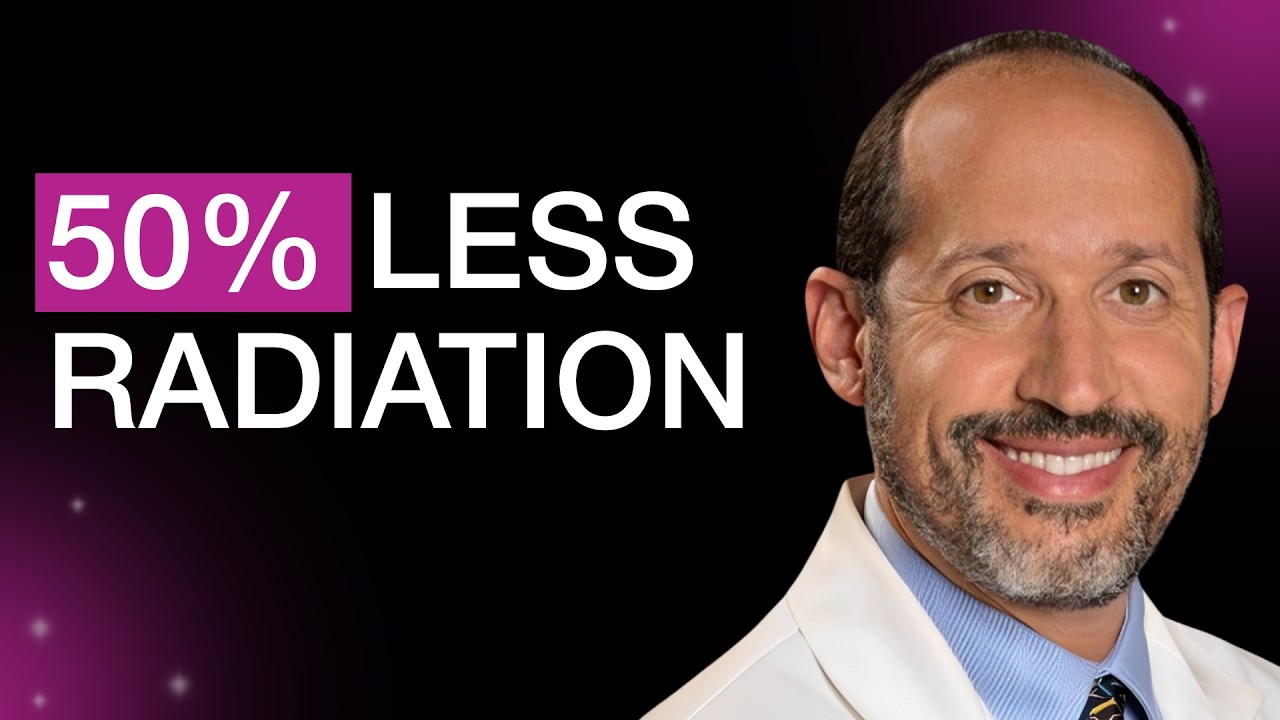
CHRIS ST. JOHN 00:00:59 Welcome back to Rethink Imaging. Today, I am thrilled to be joined by Dr. Leonardo Bittencourt, the Vice Chair of Innovation at University Hospitals Cleveland and a leader of Radicle, the Radiology AI and Diagnostic Innovation Collaborative. Dr. Bittencourt brings a unique perspective, having spent about 11 years at DASA, Brazil’s largest diagnostic company, before transitioning to academic medicine, where he’s been pioneering AI validation partnerships with startups worldwide. Under his leadership, Radicle has successfully partnered with companies like AZMed to achieve FDA approval for AI tools, demonstrating improvements in diagnostic accuracy and workflow efficiency. Today, we’re going to explore his straight-to-the-point approach to AI implementation, discuss practical strategies for departments looking to adopt AI, and get his insights on navigating this massive landscape of AI applications. Dr. Bittencourt, thank you so much for joining me today.
LEONARDO BITTENCOURT 00:02:04 Thank you so much, Chris, and to the Rethink Imaging podcast for the kind invitation. It’s going to be an honor.
CHRIS ST. JOHN 00:02:10 Thank you so much. Before we dive too far in, I’d love for our listeners to get to know you a little bit. You spent 11 years at DASA, which I think is Diagnósticos de América—it’s in Portuguese, right? It’s Brazil’s largest.
LEONARDO BITTENCOURT 00:02:28 It’s now a made-up word, but it was initially created as Diagnósticos da América, where the S.A. is the inc. termination in Brazil.
CHRIS ST. JOHN 00:02:41 Then you joined University Hospitals Cleveland. What drew you from the commercial environment to an academic medical center?
LEONARDO BITTENCOURT 00:0:53 Thank you for this question. Just to give you an idea of what DASA is about, DASA is the leader in diagnostic medicine in Latin America, probably one of the leaders in the world in numbers of exams processed. Diagnostic medicine means imaging, labs, pathology, and everything related to diagnostic imaging. Last time I heard, they had over 170 MRI scanners throughout Brazil. There are many countries that don’t have that number of scanners. Brazil has other major players in diagnostic medicine and in hospitals. It’s a market in consolidation right now, both the hospital health systems and diagnostics. DASA is the leader in diagnostic medicine and one of the leaders in hospital and health systems. I worked there for over a decade. There have been a series of mergers that further consolidated DASA, and they had a footprint of investing in innovation. They created very early on a hub for developing and internalizing AI applications and implementing digital solutions to their platforms. By doing so, they invited some of their physicians and practitioners to join as clinical champions and project leaders in some of those projects. I was fortunate to be among those clinical champions and project leaders. That’s how my journey in innovation not only began, but became more mature. We were exposed to a community of geniuses that the company brought into the headquarters to interact with the IT teams, data scientists, developers, and marketing department. We got an understanding of product development, revenue cycle, and clinical usefulness—things that are not always part of the clinical training of a radiologist. By the way, I’m an abdominal radiologist by training, and I research around prostate MRI. That’s my focus of research and advanced MRI for genitourinary conditions. But in that capacity, I was also serving as a clinical champion and project leader in some of those digital transformation and AI projects. That’s the DASA part.
In Brazil, it is also common that people who have an academic background can apply for part-time government positions in academic institutions. Most of the universities in Brazil that do research are government-owned and public. I had a part-time appointment at one of the federal universities in Brazil, and I was always involved with research since the beginning of my career there. So it was not a very harsh transition from private to academic, because I was always an academic radiologist practicing academic radiology in a private practice, too. DASA invested a lot in our academic development, which was what got me connected with University Hospitals and Case Western Reserve University in the first place. One of the things that the company would do would be to invite people from all over the world who were doing exciting and innovative research to come in and give talks to the community in Brazil. It was in one of those talks, when they invited one of my mentors, Dr. Mark Griswold—who is here at Case Western Reserve University and UH—to give a talk on a groundbreaking MRI technique that was developed here, that we got connected in the first place. That research we did together resulted in a continued collaboration that later on led to their invitation for me to apply for the position here.
CHRIS ST. JOHN 00:07:17 The position that you currently hold is Vice Chair of Innovation, which—I’ve heard of a lot of fun titles, but I have not heard that one in too many places. I feel like you’re in a relatively unique position. Most departments don’t have a standalone innovation role. How do you think leadership deemed that this was necessary, and what does your day-to-day actually look like in an innovation role?
LEONARDO BITTENCOURT 00:07:50 It is at the same time an exciting title and position to have, but also a very scary and intimidating one. When people hear it for the first time, they think, “My God, that’s nice—someone thinking about innovation individually.” Many departments have informatics and innovation or research and innovation, but innovation alone is so exciting. Then they have someone looking at innovation, but it’s almost always followed by, “Okay, but what does innovation do that the others are not doing?” That was my main question. Interestingly, it also had to do with the way that I was recruited. When the department approached me to see if I would be interested in pursuing a position here, initially their interest was in filling a spot that had more to do with MRI research. There was a whole effort in advancing the staffing and the faculty in MRI research here. Because of our collaboration, they felt, “Hey, why don’t you consider applying? We had a very successful engagement with you, and you may be a person to fill in that position.” When I came in and they learned about what I was doing over the last five years—not just what I was doing, but what I was exposed to in my work environment and all the innovation transpiring not only in DASA, but in the whole of Brazilian healthcare—they got very intrigued and interested. At the very last minute when I got my offer, the scope was broadened to innovation. It was something built together during the process of my interviews and recruitment here. I think it was a bold, clever, and very fortunate move from my leadership to look ahead and envision that idea of supporting innovation in an academic department. I hope it has paid off for them so far, and that this was a very successful idea that they had. I’m really grateful that this opportunity came up.
CHRIS ST. JOHN 00:10:27 You are the Vice Chair of Innovation and you also run Radicle. For our listeners who cannot hear the difference, that’s R-A-D-I-C-L-E, not “radically.” Can you tell us a little bit about your Radicle initiative?
LEONARDO BITTENCOURT 00:10:50 Sure. It has everything to do with this question of, “Chair of Innovation, so what?” When I joined here, it was during COVID—July of COVID. Imagine doing innovation without the ability to meet people, be in the same space, and have random conversations. All I had to do was accept all meeting invitations I got, all the cold calls that popped up on LinkedIn, and intentionally schedule time with my colleagues around the department to learn about their needs, expectations, and what I could do to help develop an atmosphere of innovation in the department. People had all kinds of comments like, “I’m a researcher, so I am an innovator.” That’s true up to a certain point. Someone else said, “I do informatics, and innovation should be informatics because that’s all innovation is about.” The first thing I noticed was: what makes innovation something unique that deserves its own leadership or governance, while respecting all the overwhelming overlaps innovation has with neighboring areas? There’s no way you can do innovation without doing research, without relying on informatics, product development, marketing, legal compliance, and everything else. What makes innovation “innovation,” and how can we foster an atmosphere of collaboration that brings everybody together with their contributions? The answer came from one of those cold calls. You mentioned AZMed. AZMed is a startup from France that was already doing well in AI detection of fractures on X-rays. They asked for one of those 15-minute calls. The call was initially to gauge our interest in having a free trial of their AI solution to experiment with, and if we liked it, we could commercialize later. As you and your listeners can imagine, there’s no such thing as a free trial in AI in radiology, because all those projects cost so much in internal effort and approvals that by the time you reach the three-month mark, it’s already gone and you won’t be able to experience it well. We were not inclined to accept free trials at the time. But because I valued the conversations we were having—they were very transparent and frank—I was made aware that they were not yet FDA-cleared and would be looking for a partner for the studies needed for their regulatory pathway. I said, “You know what? This can turn into an interesting concept for us to establish what innovation is in our department.” What if we create a process or program that helps companies in a structured way—not as a standalone, one-and-done approach as many departments do—to get the types of data they need for their studies, but also to build a community of clinical champions, practitioners, data annotators, and data reviewers who can surround the study with academic oversight and partnership? That gets those companies to commercial development while creating a long-standing academic relationship that reverts into a virtuous cycle. There will be some revenue made that can convert into grant money to fund my faculty colleagues’ time dedicated to research. That will expose them to more research and opportunities to engage with AI, and they will become clinical champions and key opinion leaders themselves. That critical mass will only grow, and suddenly, the mission of disseminating innovation will be fulfilled by this atmosphere of awareness.
CHRIS ST. JOHN 00:15:46 Can you walk us through how Radicle actually works? When you started working with AZMed, what did the process look like from initial evaluation all the way through FDA approval?
LEONARDO BITTENCOURT 00:16:05 If any listener from an academic department hears this, at first they will think, “Well, we all do that. Every academic department has people who get data for research. We have our informatics team. We have data requests. This is what everybody does.” I agree, this is what everybody does. But what makes not only Radicle, but other initiatives in academic departments going the same way unique—some of those were even our inspiration when we first started discussing—is that we try to bring it up at scale and with an intent to use it to support industry-academic collaborations without aiming only for those big, multi-million dollar grants, but for the small everyday micro-grants or micro-deals that create a sense of continuity and a landing zone for the industry and for our faculty to huddle around. The intangible concept is probably more unique than what we do at the end of the day, which is to select data, package data, ship data, and conduct research together with expertise and research oversight. It’s much more the understanding that this will hopefully be a self-sustaining virtuous cycle that will foster our collaboration with industry and expose our faculty to those opportunities.
CHRIS ST. JOHN 00:17:57 To pivot a little bit, when you and I had a phone call before recording the episode, one of the things we discussed was that when assessing AI tools, you prefer 100% workflow integration with about 80% accuracy versus the flip of that—80% workflow integration with 100% accuracy. Can you explain a little bit more what you meant by that and give us an example?
LEONARDO BITTENCOURT 00:18:31 Sure. This has to do with the other end of our innovation journey. Radicle lives much more in the co-development and validation phase of early-stage, pre-regulatory, or pre-clinical AI tools. But we try to participate in other parts of the AI journey in the department as well. Your question relates to the clinical implementation of commercial solutions. We have a whole arsenal of clinical AI tools being used today in our department, and they came through different routes. For your listeners in industry, most of those that are clinically implemented came through a successful research or co-development collaboration. Very few came through a sales pitch. It’s also worth mentioning that given my role in innovation, I participate in everything related to AI, but when it comes to clinical implementation and the decision to adopt a solution, the real decision-makers come into play: operations teams, department leadership, corporate budget teams, and clinical division heads. This is not solely my decision or realm; innovation is about empowering their decisions and providing the data we gather. Along this journey of clinical AI implementation, it’s common to get emails from executives across the institution—even outside radiology—sharing the headline of the latest article: “AI was better than radiologists at [fill in the blank].” There was even one claiming pigeons were better than radiologists at reading mammograms—come on! But if you go past the headline, the overwhelming majority of those publications relate to a study with a narrow question in a controlled environment with a selected dataset, in a way that does not replicate or emulate the clinical workflow. It’s made to prove a hypothesis, which is how science is conducted, but the study design doesn’t necessarily reflect how clinical teams will use the tool down the line. Other studies are well-designed and emulate clinical practice, and those are valid. But what happens is published papers become tools used by sales teams to pitch accuracy and performance. When you take the product out of the box to implement in a health system, that accuracy—largely due to workflow factors—will not be measured the same way. This statement comes from one of my brilliant colleagues and division head of Cardiothoracic Imaging, Dr. Amit Gupta, and I use it all the time because I agree so much: I would rather have an AI solution that fits perfectly into my workflow at the cost of some loss in accuracy than an AI solution that has 100% accuracy on paper but does not adjust to my workflow, forces me to log into separate systems, or isn’t inserted at the exact decision point where it’s needed. That is what determines whether vendors are successful, not just sheer accuracy.
CHRIS ST. JOHN 00:23:31 It leads to a follow-up question: if I’m looking to assess an AI tool to implement clinically, how do you even begin to assess the workflow side of these tools? It’s easy to quantify the success rate of an AI diagnostic tool, but how do you assess the workflow and how it’s going to fit in?
LEONARDO BITTENCOURT 00:24:07 Let me give you an example. Imagine you have a vendor that can detect a condition on X-rays from patients presenting to an emergency department. They come to us and say, “We are able to decrease the reading time of a radiologist by 40%. This justifies your purchase because your radiologists will be able to read that many more exams, generating that much more revenue.” They start making linear assumptions based on that single number of a 40% reduction in time or that their marginal cost is less than the average reading time. That doesn’t solve the equation, because the problem is not that single X-ray or narrow use case. For one, the ED has all kinds of patients. If it doesn’t reduce wait times in the ED, allow the emergency department to take care of more patients in a better, more structured way, or discharge patients better, you’re not solving the problem. You are solving a narrow use case and providing marginal results to a much more complex workflow, where this condition is only a small part and the radiologist reading those X-rays is likely also reading CTs, ultrasounds, or MRIs. Influencing a single small point in a heavily matrixed process doesn’t mean your product will be a game changer. When presented with similar proposals, we had to internalize their value proposition and recognize that it doesn’t solve the core problem. We need to figure out what outcome that use case influences and map it within our own reality, because there is no single workflow that works for everyone. We map our own process for how our emergency departments work, how that decision affects a patient’s length of stay, and the contribution of having or not having that tool on ED performance. It’s not just about accuracy—accuracy is just one element to consider. It’s also about how the information is presented, the processing time required for the AI, how it is communicated down the line, and how that communication affects downstream actions that impact length of stay, if length of stay is your KPI. That introduces complexity in assessing the value and cost of AI in radiology, because the vendors leading the market understand that while radiology deploys and uses these tools, the effects are felt much more outside of radiology than inside.
CHRIS ST. JOHN 00:28:13 Where would you say the effects are being felt?
LEONARDO BITTENCOURT 00:28:17 The effects are being felt most so far in the hyperacute setting—conditions like stroke, pulmonary embolism, and aortic dissection, usually in vascular or neurovascular settings where decisions are time-critical and every minute counts. The effects are felt not just because of the individual AI tool, but because of the entire framework: AI-powered results leading to a more timely decision, wet read, or early communication by the radiologist to the care team, alongside a communication strategy to activate care teams and empower treatment. The most successful solutions—the ones people are willing to pay for right now—solve a problem rather than just providing an answer.
CHRIS ST. JOHN 00:29:35 For departments looking to implement an AI solution, what is your take on individual point solutions versus more comprehensive platforms? Are there business or workflow implications to that?
LEONARDO BITTENCOURT 00:30:00 For departments willing to implement AI solutions, the first question to ask is: why are we implementing AI? Some departments have a true clinical need—they might say, “We are not meeting SLAs on stroke,” “We are understaffed,” or there is a well-mapped use case that justifies adopting a specific AI solution proven for that need. Other departments say, “Everybody is adopting AI, so we should look into it and dedicate budget to experiment.” Then there are departments—I consider ours part of this group—that have a track record of research and collaboration and are immersed in an innovation environment where good ideas naturally trickle in. They have the maturity to assess what is worthwhile and differentiate exploratory projects from full clinical deployment. For a department with a specific use case, they should issue an RFP and evaluate vendors the same way they would buy a PACS or a scanner, because it is ultimately a point solution for an existing problem. For those who want to experiment with AI, a platform is a good approach if budget allows. Most platforms allow you to try before you buy and offer multiple vendors for the same use case, allowing you to adapt the selection to your needs. To clarify for your listeners, standalone solutions are offered by a vendor to implement directly into your information systems—your PACS, RIS, or electronic medical record. You manage the implementation, vendor relationship, contracts, and maintenance. A platform operates like an app store: you contract with the platform, which serves as a single connection to your information systems. The platform hosts third-party or proprietary AI solutions that you can turn on or off based on your business model, and they manage the vendor relationships. If you are not creating research collaborations or do not have the bandwidth to manage individual vendor relationships, platforms are usually the way to go.
CHRIS ST. JOHN 00:34:11 I’m curious, what exactly did you have in mind when you were talking about futurology?
LEONARDO BITTENCOURT 00:34:20 Innovation in AI is an ever-changing field—discomfort is the norm. You can never reach a comfort zone because then you won’t be innovating; you need to be challenged continuously. Just as we are creating clinical adoption frameworks, establishing measurement metrics, and engaging C-suite executives, new revolutions emerge within AI. Discussions around large language models, foundation models, and fine-tuned models are going to radically change the scene again. That is what I meant by futurology: we cannot afford to get comfortable with a technology, because it evolves by the time we figure it out. The impact is already being felt across health systems with ChatGPT-like tools and large language models incorporated into medicine. It won’t be any different for radiology in how we create, deploy, operate, and measure AI solutions.
CHRIS ST. JOHN 00:36:09 When I hear that, I wonder to myself: with the exponential increase in efficacy and models helping build, shape, and train other models, are we going to be able to keep up?
LEONARDO BITTENCOURT 00:36:45 It is crazy! Full disclosure: I am not a computer science expert. I am a radiologist who had the opportunity to be exposed to innovation, so I live on the border where I translate concepts back and forth between clinical and technical teams. What I say comes from my understanding of conversations in the field. Take general large language models like ChatGPT, Gemini, or Grok. They are generally good for broad tasks, but when you want to address a specific niche or domain, you need a dedicated downstream model or wrapper enriched with specific data, constraints, and conditions to improve performance. Healthcare is no different. Many applications today outside radiology—like ambient listening or chart summarization—rely on fine-tuned large language models. A growing number of companies are investing in radiology-specific foundation models trained on millions of combinations of imaging exams and reports. These foundation models develop an ontology or understanding across millions of exams to answer general questions out of the gate. If you want to specialize in detecting lung nodules, you can provide a small sub-fraction of data to fine-tune that foundation model. That fine-tuning dataset is much smaller and less demanding than what is currently required to train a standalone model from scratch. This will exponentially accelerate industry capability to build models for new use cases and conditions, expanding beyond radiology to incorporate lab values, clinical records, and longitudinal patient data. Looking ahead, if it becomes that easy to fine-tune downstream models, why would a health system pay for pre-packaged vendor models if we can create our own internally for our patient population using a foundational model subscription? The next revolution will challenge business models that haven’t even fully matured yet.
CHRIS ST. JOHN 00:41:24 Before I let you go, as we reflect on this futurist perspective, is there a specific breakthrough in AI or machine learning in radiology that you are eagerly anticipating or particularly excited about?
LEONARDO BITTENCOURT 00:41:45 We should be excited if it leads to the betterment of patient care and humanity. People naturally express anxiety because technological shifts can disrupt traditional workflows and roles across every profession. But radiology and medical imaging are exceptionally complex fields. People have claimed radiology was on the verge of obsolescence for years, yet we remain understaffed. The text-based AI revolution moved much faster than the imaging-based revolution, and other specialties face immediate impact before radiology does. To listeners concerned about the future: if radiology becomes obsolete, it means the broader professional landscape has already transformed. Major breakthroughs will occur as foundation models and large language models operate multimodally—combining imaging, clinical text, pathology, and administrative data. That integration can solve complex system-level challenges, reduce costs, improve patient outcomes, and provide evidence for questions we haven’t yet fully framed.
CHRIS ST. JOHN 00:43:45 That is all the time we have today on Rethink Imaging. Dr. Leonardo Bittencourt is the Vice Chair of Innovation at University Hospitals Cleveland and the leader of Radicle. Dr. Bittencourt, it has been an absolute pleasure. Thank you so much for joining us today.
LEONARDO BITTENCOURT 00:44:03 Thank you so much, Chris, and thanks to the listeners.