Rethink Imaging Podcast Transcript
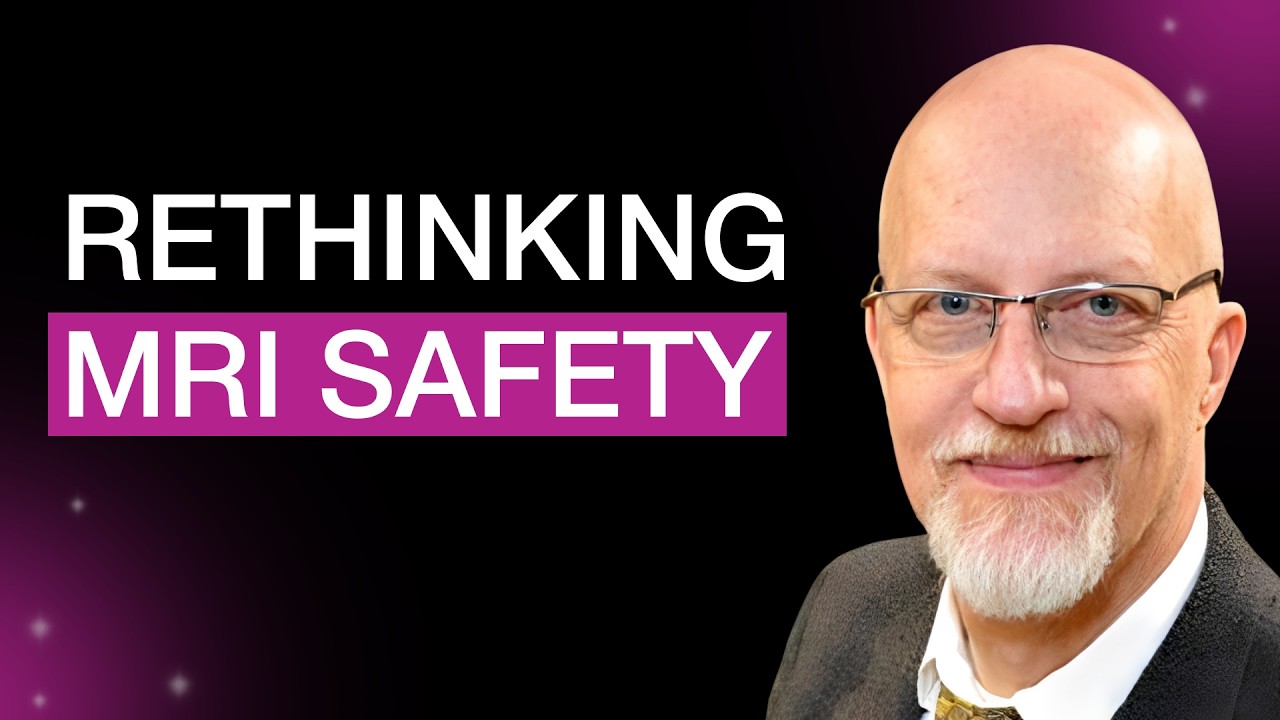
Guest: Tobias Gilk
Host: Chris St. John
CHRIS ST. JOHN 00:01:29 We’re going to circle back to best practices and regulatory stuff as well, but I want to take a slight little tangent. First of all, I want to plug Toby’s podcast, The Invisible Force, which y’all can find on podcast platforms, YouTube, and it’s being pushed out through AuntMinnie. Is that correct?
TOBIAS GILK 00:01:51 Yeah, they’re carrying it as well.
CHRIS ST. JOHN 00:01:54 Beautiful. On this show, you are investigating an MRI accident that happened last year, July 2025, on Long Island, which I remember seeing in the news myself. Obviously, there’s going to be some stuff we can’t totally get into, but for anyone who didn’t hear about this incident with the gentleman who was not getting scanned, but was wearing a very heavy metal chain around his neck and ended up getting pulled into the scanner—do you mind giving a quick summary of what happened in this incident and touching on it a little bit?
TOBIAS GILK 00:12:39 Sure, absolutely. The gentleman, Keith McAllister, was accompanying his wife, Adrienne Jones McAllister. She was going for an MRI of her knee at an outpatient imaging center, Nassau Open MRI, in Nassau County, New York, out on Long Island.
At the end of the exam, she had already been pulled out of the tube—out of the donut—and was lying on the table when she called for her husband. Amazingly, the facility had closed-circuit security cameras that recorded all of the activity throughout the building. Someone somewhere, I suspect within the Nassau County Police Department or DA’s office, leaked about a one-minute-and-twenty-second video clip.
The camera is just outside the MRI scanner room, looking through the open doorway. We see Adrienne Jones McAllister on the MRI scanner table, the MRI technologist in the room with her, and then Mr. McAllister walk in under the camera, into frame, and through the open door into the MRI scanner room on the opposite side of the table from the MRI technologist.
He is helping his wife sit up in the magnet. She is lying on her back and reaches out her hands to him. He reaches out his hands to her, they grab hold of one another, and he pulls her up into a seated position, which brings her torso close to him. He takes a step backward as she comes up into a seated position, and that little half-step backward is enough to get this 20-pound chain that’s around his neck into the field.
Some people wear weighted vests or rucksacks for an improved cardio workout; this appeared to be a more utilitarian version—just a weighted chain around his neck. That half-step he takes pulling his wife up into a seated position is enough to get the chain right within the super-high-strength magnetic field part of the MRI.
Watching the video, it’s not gory, but it is certainly disconcerting. All of a sudden, you see this man, with what looks like an invisible rope around his neck, get pulled by the chain headfirst into the tube of the MRI scanner.
The video clip ends very shortly thereafter. The technologist is reaching in, trying to pull the chain off from around his neck, and Mrs. Jones McAllister is grabbing his belt, trying to pull him out by his belt. Then the video stops.
After an extended period of time—identified by Mrs. Jones McAllister as being the better part of an hour in order to get him out of the tube—he is in the tube with a steel chain around his neck. They are ultimately able to get him out and rush him to a nearby university hospital, but he is pronounced dead the following day, reportedly having suffered multiple heart attacks.
This MRI accident, like so many others, appears rather infrequently, so the tendency is to think this is “hand of God” level stuff—that these are freak accidents, nobody could anticipate that this might happen, and certainly nobody could have prevented it. None of those things are true. There is a long and storied history of people going into MRI scanner rooms with magnetic objects that get pulled to the MRI and cause injuries or deaths.
The State of New York actually now owns the two most infamous MRI deaths in the United States, both of which involved magnetic objects getting pulled into the MRI scanner. The first one—when we were talking about my architectural introduction into MRI safety—I mentioned the 2002 ACR White Paper on MR Safety. That was written in direct response to the death of Michael Columbini at Westchester Medical Center in the summer of 2001. Twenty-four years later, also in New York, we have Mr. Keith McAllister who died because of the chain around his neck.
We have a long and storied history of these kinds of accidents happening—projectile accidents in particular, because they tend to be photogenic. But despite the fact that we know how they happen, and despite the fact that we have built a body of preventions that would be really effective at stopping these if we actually followed them, nobody requires them.
CHRIS ST. JOHN 00:08:28 So you were saying that it took them about an hour to get him out of the MRI, which, from my limited understanding of how MRI work, there’s a quench button which uses liquid helium to rapidly cool what? The coil? The magnet?
TOBIAS GILK 00:08:49 We rapidly boil off the liquid helium that keeps the magnet cold. When the wire that makes the magnetic field is 450 degrees below zero, it becomes superconducting, which means you put electricity into it once, and it stores it like a battery while it keeps making a magnetic field. If you shut off the power to the entire city block, it does nothing to the magnetic field because the energy to make it is stored like a battery in the wires.
So we have to have another way of turning off the magnetic field, which is what the quench button is. Essentially, when you push that button, it activates a little heater inside the MRI scanner and starts a cascade effect that winds up boiling off all the liquid helium. Now the wire inside the MRI scanner converts the electrical energy that makes the magnetic field into heat to boil off the helium. So it’s a big deal to push that button.
The original conjecture and inferences made by folks related to the imaging center was that they pushed the big red button that’s supposed to trigger the quench and make the magnetic field go away, and for whatever reason, it didn’t work—even to the point where they wound up putting in an emergency call to a contracted service engineering company to dispatch somebody to figure out why the quench button wasn’t working while they were exploring other ways of trying to get Mr. McAllister out of the tube.
In a conversation between the MRI tech and some other folks who I spoke with—so this is secondhand, but from sources I rely upon and have a great deal of faith in—apparently, the MRI tech described hitting the quench button, and that it didn’t work. As the other folks were exploring that, he said, “Yeah, I went up to the face of the bore of the magnet, and I hit the red button.”
In many MRI scanners, there is a red button on the face of the MRI, but it’s not the quench button. It’s what’s called an E-stop button. Essentially, if there is an imaging sequence running at the moment, hitting the E-stop button stops the pulse sequence from running and unlocks the table so you can slide the patient out. At the moment he pushed this button, there was no sequence running, and Mrs. McAllister had already slid out of the tube. So if you hit that button, nothing noticeable would happen.
If the technologist was under the impression that that was the quench button, and he kept poking that button and nothing happened, one would understand how he would have the impression that the quench button was broken and wasn’t working. The fact that neither the imaging equipment service company nor the manufacturer of the MRI scanner were named in any of the subsequent lawsuits is a good indication that there wasn’t anything identified wrong with the quench button. This appears to have been entirely an issue of operator error.
CHRIS ST. JOHN 00:12:27 It gets me thinking about the crux of this conversation: What does this say about the state of MRI safety in general within the US? Part of me instinctually asks, how are these buttons not better labeled? Not to boil it down to something as simple as labeling, but also for an MRI tech… I understand it’s a very scary situation, and I understand that in traumatic situations, the human brain and body don’t always think clearly. I’m not trying to dismiss whatever situation that tech was going through, but at the same time, if someone is approved to be an MRI tech, the quench button seems to be a core safety principle that needs to be deeply embedded into their brain and practice.
TOBIAS GILK 00:13:33 I’ll give you a couple of disturbing examples of where we stand with MRI safety education. One is from a seminar I did this past weekend. I was talking with someone who had done a deep dive into the ARRT (American Registry of Radiologic Technologists) certification exam for the MR credential—so RT(MR)s. In order to pass the registry exam, you have to get a certain number of the total presented questions correct. Let’s say you’re allowed to miss 25% of all presented questions—I’m making up numbers here because I don’t know specifically what they are. Well, if the safety questions presented on an exam are 10% of the questions, you can essentially blow all of the safety content and still get your registry assigned as an RT(MR).
That’s actually a better situation than radiologists. For the radiologists listening right now, don’t blame the messenger: Radiologists are legally responsible for the safe execution of the exam. That’s not something that gets talked about very frequently—quality, accuracy, and timeliness of reporting are usually what get emphasized in terms of a radiologist’s legal duty. But in addition to those, radiologists are the supervising physicians for MRI exams. In a radiology residency, radiologists are required to get radiation safety training, but they are not required to get any MRI safety training.
So you can have a radiologist—the MD in charge of the safety of the execution of the exam—who has completed their residency and does not have the first clue about MRI safety. That’s the state of the art in 2026.
To be clear, there are radiology residency programs—and I actually teach MRI safety for at least one of them—where we make sure we are introducing this important knowledge to the radiology residents. But for a program looking to do only the checkbox minimums of what the ACGME says they have to, you can turn out radiology residents who have no knowledge of MRI safety.
Board certification in radiology is similar to the situation described for the RT(MR) registration. You can bomb all of the MRI safety questions and still pass a board registry. So we don’t have effective MRI safety training minimums, even for the people who have the most hands-on responsibility for the safety of patients and the environment.
CHRIS ST. JOHN 00:17:21 Do you think it should be the federal government, state governments, or accrediting bodies? Where do you see these safety pathways needing to come from?
TOBIAS GILK 00:17:35 Like most people, I have skepticism about the federal government sweeping in to make our lives better. That being said, we’ve been living with a “choose your own adventure” model for MRI safety, and we keep seeing people injured in ways where we know how those injuries happen and we know we have effective preventions.
For a long time, like many people in radiology, I thought, “We will be good and self-police, and we’ll get this stuff done.” That has not happened in the last 25 years. In fact, as MRI care gets more and more complicated, the situation appears to be getting progressively worse. So at this point, I’m thinking we need to have somebody step in, and there are a few different ways that could happen.
CMS, the 800-pound gorilla in the healthcare space, could step in if they so chose. On the hospital side, CMS has Conditions of Participation. One of the things the radiology Conditions of Participation say is that you must meet professionally approved standards for safety.
If you go to CMS, as I have done, and knock on their door saying, “You say we must meet professionally approved standards for safety. I’m not going to ask about all of healthcare, just one area: MRI. What do you acknowledge as the professionally approved standards for MRI safety?” CMS essentially throws up their hands and says, “We don’t know. Surely the world out there knows what those standards are. Go ask the states, because we don’t enforce this at a national level; the states enforce this on our behalf.”
This was motivated by one particular accident that happened in the state of Texas, so I went and asked the Texas Department of Health—or whatever the title of that department is. They essentially said, “Why are you asking the states what CMS’s ‘must meet professionally approved standards’ is? If it’s a CMS requirement, you should be asking CMS.” I said, “Yeah, but CMS said you guys are the enforcers and would know.” They replied, “Why would we know it’s a CMS standard? We’re the hired muscle. We’re supposed to do what they say. If they don’t tell us what it is, we’re not going to do anything.”
CMS could change the MRI safety landscape with a snap of their fingers if they just said, “For MRI safety, when we talk about professionally approved standards, what we mean today—and we reserve the right to change our mind tomorrow—is the ACR Manual on MR Safety.” If they did that, suddenly there would be an objective best-practice set of criteria invoked and referenced on a national scale.
They could similarly do that with accreditation organizations. They could say, “We’re seeing a disconcerting growth in MRI accidents. We want all of you to show us how you are incorporating the specific performance criteria from this ACR document.” That would have a sea-change level impact on hospitals.
In 2008, the US federal government passed MIPPA legislation—the Medicare Improvements for Patients and Providers Act. In the MIPPA legislation, they said CMS will pay for CT scans, PET scans, and MRI scans from outpatient facilities and providers, provided those services are provided safely and effectively. The first two—CT and PET—use ionizing radiation, so there is a body of both state and federal safety standards associated with them. But there are no state or federal standards for MRI safety.
So despite MIPPA stating that outpatient imaging must be done safely and effectively, there’s no yardstick or measurement tool for the safety of MRI services. If CMS wanted to, they could change the MRI safety landscape overnight simply by identifying what tools we should reference where standards are explicitly invoked.
If they just told us, “This is what we want you to use,” the world would change overnight without needing to depend on senators, representatives, policy aides, and lobbyists swooping in to craft something that suits them better. We have a brilliant set of MRI safety best-practice standards out there—publicly, freely available, and the most comprehensive thing I have seen anywhere in the world. Yet it languishes in a status of, “We think it would be a good idea, we’d really like it if…”
Nobody is saying, “We demand safe patient care, there are specific performance criteria that will help you get safe patient care, and therefore we expect you to follow these criteria.” The criteria exist; nobody so far has been willing to say, “These are the ones we want you to use.”
CHRIS ST. JOHN 00:24:35 At the same time, didn’t CMS also recently release new CPT codes for reimbursement for doing proper implant screening?
TOBIAS GILK 00:24:51 In my mind, this absolutely takes the cake in terms of making the case for MRI safety standards. Because of the increasing complexity of MRI and MRI safety—because we have patients with greater numbers, varieties, and complications related to implants, devices, and foreign bodies—CMS has justifiably said, “We need to compensate the folks treating these more complicated patients for the additional labor associated with more complex patient care.” I think that is both appropriate and responsible so we don’t financially penalize the institutions taking care of our more complicated patients.
I think it’s brilliant. I love the fact that CMS has these CPT codes. But if MRI safety is so much more complicated today than it was 20 years ago—so much so that we need additional reimbursement tools—who is actually implementing these tools?
We have technologists and radiologists whom we don’t require to have any meaningful MRI safety training as a basic foundational layer to the whole system. We are willing to pay for more complicated MRI patient care, but CMS at the same time is unwilling or unable to establish minimum safety standards for the people or practices operating inside these imaging centers.
I would not want CMS to throw the baby out with the bathwater here, and I wouldn’t want them to undo anything related to the CPT codes because they are definitely a step in the right direction. But they acknowledge the safety situation in MRI in a way that CMS fails to acknowledge when it comes to minimum standards for policies, procedures, actions, and training.
So yes, I think these facilities should get paid for the additional work they’re doing. But if the entire rationale for paying them more is that MRI is more dangerous, complicated, and labor-intensive, shouldn’t we also be looking at these other pieces? Thumbs up to the CPT codes, but where the hell is CMS with respect to addressing the underlying issues that the CPT codes are trying to correct?
CHRIS ST. JOHN 00:27:48 You’ve also written about MRI remote scanning and how safety standards haven’t kept up with the technology itself. What’s the risk there, and what should facilities be thinking about?
TOBIAS GILK 00:28:02 Remote scanning is really interesting. It pushes a lot of people’s buttons, and many have an immediate reaction to the idea that the person running the scanner isn’t there—that with a high-speed internet connection, they can run the scanner from Timbuktu.
CHRIS ST. JOHN 00:28:28 Can they press the quench button from Timbuktu?
TOBIAS GILK 00:28:33 That’s one of the problems. The three main risks we identified—burns, projectiles, and hearing damage—are managed as pieces of the physical environment. If the technologist running the MRI scanner is no longer part of that physical environment, who is responsible for it?
Interestingly, in the ACR safety document that I keep hoisting up onto a pedestal, one of the things I disagreed with in the 2024 ACR manual was how they addressed remote scanning from a safety standpoint, which was very perfunctory. They essentially said, “There’s really only one existing role or credential recognized among the states and federal entities where we have some degree of confidence that they understand the MRI environment and the safety of working inside it: the RT(MR), the MR subspecialty-certified technologist.”
So if we want someone running the MRI scanner, we want that to be an RT(MR). And if we want someone in charge of the physical environment, patient screening, prep, positioning, coil selection, and patient padding, the only person we know gets that kind of training is an RT(MR). So they want an RT(MR) in that position—which ignores the fundamental labor shortage issues and economics pushing for remote scanning.
In many parts of the United States, we don’t have one RT(MR) per magnet. The ACR’s minimum staffing model means the remote radiologic technologist may be running two or three scanners concurrently interleaved. Their response failed, in my estimation, on two counts:
It ignored the underlying labor and economic reasons for remote scanning.
It failed in terms of imagination.
At the time the 2024 document was written, I agree that the only individuals we could count on to have that knowledge were MR techs. But why don’t we describe how to impart that knowledge to folks who aren’t MR techs?
On that front, at the beginning of the year, ARRT announced a new Imaging Assistant role—IA(MR)—and plans to have a registry for these individuals sometime in late summer or fall, which is brilliant.
Interestingly, the IA(MR)s—essentially tech aides for MR—are going to have to have more MR safety training than radiologic technologists or MR techs. From an MRI safety standpoint, the continuing education requirements for the tech aides will require more MRI safety continuing education than for RT(MR)s.
We are beginning to see a recognition that managing the physical environment is critical, to the point where they are requiring more MR safety training for tech aides than for the techs themselves. We are starting to see the development of roles and infrastructure that can support remote scanning while providing assurance of effective safety management—like knowing which button is the right quench button. These things are exceptionally important when you need them.
CHRIS ST. JOHN 00:33:29 I want to talk about a quote from you where you say, “If you’ve been told MRI safety only comes at the expense of throughput, you have been lied to.” Will you make that case for me?
TOBIAS GILK 00:33:42 Sure. This brings things full circle to some extent, and it has to do with workflow and our conscious awareness of whether we chose to do things this way or just fell into them.
A number of years ago, I ran a poll on the Facebook MRI Safety group—which right now has just shy of 40,000 members from around the world. I asked how many schedule slots get left empty because patients show up at the doorstep saying, “Oh, did I forget to tell you I have a pacemaker?” or “I had surgery for my stroke, but I don’t know what they did.” These 11th-hour surprises related to patient safety leave appointment slots open.
The average was around 2.4 to 2.5 appointment slots per tech per 40-hour workweek. In academic medical centers, that number approached five appointment slots per full-time shift per magnet.
What most facilities don’t realize is that if we were smarter about our processes, we could identify those risks earlier. Those patients would either be canceled in advance—letting us schedule someone else in that slot—or we could identify and resolve potential conflicts so the patient is good to go for their study.
Let’s say the average is two patients per week, and let me make the math easy: assume $500 in technical revenue per MR study. That’s $1,000 a week for a 40-hour schedule, or $52,000 a year—assuming you only run 9 to 5, Monday through Friday. If we add 50% to account for additional hours, we’re at $75,000 to $80,000. An individual facility is probably losing, at a minimum, $75,000 to $80,000 because they aren’t managing MR safety screening and patient clearance efficiently.
Even assuming we still get some 11th-hour surprises, let’s take half of that: I can put $40,000 a year back in the pocket of a single-magnet MRI operator working Monday through Saturday simply by improving patient scheduling and screening, educating point-of-care staff, and working with radiologists to establish clinical decision support tools for uniform care.
One of the biggest drags on productivity and throughput is an inefficient approach to safety questions. If we improve safety workflow, the expected outcome is that you scan more patients per day, week, month, and year, collect more revenue, and do it with less uncompensated labor.
We talked about CPT codes and reimbursement, but if we avoid these bottlenecks, you maximize the most revenue-generating part of your practice: getting people into and out of that scanner.
The resistance I hear from radiology administrators and C-suite leaders is, “This guy is going to come in, talk about MRI safety, slow everything down, and reduce patient volume.” I’m pleased to report that most are pleasantly surprised. I don’t want you to slow down unnecessarily—though in certain situations that is appropriate—for the most part, I want you to speed up. I want you to manage speed bumps so you have a more frictionless patient experience and throughput on a daily basis.
CHRIS ST. JOHN 00:39:45 I feel like that’s a beautiful full-circle moment to wrap things up. Toby, that is all the time we have today, but thank you so much for coming on the show. I’ve loved talking to you today.
TOBIAS GILK 00:39:55 Thank you very much, the pleasure has been mine. I love your podcast and all the guests you’ve brought on, and I hope I lived up to expectations.
CHRIS ST. JOHN 00:40:24 Thank you. I’m sure you did! I hope to have you back someday.
Rethink Imaging is brought to you by Imalogix. Here, you’ll find engaging interviews with thought leaders, experts, and patients sharing stories that showcase the transformative power of medical imaging. To discover how Imalogix is rethinking imaging in healthcare, visit imalogix.com. Be sure to subscribe to Rethink Imaging on Apple Podcasts, Spotify, or wherever you listen. And from all of us here at Imalogix, thanks for tuning in.