Olav Christianson Final Transcript
[00:00:00] Chris St John: Welcome to Frame by Frame, Rethink Imaging, a podcast by Imalogix. Here, we explore the intricate world of medical imaging, aiming to dissect the field and inspire both professionals and curious minds alike. I’m your host, Chris St. John. Welcome back to Frame by Frame, Rethink Imaging. Today, we are going to be discussing the new CMSxRAD eCQM with Olav Christensen.
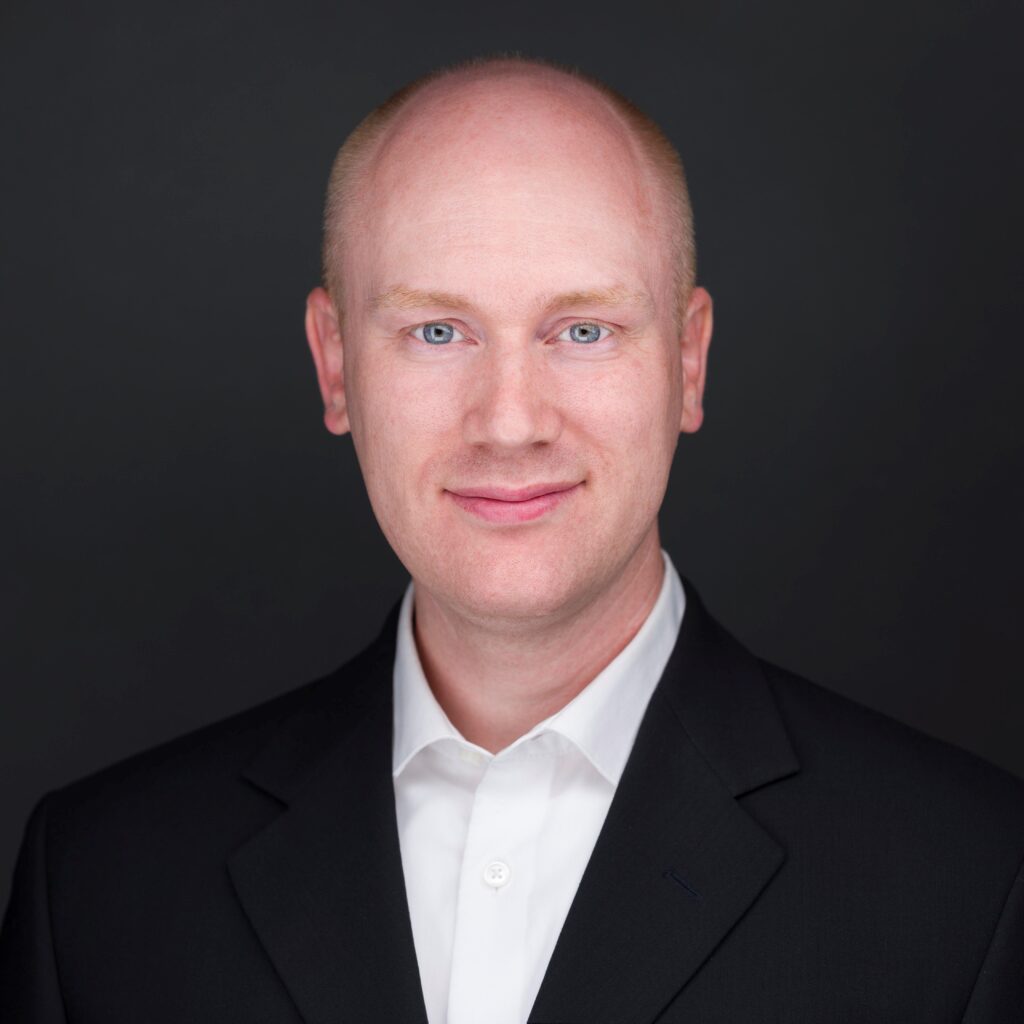
[00:00:29] Olav is the vice president of clinical strategy at Imalogix, where he brings over a decade of experience in medical physics and clinical consulting to his current role. He earned his master’s degree in medical physics from Duke University, where his thesis focused on developing dose monitoring software.
[00:00:45] During his time as an on site medical physicist at Duke University Medical Center, he published several influential academic papers on radiation dose monitoring and image quality analysis. As one of the early contributors to the field of radiation dose monitoring, he authored [00: 01:00] foundational papers on radiation dose tracking and automated noise assessment, which have been cited by CMS in their measure specifications.
[00:01:07] His work has shaped best practices in dose monitoring and continues to be a key reference in the field. Previously, Olav led a practice of medical physicists collaborating with over 300 hospitals across the U. S. to optimize radiation protocols and improve patient safety. In his current role at Imalogix, he’s deeply involved in shaping clinical strategy and advancing innovation in radiology and imaging technology.
[00:01:30] An active member of several professional societies, he works closely with various groups to provide clarity on CMS’s new electronic clinical quality measure on radiation dose and image quality and supporting its implementation across healthcare systems. Olav, thank you for your patience through that introduction and welcome.
[00:01:48] Olav Christianson: Oh, thank you for the wonderful introduction.
[00:01:50] Chris St John: Absolutely. It’s my pleasure. Olav, let’s just get right into it, right? You’ve been heavily involved in CT image quality throughout your career. Can you tell me [00:02:00] first a little bit about how you got started in this field? And talk a little bit more about your experience on the subject.
[00:02:06] Olav Christianson: Sure. So how I got started is I, well, my father was a nuclear physicist. My mother was a doctor. So this became kind of a nice bridge point between the two of them and a natural landing spot for me. But I actually started off on the physics side. I got my bachelor’s degree in physics and I wanted to study astrophysics.
[00:02:28] I still find astrophysics a fascinating subject, but the problem for me was the Impact it had was long term in finding new branches of science and understanding what’s happening in the universe. And I needed to do something that was more immediate, something that impacted people’s lives. And that’s when I came across medical physics.
[00:02:50] And actually I got a degree in nuclear engineering first, but I did a specialty in medical physics and then eventually decided to go to the program at Duke [00: 03:00] to pursue another master’s degree in medical physics.
[00:03:03] Chris St John: Oh, very nice. And it was at Duke too, where you started really focusing on image quality, right?
[00:03:09] Olav Christianson: It was, yeah. Ahsan Sameh was a former guest on this podcast, was my advisor in graduate school. And my work focused on radiation dose and image quality. For a long time in medical imaging, especially in CT, we’ve relied on phantoms as a way of measuring the image quality. A phantom is basically a test object with devices inserted into it allow you to take measurements about how good the images look.
[00:03:36] So you put the phantom on the scanner, you scan it, and then you can take some measurements. The challenge with this is the measurements you take on image quality are only applicable under the parameters that you image the phantom. On a typical CT scanner, you have somewhere between 30 and 100 CT protocols.
[00:03:56] You’re only required to test a handful of them using these [00: 04:00] phantoms. So for the remainder of the CT protocols, we have very limited knowledge of how that scanner is performing. And how good the images really are. So the idea I had was to say in addition to the phantom measurements, can we extract meaningful information directly out of the images?
[00:04:19] Can we just look at the images and say, is this a good image or a bad image? And that’s what we started with. Looking at the noise. If you’re not familiar with noise, you can think of photography. Imagine you’re taking a picture in a dimly lit room. You’re not getting enough photons of light to make a good picture.
[00:04:36] The image can come out looking grainy. Same thing happens in CT. If we’re not getting enough x rays to the detector, then the images look grainy or noisy. So that’s one of the key parameters of how good an image is. So we started by looking at noise and said, can we automatically measure the amount of noise in CT images?
[00:04:57] And the answer was yes. We came up with a new [00: 05:00] technique, an automated technique, to measure it in every single CT image. That led to my, uh, 2015 paper where we came up with the term global noise level, and that’s now one of the three data elements that’s part of this eCQM.
[00:05:14] Chris St John: Yeah, that’s right. And so, before we dive too deep into global noise, for those who are unfamiliar, what exactly is the new CMS measure?
[00:05:24] I believe it’s titled excessive radiation dose or inadequate image quality for diagnostic CT in adults. And why is it such a big deal for medical imaging?
[00:05:34] Olav Christianson: So, let’s take a step back and talk about CMS and what their role is. CMS is responsible for providing healthcare to approximately 160 million Americans through It’s various programs like Medicare and Medicaid.
[00:05:50] One of their tasks is to ensure high quality care for all of those patients that are receiving care through those programs. There’s a lot of tools they have to do that, [00: 06:00] but the one that we’re going to talk about today is clinical quality measures. Clinical quality measures are They identify an important aspect of delivering quality care and a way to measure it.
[00:06:10] And then hospitals that want to get payment from Medicare and Medicaid have to submit their data to CMS to prove that they’re delivering high quality care. So CMS came out with a new clinical quality measure. This one’s actually an electronic clinical quality measure, which means that it’s not pencil and paper.
[00:06:27] This is all electronic or eCQM and that titled excessive radiation dose or inadequate image quality and CT. It’s part of three programs with CMS, that’s the Inpatient Quality Reporting, Outpatient Quality Reporting, and the Merit Based Incentive Payment System, or MIPS. So this is now a new measure that is available for reporting.
[00:06:49] It is currently voluntary for all three programs, will become mandatory for reporting for outpatient 2027. So that’s kind of the high level, how this [00: 07:00] fits in with CMS’s initiatives. But there’s some unique aspects to this eCQM, okay? One of them is most eCQMs use data that’s available in the electronic medical record already.
[00:07:14] For example, you might be looking at patients that present to the emergency department with heart problems. And then you say, do they receive the care they need within the time it’s specified, right? If it takes too long to provide care. That might indicate poor quality for those patients and could result in worse outcomes.
[00:07:32] That information is all documented. You know what time the patient showed up, what time the patient received the, the care they needed, and it’s very easy to compute whether you met CMS’s criteria. With this new eCQM, it’s talking about radiation dose and image quality. Those data elements are not readily available in the EMR today.
[00:07:54] So there’s the need for software that will calculate those data elements before you can [00: 08:00] actually compute the measure. CMS calls that translation software. To my knowledge, this is the first eCQM that requires translation software of any sort.
[00:08:11] Chris St John: And so let’s say then that, you know, a facility is already tracking dose in their EMR.
[00:08:17] What are the extra steps then to comply with the new measure?
[00:08:21] Olav Christianson: So, what you need to do is you need to get the, you need to calculate the three data elements, which, depending on how you go about doing it, could be a small or a large project, but once you have those three data elements calculated, you need to insert them back into the EMR, or at least, this is the primary way of reporting the CMS.
[00:08:40] There are other pathways I can talk about, but the primary pathway most hospitals will use is to insert those three data elements into their EMR. And once they’re in your EMR, then you just follow your normal CMS reporting pathways. There’s logic from CMS about how you search for these data elements and how you compute the measure and how it [00: 09:00] gets submitted to CMS.
[00:09:01] Which is usually in the form of a QRDA file. Now, I will say that a lot of the EMRs are working through how they are going to integrate with other vendors out there. And so they’re actively looking at that process. Some of them may be further along than others, right? But I would talk to your EMR vendor and ask them about what they’re doing and what a timeline is for when you can expect that integration to come out.
[00:09:28] In fact, we’ve been in discussions with Epic for some time now about what their integration is going to look like and when that’s going to come out. So we’ve been working closely with them and they’ve been clear that their integration will be vendor agnostic. And it’ll be available to everybody at the same time.
[00:09:44] Chris St John: Oh, great. So if folks wanted to do their own solution and they already have Epic installed, they won’t have to worry about bringing in any other pieces to that puzzle.
[00:09:54] Olav Christianson: If you have Epic and a tool that supports the translation software, such as [00:10:00] Imalogix, then yeah, we’ve already worked through, we’re working through the integration with them.
[00:10:06] Chris St John: Yeah. I mean, let’s dig in, right? So. What exactly is translation software and why is it required for this measure?
[00:10:15] Olav Christianson: So there’s three data elements that are required to compute the measure. One of them is a data element, the other two are quantitative. So the qualitative one is, what’s the CT category? That’s things like, is this a low dose head or is it a high dose chest?
[00:10:32] There’s 18 different categories that CMS has defined. The other two are quantitative measures. The first one is the global noise, which we talked about a little bit. I’ll get into a little bit more detail on it. The second of the quantitative measures is the size adjusted radiation dose. Okay, the reason both of those are important is When we image a patient in CT, we use x rays.
[00:10:55] The x rays go through the patient. Some of them are [00: 11:00] absorbed or interact with the patient. Some of them make it all the way through to the detector. Those are the ones we’re using to generate the image. If we get too few x rays that make it to the detector, then we end up with a bad image, a noisy image.
[00:11:14] If we have too many x rays, then that means there’s too many being absorbed by the patient, which could potentially pose a harm to the patient. So, if we have too much noise, it’s bad, if we have too high of a radiation dose, it’s bad. So CMS has set thresholds on both of those for each of the 18 categories, and if you go above their thresholds, then it counts negatively against your score on this measure.
[00:11:39] Chris St John: I just wanted to ask and clarify, right? Because it’s not just global noise and dose, right? I believe the specific language is actually size adjusted dose, so like, what is the nuance there?
[00:11:48] Olav Christianson: Yeah, it’s exactly where I was going. Yeah, size adjusted radiation dose is Here’s the problem CMS had. The amount of x rays you need, which is, you know, related to the radiation dose, [00:12:00] it changes based on the size of the patient.
[00:12:02] If I have a small patient, then I don’t need as many. If I have a really big patient, a lot more of them are going to get absorbed on their way to the detector. So I need more. So bigger patients need a higher dose. So how do I determine how much dose is too much? So CMS had a challenge. What they did was they said, Alright, we can look at this.
[00:12:24] There’s a relationship between patient size and the amount of dose that’s needed. And if we can figure out what that relationship is, we can account for it. We can say, you know what, a big patient has this much dose, let’s bring it down. And a small patient that only has this much dose, let’s bring it up.
[00:12:40] And we can flatten that curve and say, what would the dose have been if this patient had been an average size? That’s what the size adjusted radiation dose from CMS is trying to do. It’s notable that this is different from any dose metric that has ever been reported previously. The metrics that are reported from the [00: 13:00] vendor include the CT dose index and dose length product.
[00:13:04] And more recently, the AAPM has really championed the size specific dose estimate, which accounts for patient size, but does it in a different way than CMS. So this is a new metric from CMS.
[00:13:17] Chris St John: Okay, and so to go back to translation software a little bit, right? So basically what you’re saying is, you’re collecting all of this information, and you need a piece of software to turn it into a form that can interact with folks EMR, so that way they can submit to CMS?
[00:13:33] Yes.
[00:13:34] Olav Christianson: Yeah, that’s right. So what the translation software has to do is it looks through Information from the PACS, as well as messages that are being sent in the hospital about, about what was ordered to be done. And there’s, what it’s doing is saying how much radiation dose was used and also how big was the patient.
[00:13:56] So then you can do the size adjustment to say what’s the size [00: 14:00] adjusted radiation dose. And then it’s also measuring the noise in every single image and saying, what is the noise for this examination? And then finally it’s saying, what is the category it belongs to? So the role of the translation software Is to take the data that is in the EMR, which includes images and CPT codes and so on, and translate it to the three data elements that are required by CMS.
[00:14:25] That’s the CT category, size adjusted radiation dose, and the global noise level. I
[00:14:31] Chris St John: mean, Olav, you mentioned translation software, right? It’s moving the data elements into The EHR, the EMR, what is, what’s actually going on there?
[00:14:42] Olav Christianson: The translation software is really a function, right? It’s saying, what are, I have information that’s available to me in the PACS and the EMR, and how do I turn it into the data elements that are required by this measure in CMS, if you look at products [00:15:00] like Imalogix, we have been doing this for years now, it wasn’t exactly what the size adjusted radiation dose as CMS has to find it.
[00:15:09] But we’ve been doing the same thing to calculate size specific dose estimates, to calculate organ doses, right, to identify which studies exceed the thresholds that you’ve set dose limits on at your institution, right? So with a minor tweak to what you’ve already been receiving it through products like Imalogix.
[00:15:30] You can actually calculate the three data elements that are required by CMS. So it’s really, it’s a function of a software, it’s not, doesn’t have to be stand alone software on its own.
[00:15:40] Chris St John: Yeah, and so you said, I believe that currently reporting for this measure is voluntary, right? That’s right. But it is not going to stay voluntary.
[00:15:52] Olav Christianson: Yeah, in 2027, it will become mandatory for outpatient quality reporting. So, [00:16:00] this is really important. Any hospital, any institution that qualifies for the outpatient quality reporting program, Will have to start reporting on this measure or else they’ll have penalties in terms of, you know, reimbursement reductions from CMS.
[00:16:16] That’s going to be a large majority of hospitals in the U. S. are going to have to implement this software.
[00:16:23] Chris St John: Right. And so with these reporting requirements becoming mandatory for outpatient, what will it take for a facility to be truly prepared
[00:16:33] Olav Christianson: by then? The software itself may not take much, very much to set up.
[00:16:38] Okay, what I mean by that is you need to send data to the software from the various sources. You need to get the software installed. Once it’s set up, it needs to feed the information back into your EMR. So there, there is work to be done there. It does not have to be. You know, a year long project, this is something that can be done relatively quickly.
[00:16:59] The [00: 17:00] challenge is it’s going to have to go through IT security. It’s going to have to go through legal. You’re probably going to have to sign a BAA, right? So there’s going to be a hurdles to clear just to get this on the IT people’s radar. And you’re competing for attention with other projects that are really big, important projects.
[00:17:20] Like maybe you’re moving from one EMR to another. Or maybe you want to implement an AI solution that’s going to help with your workflow and reduce the burden on your radiologist. So you’re going to be competing with IT resources that are trying to support these other really big initiatives at the hospital.
[00:17:37] So you don’t want to wait until the last minute to try to get something in place, because you may find yourself in a bind. The other thing that’s important here is You also don’t want to put yourself in a situation where you’re going to be reporting on data you’ve never seen before. You have no idea if your data is going to look good or bad, right?
[00:17:55] So, what you really want is you want to get something in place [00: 18:00] relatively soon so that you can start to act on that data. Identify the low hanging fruit, make improvements, and optimize your score on this measure before it becomes mandatory to report on it.
[00:18:11] Chris St John: And so, I mean, so for those participating in the voluntary program over the next couple of years, I feel like there’s a risk that only At least self identifying high performing institutions will be submitting data, thus making the, you know, the curve of financial distribution more competitive, right?
[00:18:31] How should institutions be approaching deciding whether or not to report voluntarily?
[00:18:37] Olav Christianson: Yeah. So the, first of all, the inpatient quality reporting and outpatient quality reporting programs are loosely referred to as pay for reporting. Which means you have to submit your data to CMS, but your reimbursement is not affected by your rank in this measure.
[00:18:54] Just, did you submit the data?
[00:18:55] Chris St John: The
[00:18:56] Olav Christianson: MIPS program is [00:19:00] different. The MIPS program, there is a scale. The hospitals that are performing at the top end of the scale can get up to a 9 percent boost to their reimbursement. Actually, I should say clinicians or clinician groups. MIPS affects clinicians and clinician groups, not hospitals.
[00:19:15] But those that are performing on the low end can get up to a minus 9 percent impact on their reimbursement. Now, that does create a little bit of a risk, right? And it is likely that the people who choose to submit on this measure will likely be the top performers. I wouldn’t necessarily choose to submit if I knew that my, my data was going to put me at the low end of that scale.
[00:19:39] Now I have heard that in the first year, the clinicians and clinician groups will not get a negative reimbursement. I haven’t been able to confirm that myself, but I’ve heard that from other sources. But even still moving forward, you have to worry about who am I competing against and how do my numbers stack up
[00:19:59] Chris St John: right?
[00:19:59] [00: 20:00] Can we touch back on translation software a little bit and what kind of the options are? I also understood that it’s possible for facilities. To create their own solution?
[00:20:12] Olav Christianson: Yeah, there’s been a lot of confusion in the field around this. There initially was a belief that the measure steward came out with software that is available, and there was initially a belief that you had to use that software.
[00:20:28] CMS never said that, right? If you look at the original language from CMS, it was actually pretty clear saying that you did not have to use any specific vendor. Nevertheless, this, you know, there was confusion in the field. Well, fortunately, CMS recently issued a clarification, which said, again, you do not have to use software from any specific vendor.
[00:20:48] It also went on to say that there You do not have to prove to CMS that your vendor is following the measure specifications, which means there’s no certification [00: 21:00] process. So essentially, anybody who can develop software, as long as they follow the measure specifications, They can develop translation software and generate the data that’s needed to compute this measure.
[00:21:14] Chris St John: And so, I mean, let’s say then a facility did want to build its own tools, right? Where would they be able to find these calculations or these guidelines? Are they included in CMS specifications or is there, are there other good resources for folks to go to?
[00:21:27] Olav Christianson: Yeah, I think one of the reasons there was so much confusion is it’s hard to find information.
[00:21:32] There is a measure specifications document. It’s through the National Quality Forum, or NQF. You can go and search. I believe it came out in the year 2021. So you can go and find it, measure 3663E. Or if you want, you can just send a message. To go to Imalogix. com and click contact us and let me know that you would like to get the measure specifications.
[00:21:56] I’d be happy to send it to you.
[00:21:58] Chris St John: Oh, very
[00:21:58] Olav Christianson: nice. [00:22:00] But the, yeah, so the measure specifications is like an 80 page document that talks about the rationale for the measure. Talks about how it was created. Talks about how it was tested. It also provides the formulas that are used to calculate things like the size adjusted radiation dose.
[00:22:17] Talks about how global noise is adjusted for slice thickness. So that’s the place to start. Read that document. Understand all the different components that are in there. There, I do want to point out that there are cases where the measure specifications are unclear at certain points. For example, when we’re talking about global noise, I published the original paper on that in 2015, but the measure specifications also cite a paper out of the University of Wisconsin from 2019.
[00:22:51] The main difference between the two methods is my method measured the noise in tissue, whereas the Wisconsin paper measured the noise in air. [00: 23:00] But the measure specifications don’t tell you if you have to use one method or the other, right? So that’s just one example, right? There are other examples out there where the measure specifications are, leave a couple things unanswered.
[00:23:15] So my advice to anybody who’s looking to develop translation software is to do the same thing that we did at Imalogix. That’s develop, uh, communication with CMS. And just Be open and honest with them about what you’re doing and see how they respond.
[00:23:29] Chris St John: Yeah, pretty straightforward and direct. I like that approach.
[00:23:34] And so, let’s talk about, you know, implementation, right? So what would a realistic expectation be for facilities starting now versus those waiting until outpatient becomes mandatory in 2027?
[00:23:48] Olav Christianson: Yeah, so first of all, the, in terms of implementation time, it’s going to depend on a couple of factors. If you’re starting from scratch, meaning you have no software in place, you’re just [00:24:00] beginning the process, I would allow up to a year for the implementation, so you can get through IT security.
[00:24:07] You can get through BAAs, right, and get the software installed.
[00:24:12] Chris St John: And when you say, if you have no software installed, are you referring to translation software specifically, or are you talking about like, any dose monitoring software?
[00:24:21] Olav Christianson: What I’m talking about is, if you have dose monitoring software, there may be Options to speed up the implementation, for example, Imalogix customers were providing translation software to all Imalogix customers at no charge, right?
[00:24:38] So it’s actually a much smaller project because we don’t have to go through, you know, I. T. and B. A. s and so on. We’re already in place. We already have the data that’s needed. There might be a few additional components that need to get set up to integrate with the EMR fully, but it’s a much smaller project, and I can’t speak to the other vendors.
[00:24:59] I know [00: 25:00] some of the other vendors are also looking at options of how to support their customers, but if you already have. A solution like Imalogix in place. This is, this may be a small project. If you don’t, then this may be a much larger project that you need to allot some more time for.
[00:25:15] Chris St John: What about for facilities who are just discovering this measure right now?
[00:25:19] Olav Christianson: Yeah. So first of all, if it wasn’t on your radar before, get it on your radar now. Right. The first thing I would do is I would look at gaining some information. Look at the language from CMS. I mentioned there’s a lot of misinformation out there, so make sure it’s coming from CMS. The federal register has the official language from CMS.
[00:25:40] The recent clarification from CMS also came out and has been posted on various forums. If you can, if you don’t have access to these, any of these documents, go to immologics. com, click contact us and. You know, say what you’re looking for. I’ll make sure you get it, but so get the information in front of your compliance team so you can [00: 26:00] start to evaluate your options.
[00:26:01] And then the second step, I think, is you look at what vendors are out there to support your efforts. I mentioned the measure Stewart has software, uh, translation software. Imalogix has translation software. If you have other dose monitoring products in place or other tools. They may develop translation software, they may partner with somebody else who already has it, right?
[00:26:23] So explore what your options are. And then once you’ve decided on what the best option is for you, then you need to get, move forward with getting it on the IT list, right? It has to be prioritized against all the other work that the busy IT departments are dealing with.
[00:26:38] Chris St John: And is there, are there like, you know, out in the world of, you know, Googling for software solutions, like, or what, what should you be looking for in a software solution?
[00:26:50] Olav Christianson: Yeah. So I was thinking about this. I think the biggest thing I would be looking for is don’t focus on what’s the need [00:27:00] tomorrow, you know, and just say, okay, I just need to get these data elements into my EMR. And, and then I’m good, right? That’s kind of a short term solution. What I mean by that is the joint commission came out with requirements in 2015 to look at radiation dose.
[00:27:15] A lot of hospitals bought radiation dose monitoring software. Many of them focused on what do I need to do for joint commission compliance today? And they bought a package that would meet their needs at the lowest cost. Well, now what’s happened over the years is the regulations have changed and evolved, and most recently with the addition of this new CMS requirement.
[00:27:36] And now some of the people that bought those solutions in 2015 are finding it doesn’t give them what they need today. Right? So what I would look for is I would look for somebody who’s a partner that’s going to keep up to date with what’s happening in the field. That’s going to provide me regular updates and make sure that I’m not buying my compliance for today.
[00:27:55] I’m buying it for the length of the partnership I have with that company.
[00:27:59] Chris St John: You know, you’re [00:28:00] just changing the form of the data to make it compatible with your EMR and calculating though.
[00:28:07] Olav Christianson: Yeah. To comply with the measure specifications, right? That’s the goal is to make sure that. You’re meeting what CMS is looking for so that you can calculate the measure in a standardized way.
[00:28:19] And yeah, the role of the translation software is to generate the three data elements as specified by CMS.
[00:28:26] Chris St John: So all of what you’re effectively saying here is translation software is not like one monolith program, right? It’s not one thing, but it’s rather a capability of larger software products?
[00:28:43] Olav Christianson: Yeah, it’s a function of a platform, and if you have a tool like Imalogix in place, it’s a minor tweak to what Imalogix has been performing for years.
[00:28:55] Chris St John: Okay, so, you know, you talked a lot about translation software [00:29:00] already and how this is the first clinical quality measure that requires translation software. But we’ve also touched a little bit on dose monitoring software. How does that fit into the larger equation here?
[00:29:12] Olav Christianson: So the goal for CMS of including a measure or eCQM on this topic is for hospitals to use these data points to get better.
[00:29:23] You don’t want a tool that’s just going to insert into your EMR and then you don’t have very much visibility into it or clarity of how it’s calculated, right? What you would like to do is have a tool that lets you understand your data. identify opportunities for improvement, and then quickly implement solutions that are actually going to improve patient care.
[00:29:42] Dose monitoring platforms have already built a lot of those functionalities into them. So it makes sense to build on that functionality that you’re using already. Even better, if you can look at how your institution is doing compared to others, let’s say your [00: 30:00] score on this measure is not as high as you would like it to be.
[00:30:02] If you could identify other institutions that have similar devices that are performing much better than you, and you are, then you could learn quickly from best practices out there and implement solutions much faster than if you had to figure it all out on your own. So tying this into a larger platform.
[00:30:21] We’ll make quality improvement happen faster, which will result in better patient care and higher scores for hospitals. They’re doing that
[00:30:28] Chris St John: right.
[00:30:28] Olav Christianson: And higher scores
[00:30:30] Chris St John: lead to
[00:30:30] Olav Christianson: higher reimbursement, right? Yes. If you’re participating with this as part of the MIPS program, higher scores lead to higher reimbursement.
[00:30:38] Chris St John: So all of how do you see this measure changing radiology over the next few years? Do you For more information, visit mips. gov. Envision it in evolving in a way that just continues to raise the standards of patient care. And like, what about the implementation of other measures?
[00:30:54] Olav Christianson: Yeah, so, in our discussions with CMS, they made it clear that they’re looking at adding [00:31:00] additional measures in the radiology space.
[00:31:02] So it’s very likely that we’ll see something coming out in the next several years. So that You, when you’re looking at partners and choosing who you want to work with, one thing you should look for is something that will be able to support more than one, just one measure, right? You want to have something that’s going to support all your compliance needs.
[00:31:21] The other thing is, I think this is a good step forward for CMS, right there. For a long time, hospitals have known that we need to deliver the best care we can, which means the lowest radiation dose that is used gives us the information we need in the images to make a diagnosis. But CMS has really put this measure out there to help support improving patient care in this area.
[00:31:46] Right? The goal wasn’t just generate numbers to submit to CMS. The goal was to improve patient care. So they want us to understand the data and use it to actually make a difference and make patient care better.
[00:32:01] Chris St John: And so how do you see this measure changing radiology over the next couple of years?
[00:32:05] Olav Christianson: Yeah, so I think this is the first time that there’s been a requirement to look at the image quality outside of phantom studies I mentioned before, where you look at a few protocols.
[00:32:17] This is the first, you know, large scale requirement to look at image quality in patient images. That’s a notable change, right? All the requirements in the past were focused on radiation dose. And if we drive radiation dose down too far, we talked about we end up with bad images. So this is, CMS has really taken a step here to say we need to look at image quality as well as radiation dose.
[00:32:42] And this is really, I say the first step, because image noise is not The end all be all of image quality. It’s one component. It’s one attribute of image quality. There’s a lot more that goes into it than that. You know, imagine you’re taking a photograph of somebody’s face. If it’s a [00: 33:00] noisy image, it’s a bad one.
[00:33:01] But that’s not good enough to say it’s a good image of their face, right? There’s a lot more that goes into it. How sharp is it? Is it, you know, is it really blurry or can I make out the details? Did I use like the beauty filters to smooth out some of the imperfections? Did I go too far with that where now their face looks kind of fake or cartoon like?
[00:33:21] Right? So there’s a lot more that goes into making a good image than just is it noisy or not. And that’s where I see this changing over the next few years. I see that we can build on the image quality side of this and do a lot more and actually optimize patient care with radiation dose and image quality.
[00:33:40] Chris St John: Ola, thank you so much for coming on to Frame by Frame today. It’s been a pleasure having you. Thanks for having me. This has been great. Well, thank you all, everyone, for listening. Olav Christensen is the Vice President of Clinical Strategy at Imalogix. Olav, thanks again. Frame by Frame Rethink Imaging is brought to you by Imalogix.[00:34:00]
[00:34:00] Here, you’ll find engaging interviews with thought leaders, experts, and patients, sharing stories that showcase the transformative power of medical imaging. To discover how Imalogix is rethinking imaging in healthcare, Visit immalogix. com. Be sure to subscribe to Frame by Frame Rethink Imaging on Apple Podcasts, Spotify, or wherever you listen.
[00:34:20] And from all of us here at Immalogix, thanks for tuning in.