Rethink Imaging Podcast Transcript
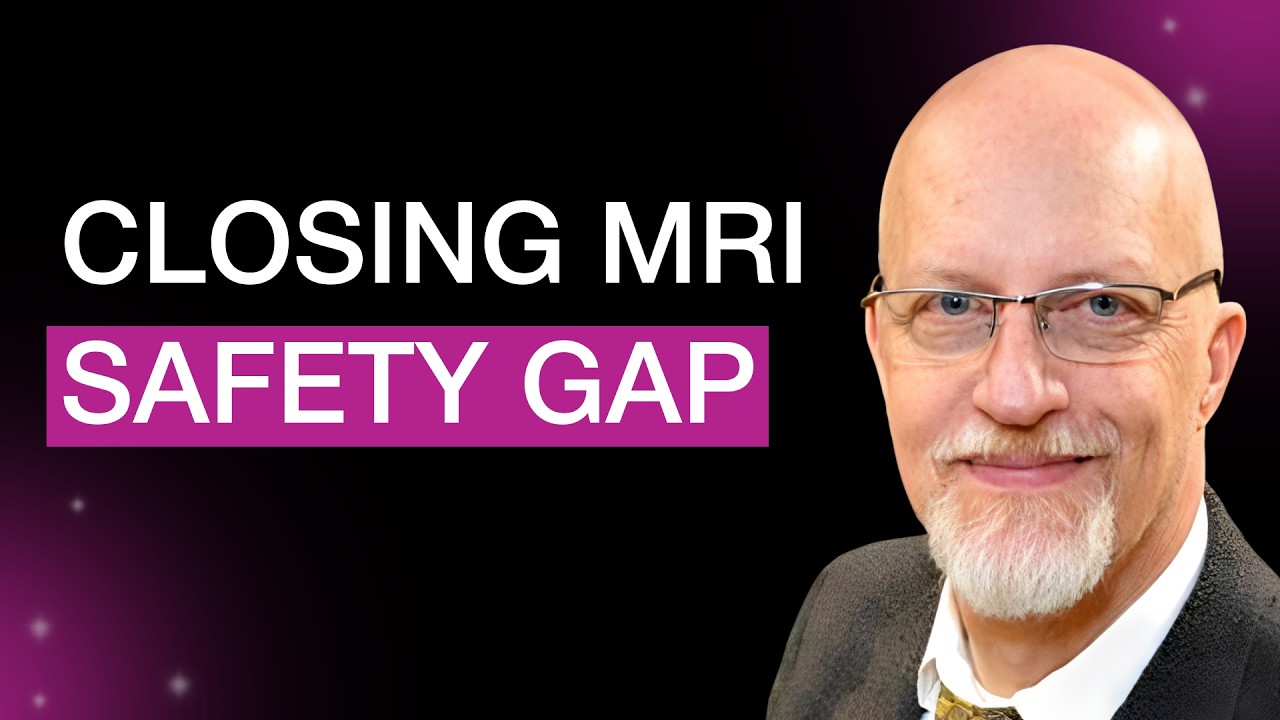
Guest: Will Breeden
Host: Chris St. John
CHRIS ST. JOHN 00:56:00 Welcome back to Rethink Imaging. I’m your host, Chris St. John. Today we are joined by Dr. William Breeden, a radiation physicist who has spent 23 years at St. Vincent’s Hospital and over 27 years consulting. He has worked as a senior reviewer with the American College of Radiology for over a decade and has been chair of the Nuclear Medicine Physics Committee for 15 years with OLA.
I have a bit of a connection with Will. We’ve spoken many times in the past. I believe one time I said when it comes to medical physics, he has more licenses than a DMV and he is approved in more states than your favorite fast food chain. I think that still holds up. On the show, we’ve been looking at things from a higher level recently—lots of theory, lots of theoretical perspectives. When talking to Will today, I really wanted to get our hands a little dirty and get into day-to-day clinical practice. Will brings that rare combination of hands-on expertise with a critical theoretical perspective. Will, thank you so much for joining us and welcome to the show.
WILL BREEDEN 00:02:09 Chris, that was a hell of an intro. I appreciate that. When you say how long I’ve been in the business, it just makes me realize how old I am now. It’s been a long road, but thank you so much. I’m glad to be here.
CHRIS ST. JOHN 00:02:20 Ignoring your age, but respecting the fact that you’ve been in this business for so long, how did you end up here?
WILL BREEDEN 00:02:28 Great question. In high school, I was always fascinated with chemistry and physics. I had a great high school chemistry and physics teacher and just fell in love with it. I had a great math teacher as well. I did a summer program between my junior and senior year of high school—a health physics program at a local university in Florence, South Carolina, Francis Marion University. I went to that summer program and came back saying I wanted to be in health physics. Most people think that’s a PE teacher, but health physics is anything but that. It’s about radiation protection and radiation safety physics, combining all the aspects of chemistry, biology, physics, and math.
I went to Francis Marion, did my undergrad in health physics, and did summer internships at nuclear power plants. As we know, at least up until this point, nuclear power has been kind of a dead process in the US—they were not building any new nuclear reactors, though potentially they may start back now. I was intrigued by the medical side, so I went to my undergrad professor and said I didn’t really want to work in nuclear power. He said, “Well, why don’t you go to grad school?” I said, “Professor Hendrick, I don’t know if I have enough money to go to grad school.” He said, “Breeden, nobody pays for grad school. You just go and they’ll give you money.”
I started applying to grad schools and ended up settling on the University of Michigan, where I luckily got a Department of Energy fellowship. I focused on medical health physics in graduate school and worked with a physicist named Jim Carey, who was at the University of Michigan Hospital and also owned a big consulting firm in Michigan and Indiana (now also in Wisconsin and Utah). I got a lot of practical experience with Jim and his consulting group while in grad school. Luckily, Jim offered me a job right out of grad school working in Indiana. I spent half of my time doing nuclear medicine physics and half of my time doing diagnostic physics. That’s where it all started. That’s the long and short story of it.
CHRIS ST. JOHN 00:04:52 Can you run through the list of your titles real quick for our listeners?
WILL BREEDEN 00:04:57 Let’s see. I’m board-certified through the American Board of Radiology in Nuclear Medicine Physics. I’m also board-certified through the ABR in Diagnostic Medical Physics. I have been actively involved in the American College of Radiology for quite a few years as a reviewer for accreditation for CT, MRI, mammography, nuclear medicine, and PET.
I served on the PET Nuclear Medicine Physics Subcommittee once, and I’m serving a second three-year term now. I was on the CT Accreditation Physics Subcommittee—I co-chaired that for about a month and realized I didn’t have enough time and had to back out of chairing it.
For the American Board of Radiology, I co-chaired the OLA program for nuclear medicine physics, which is basically the continuing education side for board-certified medical physicists through the ABR. We write questions that physicists have to answer on a weekly basis to maintain their certification status. I’ve done that since its inception and I’m finally rotating off this year. I also serve on the American Board of Radiology oral exam committee for nuclear medicine physics—I just started on that committee.
Through the American Association of Physicists in Medicine, I served on the bone densitometry exam committee for the ARRT, which is the American Registry of Radiologic Technologists, and helped create that bone densitometry exam and worked on the physics questions for it. I’m probably leaving something out, but those are the top highlights.
CHRIS ST. JOHN 00:06:44 That is a good summation, and it leads me to my next question. I want to explore your day-to-day. You sit on all these committees, you’re working at St. Vincent’s, you’ve got your hands all over the place—is there such a thing as a typical day for you? How would you describe your day-to-day work? Is every day completely different, or do you have a flow?
WILL BREEDEN 00:07:13 The thing that I love the most and hate the most about medical physics is the same: there’s never any norm. There’s never a set schedule. You go into a day thinking you’re going to do A, B, C, and D. You come in first thing in the morning, check your emails, and then get a phone call that equipment is down. We may have a mammography unit that went down. Now I’m looking two days ahead to determine what I have scheduled that I’m going to have to reschedule, because certain modalities take precedent over others due to federal regulation requirements.
Juggling those situations alongside normal, routine scheduled equipment testing is a big part of what we do. We go in and test CT, MRI, nuclear medicine gamma cameras, PET/CT scanners, mammography units, and ultrasound units. All of those items have to be tested either through state regulatory requirements, The Joint Commission accreditation requirements, ACR requirements, or other accrediting bodies like RadSite or the Intersocietal Accreditation Commission (IAC). There are a lot of moving parts, and you always have something different thrown at you on a day-to-day basis.
CHRIS ST. JOHN 00:08:41 You talked about testing all of this equipment. Sorry to the listeners if this is old hat to you, but I have no idea what that process looks like, and I would love to hear about that.
WILL BREEDEN 00:08:52 It all varies. Let’s start with a normal, regular radiographic room where you go in to get a chest X-ray or an X-ray on an injured hand. We do a battery of equipment performance tests on that piece of equipment. First, we want to check to make sure it is producing a good diagnostic-quality image. There are different metrics we look for in performance testing. We look at the energy of the X-rays coming out to make sure it matches what we expect, and we have ways to measure that. We want to measure the amount of radiation coming out per unit and make sure it’s reproducible. If I set the same exposure technique and make four or five exposures in a row, do I get a reproducible, consistent result?
We also check whether the quality of the X-ray beam is reasonable. If the X-ray tube starts to get old or fail, the beam can actually become hard. What I mean by the beam becoming hard is that filtration occurs that creates higher-energy X-rays coming out relative to lower-energy X-rays, which can make image quality an issue and radiation dose an issue.
CHRIS ST. JOHN 00:10:10 Before you keep going, can you talk a little bit more about beam hardness? Is this a byproduct of the machine itself? What does that process look like, and how do you fix it when you find it?
WILL BREEDEN 00:10:26 There is usually inherent filtration already between the X-ray tube and the patient. It is usually aluminum, sometimes copper, and it’s a set amount. But as the X-ray tube gets more and more exposures, it can build up a deposit from the anode vaporizing, putting a deposit on the exit window of the X-ray tube that causes the half-value layer to increase.
We use a measure called the half-value layer. We track that from year to year, and if we see it creeping up, we know that could be a potential problem. On the flip side, if your half-value layer is too low, you don’t have enough filtration between the X-ray tube and the patient, and you get a lot of low-energy X-rays that contribute to radiation dose without contributing to image quality. So you always want your half-value layer to be within a certain range—not too low, not too high.
That is one metric of many that we test. It sounds like a lot, but normally you can test an X-ray unit in 30 minutes to an hour, depending on how many tests and how much image quality testing you want to perform. There’s also testing of the automatic exposure control to make sure that’s functioning correctly. That determines how much radiation passes through the patient depending upon body size. If that’s not functioning correctly, you can have overexposure, underexposure, unreproducible exposures, or imbalance between photocells. There are many different performance tests just for X-ray, and then we can talk about CT, nuclear medicine, MRI, and so on.
CHRIS ST. JOHN 00:12:27 You said something that piqued my interest. You mentioned running tests depending on how many you want to perform. What informs you as you make that judgment call that a machine has reached a sufficient amount of testing? Is it a predetermined list of checkboxes designed by organizational bodies, or is it what you’re seeing with the critical eye that comes with time and experience?
WILL BREEDEN 00:12:58 It’s all of that. At minimum, you perform what the state requires—what the State Department of Health regulations require in your state. That’s the minimum. But you really need to do more, and most physicists perform additional testing. They will follow American College of Radiology guidelines, which are another step up with more testing than what state regulations require. There could be Joint Commission-required testing, which is a higher level. The American Association of Physicists in Medicine also puts out task group reports, which are like the toolbox for medical physics detailing what to test, how to test it, and what the results should be. Between the accrediting bodies, the American Association of Physicists in Medicine, and state regulations, it all comes together into one package.
CHRIS ST. JOHN 00:14:00 You mentioned earlier that there is an order of operations when equipment goes down or when setting priorities. With all these different modalities—PET, CT, mammography, nuclear medicine—needing your attention at once, how do you allocate your time? How do you maximize efficiency to keep everything up and running?
WILL BREEDEN 00:14:30 When it comes to equipment repair and post-repair testing, you can’t plan on those things. When something breaks, it breaks. On rare occasions, we can tell. For mammography, the service engineer can check the life of the X-ray tube, and when it hits a certain exposure count, they have a general idea that it may fail. Or there could be intermittent problems indicating a system is about to go down, so they preemptively decide to repair the machine before it fails. When they do that, we can schedule the testing with them, which makes planning easier.
The routine annual testing we perform can get shuffled to the back if a mammography unit goes down and its X-ray tube has to be replaced. Technologists cannot use that unit or expose a patient until we’ve tested and cleared it. If they do use it, they could receive a citation from the FDA during an inspection. So those things take precedent. The reality is that at some point everyone has a crisis, and when it’s your turn, you expect us to be there on time. When it’s not a crisis and you get rescheduled, most local hospitals and departments understand that at some point they will need that priority and someone else will get bumped down the road.
CHRIS ST. JOHN 00:16:28 You said the word crisis, and I’m curious about that. Understanding privacy, can you talk through a crisis that went off the rails and how you fixed it, or something recurring that you see regularly? What is the scope of issues that you handle?
WILL BREEDEN 00:17:06 If you look at the most heavily used modalities—CT and high-end interventional radiology—if you are a Level 1 trauma center with a stroke protocol and need a biplane IR suite up and running, those are crisis situations. When a biplane angio suite or IR suite goes down, you have to be there. The expectation in my experience is that as the service engineer is packing up, you are unpacking and getting right to work. That could be at 11:00 at night or 5:00 in the morning. It has to be up because this is serious.
We are here for patient care. We’re in the background, but if things don’t go well on the back end, it affects patient care. We want to keep systems running so that when a patient is ill and needs to be diagnosed and treated, we can do that quickly.
Mammography is federally regulated. When that equipment is down, they cannot use it. Sometimes it takes a while for the service engineer to determine the problem—they may think it’s the X-ray tube, but after installing it, realize they also have to replace the generator.
Another crisis situation is when a department or hospital is unexpectedly inspected by the FDA or The Joint Commission, and they want to see documentation. Usually people panic because they’re not used to pulling all that paperwork. We swoop in and provide all the information the surveyors are looking for from a physics and radiation safety perspective. These things happen on the fly. There’s never a dull moment.
CHRIS ST. JOHN 00:19:29 What are some of the judgment calls that you have to make in your day-to-day? Give me some examples of the more difficult decisions you encounter.
WILL BREEDEN 00:19:45 Any patient safety-related issues take precedent—they are number one. If someone gets injured in an MRI suite or burned from RF heating during an MRI exam, or has an issue in the cath lab—these things are rare, but they do happen. Patient safety concerns always take precedent. Every medical physicist I know takes that as the number one priority.
Next is radiation protection and staff concerns. Occasionally staff members are concerned about the amount of radiation exposure they’re receiving. Other times, issues arise between a technologist and a physician, where the technologist reports that a physician is using too much radiation. We have to assess whether that’s true, whether they need training or reinforcement, or if they are new or inexperienced. Those situations take precedence over routine equipment performance testing.
During inspections by the State Department of Health, the Nuclear Regulatory Commission, or The Joint Commission, we act as a liaison to provide the information the surveyors need to review.
Beyond that, we have to stay credentialed. Finding time to do continuing education and attend meetings is a challenge. The sheer amount of continuing education we have to maintain is off the charts—it takes an army just to keep track of what I need to take and when certifications expire.
CHRIS ST. JOHN 00:21:45 It is a baffling number of moving parts that need to be checked, both personally for you as a physicist and for the organizations you work with.
WILL BREEDEN 00:22:01 Let me bring up another point about crisis situations. It’s one thing when you’re an in-house medical physicist, but when you’re a consulting medical physicist, you have another level of complexity because of travel. You may be in one part of the state, and two or three hours away—depending on your state and coverage area—another issue arises. You always have to strategize geographically where you’re going to be and make your time as efficient as possible. If your home base is Dallas and you drive to San Antonio, you don’t want to test just one X-ray tube. If you’re going there anyway for down equipment, you look at what else is due or what could be done early to make a solid day out of it without making multiple trips. You just don’t have time for extra trips.
CHRIS ST. JOHN 00:23:10 I’ve driven across Texas, and I would not want to go back and forth. Do you do a decent amount of traveling now, or not too much?
WILL BREEDEN 00:23:25 Not as much as I used to. In my earlier days, I traveled more, but it got to be too much. It’s hard to consult across different state lines. You can do it, but if you’re not able to respond to a client’s needs promptly, they won’t be happy and the relationship won’t last. It takes a toll on you, and the equipment is heavy—CT testing equipment is a minimum of 50 pounds. Having to ship that or take it on flights gets old.
CHRIS ST. JOHN 00:24:06 How long were you doing extensive travel?
WILL BREEDEN 00:24:10 A long time. When I got out of grad school, I started with Medical Physics Consultants (MPC). I ultimately left them in October 2000 and took a job in South Carolina with a physics group out of Atlanta, Alliance Medical Physics. Love those guys, and love MPC too—they’re all great companies. But with Alliance, the travel covered the entire Southeast. Going between South Carolina, Florida, North Carolina, Georgia, and Alabama gets to be too much.
I left there in 2003 and started at St. Vincent Ascension in Indiana, where I’ve been ever since. I’ve been able to do some consulting when opportunities arise through Advanced Medical Physics, which is now part of One Physics. There’s a shelf life for extensive travel in this job.
CHRIS ST. JOHN 00:25:10 Is there anything you took from your time traveling that helped guide your on-site practice?
WILL BREEDEN 00:25:22 Time management, 100%. You have no room for error with scheduling and have to stay on top of things. You have to work late and do things off-hours. Sometimes consulting is like trying to drink water out of a fire hydrant.
It’s funny seeing the progression of consulting medical physicists who have been in the grind and decide to go in-house. There is a transition period where it feels like everything slowed down. There is still a lot of work to be done and crisis situations occur, but they are usually more manageable and less chaotic. It’s funny to see them feel like they aren’t doing anything, but I tell them they are just doing it differently. In-house, you have time to get into the nitty-gritty, get into the weeds, make an impact, and work closely with physicians and technologists in ways you didn’t have time to do while consulting.
CHRIS ST. JOHN 00:26:43 What do your daily interactions with techs and radiologists look like? Are they constantly asking for your input, or do you have rotating check-ins? How do you allocate your time on the human side of things?
WILL BREEDEN 00:27:02 Everyone does it a little differently. Some people round in the morning. I don’t really do that, but everyone knows where I am. We cover the entire state of Indiana for Ascension, so we move around a lot. Even if I’m not in my office, technologists, department managers, directors, and radiologists all have my cell phone.
We work with radiologists a lot on CT protocols, MRI protocols, and protocol optimization. We also work with interventional radiology physicians on radiation protection. Recently, a cardiologist wanted a new radiation protection device installed that allows them to eliminate wearing lead aprons. State regulations didn’t initially allow it, so we worked with the cardiologist and the State Department of Health to get an exemption so they could use the device legally without wearing heavy lead for eight hours a day.
Technologists contact us if they have issues with fetal dose estimates when a pregnant patient is exposed. Patients or parents of pediatric patients often have questions about radiation exposure, and technologists defer them to us to have those radiation risk conversations, which we are happy to do.
CHRIS ST. JOHN 00:28:53 We’ve talked about the chaotic schedule and traveling, but what is the best part of your day?
WILL BREEDEN 00:29:08 The best part of my day is being able to provide support. We support everybody: radiologists, nuclear medicine physicians, technologists, hospital administration, cardiologists, and orthopedic surgeons using fluoroscopy. We want to be a resource so people know they can come to us with any question or concern. We want to help them and keep them safe, and sometimes that means explaining why we make certain policy decisions.
Being that resource and being helpful gives me a lot of gratitude. Ultimately, if I’m helping them, we’re helping the patient, which is the main goal. Healthcare has many cogs, and everyone plays an important role—from housekeeping and security to nursing, physicians, and support staff. It takes a village to make this work. You can clearly see the places where it works right and the places where it’s dysfunctional.
CHRIS ST. JOHN 00:30:34 I was talking to Brad Lofton from CAM Physics, who is also coming on the show. From his perspective, he sees a slow transition of physicists into glorified box checkers. It is refreshing and comforting to hear you talking about the essence of what this job is: patient care and support within internal systems.
WILL BREEDEN 00:31:00 I know where Brad is coming from. Over the last 20 years, certain things have drifted away from medical physics involvement, particularly in smaller community hospitals outside of academic research institutions. Physicists used to be involved in equipment specification, helping hospitals decide what equipment to purchase and steering them in the right direction. Now, larger healthcare conglomerates control that through supply chain. Contracts and deals are made, and hospitals are simply told which scanner they are getting. When we ask about specific options, we’re told supply chain analysis determined that scanner model fits the need. There is power in large national contracts, but the art of physicists being part of equipment selection has largely been lost. I get what Brad is saying in that regard.
CHRIS ST. JOHN 00:32:10 Before we wrap up, I’m trying an experiment with three questions I’m asking guests across different roles and health systems. These can be long answers or short soundbites—whatever feels natural.
Question number one: What is one truth in imaging that people just don’t want to admit?
WILL BREEDEN 00:32:53 That burnout is real. I see it happening with everybody: physicians, technologists, physicists, nurses. Healthcare is not for the faint of heart.
CHRIS ST. JOHN 00:33:10 Number two: What is one idea in radiology that you think we’re wrong about?
WILL BREEDEN 00:33:18 I think we are significantly underestimating what AI is going to look like in medical imaging. I know there is a lot of buzz around it, but it is going to be on a whole other level. In 10 to 20 years, there will be far more automation than there is now.
CHRIS ST. JOHN 00:33:40 If you could change or fix something instantly in imaging, what would you change right now?
WILL BREEDEN 00:33:48 From a medical physics standpoint, I would make every hospital administrator take a course in medical physics—specifically an orientation explaining who medical physicists are, what we do for the hospital, and how we keep them out of the newspaper. Hospital administrators often don’t learn that until something goes wrong.
I’m not saying all hospital administrators are unaware—my administrator knows me by name and speaks to me whenever he sees me in the hall. But in many places, especially with consulting medical physicists, administrators think a physicist just comes in, puts a sticker on an X-ray machine, and walks out. There is a lot more going on than just that.
CHRIS ST. JOHN 00:34:45 Will, that brings us to the end of our episode today. Thank you so much for talking with me. I really appreciate it.
WILL BREEDEN 00:34:53 It’s always fun and I appreciate the opportunity. I’ve been watching the podcast since it started—you’re doing a great job and I really enjoyed it. Thanks, Chris.